Why Is Everything on Amazon So Cheap? The China Shipping Story
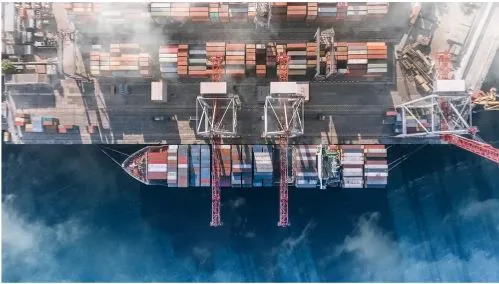
You’ve probably noticed it. A set of kitchen tongs for $6.99. A phone stand for $4. A string of fairy lights for $8 with free shipping. You add them to your cart, they show up three days later, and somewhere in the back of your mind you wonder: how is any of this even possible?
The answer involves Chinese factories, container ships, and a logistics system so efficient it has reshaped the economics of retail around the world. Here’s how it actually works — and why in 2026, that equation is getting more complicated.
It Starts With Scale That’s Hard to Imagine
China accounts for roughly 28% of global manufacturing output. That’s not a small lead — it’s a structural dominance built over decades through a combination of factors that go well beyond just cheap labor.
Take a place like Shenzhen. This single city has evolved into a complete electronics manufacturing ecosystem: component suppliers, assembly plants, testing facilities, and logistics providers all within close proximity of each other. The time and cost of sourcing a component, getting it to the factory, assembling it, and shipping it out is dramatically lower than it would be almost anywhere else — not because any one step is cheap, but because every step is integrated. There’s very little wasted movement in the system.
Then there’s scale. Chinese factories frequently run at volumes that would be unthinkable in most other countries. A factory in Guangdong province producing 500,000 units of a product spreads its fixed costs — machinery, R&D, management — across every single unit. The more you make, the cheaper each one gets. That $6.99 set of kitchen tongs wasn’t cheap because someone cut corners. It was cheap because the factory that made it probably produced ten million sets just like it.
Why Shipping from China to the US Is Cheaper Than You’d Think
Here’s a fact that usually surprises people: moving a standard container from China to the US — a container that holds thousands of individual products — costs a few thousand dollars in ocean freight. When you divide that across every item in the box, the shipping cost per unit is often just a few cents. The ocean crossing itself takes 18–25 days to the West Coast and 30–40 days to the East Coast, but the cost is what matters here.
That’s why trans-Pacific cargo shipments make economic sense for products that would seem too cheap to bother shipping internationally. The container doesn’t care whether it’s carrying $50,000 worth of electronics or $50,000 worth of $7 kitchen tools. The ocean freight cost is essentially the same either way.
This is the part of the equation most people miss. The reason your Amazon order from China is affordable isn’t just that manufacturing in China is cheap. It’s that the entire logistics chain — factory to port, port to ship, ship to US port, port to your door — has been optimized to move goods at a cost per unit that’s almost invisible at the consumer level.
So Why Did Prices Start Going Up?
If Chinese manufacturing is so efficient, why have prices on many products crept up over the past few years?
Two reasons, and they’re both significant.
First, Chinese manufacturing isn’t as cheap as it used to be. China’s labor costs have increased significantly in recent years, with manufacturing wages now averaging between $6 and $8 per hour depending on the region and skill level — well above the rates seen a decade ago. China is no longer a low-wage country in the way it once was. It’s now a mid-range manufacturing economy, which means its competitive advantage has shifted from pure labor cost to infrastructure, expertise, and scale.
Second, and more dramatically: tariffs. Since 2018, the US has imposed increasingly large duties on Chinese goods, and by 2026, many Chinese product categories face 25–145% tariffs on entry into the US. That $6.99 set of kitchen tongs might still cost only a few dollars to make and a few cents to ship, but if there’s a 25% tariff sitting on top of the import value, someone has to absorb that — either the importer, the retailer, or ultimately you.
The $800 de minimis exemption — the rule that allowed small packages from China to enter the US duty-free — ended in May 2025. Every shipment, no matter the value, now goes through formal customs. That adds broker fees and processing time to every single package, including the small ones that platforms like Temu and Shein built their entire model around.
LCL vs FCL: How Businesses Actually Manage the Shipping Costs
Behind every cheap product on Amazon is an importer who made decisions about how to ship it. One of the most important of those decisions is whether to use LCL (Less than Container Load) or FCL (Full Container Load) shipping — and choosing between LCL and FCL is more consequential than it sounds.
LCL means your goods share a container with other companies’ cargo. It’s flexible and works well for smaller orders. FCL means you book an entire container for yourself — it costs more upfront but is cheaper per unit at higher volumes, and it’s faster because your cargo doesn’t need to be sorted and consolidated with other shipments at either end.
Businesses selling on Amazon and other platforms constantly balance these decisions. Move too early with a large FCL order and you’re tying up capital in inventory. Move too conservatively with LCL on every shipment and you’re paying more per unit than you need to. Getting this right, consistently, across dozens of product lines, is actually quite difficult — and it’s one reason why experienced freight forwarders exist.
Is China Still the Answer?
For many product categories, yes. Chinese manufacturing is still structurally cheaper than almost anywhere else in the world when you factor in the supplier ecosystem, infrastructure, and production scale. Alternatives like Vietnam and India are growing quickly, but they’re still catching up to what China has built over thirty years.
That said, the landscape has genuinely shifted. Tariffs have pushed some importers to explore sourcing from Vietnam, India, Mexico, or other countries with lower tariff exposure for the US market. Supply chains that were once entirely China-dependent are being redesigned to be more flexible.
For shoppers, that means the era of prices only going down may be over for some categories. But the fundamental economics that made affordable global manufacturing possible — scale, infrastructure, ocean freight efficiency — haven’t disappeared. They’ve just gotten more complicated.
The next time you add something absurdly cheap to your cart, you’re not just buying a product. You’re at the end of a supply chain that stretches back to a factory, a port, a container ship crossing the Pacific, and a customs clearance process that most people never think about. It works, most of the time, at a scale and price point that still feels slightly unreal.