Custom vs Standard Flexible Packaging: What Manufacturers Should Know
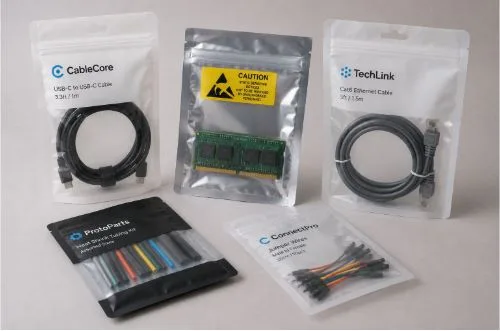
In many manufacturing environments, flexible packaging is easy to overlook. It’s often seen as just a final step before shipping. But in reality, it plays a much bigger role in protecting products, improving efficiency, and even reducing overall costs. That’s why manufacturers, including those working with EONSEN custom packaging manufacturer, are paying closer attention to how packaging decisions affect overall performance.
At first glance, standard options seem faster and more affordable. But that’s not always the full story. The right choice depends on your product, how sensitive it is, and what it goes through during handling and transport. In this guide, we’ll break it down so you can decide what actually works for your operation.
What Standard Flexible Packaging Really Means
Standard flexible packaging is essentially the ready-made option. It refers to packaging that comes in pre-defined sizes, materials, and formats, designed for a wide range of applications. You can source it quickly, use it immediately, and avoid the time and cost involved in customization.
That’s a big reason why many manufacturers rely on it, especially when speed matters. It typically comes with a lower upfront cost and shorter lead times, making it a practical choice for straightforward needs.
In terms of where it works best, standard packaging is well-suited for low-risk products or items with consistent, uniform dimensions. If your product doesn’t require special protection or handling, this option can get the job done without unnecessary complexity.
What Makes Custom Flexible Packaging Different
Custom flexible packaging takes a different approach. Instead of using pre-made formats, it’s designed around your product and how it needs to be protected, stored, and transported. In simple terms, it’s packaging built to fit your exact requirements, not the other way around.
In practice, customization goes far beyond size or appearance. You can adjust the material structure, fine-tune thickness and strength, and add functional features like moisture barriers, anti-static protection, or puncture resistance. Even the shape and format can be tailored to match your product more precisely.
That said, the real difference is in the engineering behind it. Many manufacturers find that once packaging is treated as part of the product design process, not just an afterthought, the performance benefits become much more noticeable.
Where the Real Differences Start to Show
This is where the differences start to matter. When you look at day-to-day operations, the gap between standard and custom flexible packaging becomes much clearer.
One of the biggest factors is protection. Standard options offer general coverage, but they may not fully address specific risks like moisture, static, or impact. Custom solutions, on the other hand, are built to handle those exact conditions.
Fit also plays an important role. With standard packaging, you often end up adjusting your process around the packaging. That can lead to wasted space, inefficient packing, or extra materials. Custom solutions are designed to match your product, which helps streamline handling and improve consistency.
Then there’s cost over time. While standard packaging is usually cheaper upfront, it can lead to higher damage rates or material waste. In many cases, those initial savings disappear once returns, replacements, or inefficiencies are factored in.
When Standard Packaging Is Enough
There are plenty of situations where standard flexible packaging does exactly what you need, without adding unnecessary complexity. If your product is non-fragile or relatively low in value, the risks during handling and transport are much lower. In these cases, a general-purpose solution is often more than enough.
It also makes sense when your products have consistent, predictable dimensions. Standard options work best when there’s no need to adjust for size variations or special handling requirements. You can pack quickly, keep operations moving, and avoid unnecessary decision-making.
Another scenario is short-term or low-volume production. If you need packaging fast or you’re running smaller batches, standard options offer a clear advantage in speed and convenience.
At the end of the day, not every product needs a highly engineered solution. Sometimes, keeping things simple is the most practical and cost-effective choice.
When Custom Flexible Packaging Becomes the Better Choice
That said, there are clear situations where custom flexible packaging becomes the better option. If you’re dealing with fragile or precision components, even small amounts of movement, pressure, or static can lead to damage. In these cases, packaging needs to be designed to control those risks, not just contain it.
The same applies to high-value goods. When the cost of damage is significant, relying on a one-size-fits-all solution can quickly become expensive. Custom solutions help reduce that risk by providing the right level of protection where it actually matters.
Size and shape are another factor. Large or irregular products rarely fit well into standard formats, which can lead to wasted space or unstable packing. And for products sensitive to moisture, oxygen, or static, specialized materials and structures become essential.
In practice, this is where experienced suppliers like EONSEN Pack tend to focus, treating packaging as part of the overall engineering process rather than a separate step.
So, How Do You Make the Right Call?
So how do you make the right call? It comes down to a few key factors. Start with your product. Is it sensitive, fragile, or high in value? If so, protection should be a priority. Then consider your shipping and handling conditions. Long transit times or rough handling can quickly expose the limits of standard packaging.
Another important point is the cost of damage versus the cost of packaging. Saving a bit upfront doesn’t help if it leads to returns, replacements, or production delays later on.
If you’re unsure, it helps to look at it case by case. The goal isn’t to choose the more advanced option, but the one that fits your product and process best.
It’s Not About Better, It’s About the Right Fit
At the end of the day, the choice isn’t about which option is better overall. It’s about what fits your product and your operation. Standard flexible packaging works well for simple, low-risk needs, while custom solutions are designed for situations where performance really matters.
Smart manufacturers don’t rely on assumptions or upfront cost alone. They look at the bigger picture, including protection, efficiency, and long-term impact. In many cases, working with partners like EONSEN Pack becomes part of that process, helping teams make more informed packaging decisions over time.