How Mechanics Use Handheld Thermal Cameras?
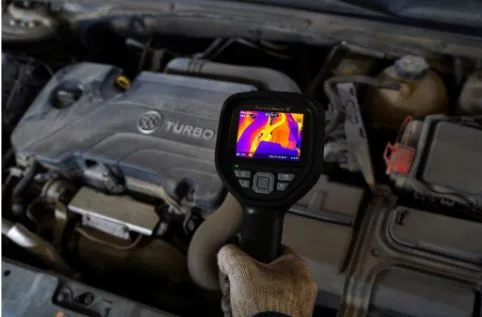
Handheld thermal imagers can display thermal patterns invisible to the naked eye, helping repair technicians quickly identify hidden vehicle faults. For example, the Thermal Master Thor series is a handheld thermal imager designed for vehicle inspection, electrical diagnostics, and workshop troubleshooting.
Below, we’ll explore how repair technicians use thermal imagers in real-world repair scenarios and why the Thermal Master Thor series can aid in detection.
Why Do Mechanics Use Handheld Thermal Cameras?
Mechanics use handheld thermal cameras because many vehicle problems create abnormal heat before visible damage appears. A thermal imaging camera allows you to instantly compare temperatures across engines, brakes, batteries, HVAC systems, and electrical circuits.
In simple terms, heat becomes a diagnostic signal. If one brake rotor runs hotter than the others, it may indicate a seized caliper or excessive friction. This means that mechanics can locate problems much faster than with traditional inspection methods.
Thermal cameras are especially useful for modern vehicles filled with sensors, ECUs, and complex wiring systems. In practice, mechanics can quickly narrow down problem areas without removing multiple components during initial diagnostics.
How Do Mechanics Use Thermal Cameras?
Step 1: Scan for Hotspots
Mechanics usually begin by scanning the engine bay, fuse box, cooling system, and brake assemblies while the vehicle is operating. In practice, the thermal camera quickly highlights overheating areas or unusual temperature differences. This means that mechanics can focus directly on suspicious components instead of checking every part manually.
Step 2: Compare Component Temperatures
Healthy vehicle components normally operate at similar temperatures. If one wheel hub, battery cell, or radiator section appears significantly hotter, it often indicates friction, blockage, or electrical resistance. In simple terms, uneven heat patterns help mechanics identify hidden failures before they become serious problems.
Step 3: Inspect Electrical Systems
Thermal imaging cameras are widely used for diagnosing electrical faults. Mechanics can locate overheated connectors, blown fuses, loose terminals, or overloaded wiring much faster using thermal imaging. For example, a hotspot inside a fuse panel may reveal a hidden short circuit that standard visual inspection cannot easily detect.
Step 4: Verify Repairs
After repairs are completed, mechanics often perform another thermal scan to confirm temperatures have returned to normal. This means that the thermal camera works as both a diagnostic and verification tool during automotive maintenance.
What Vehicle Problems Can Thermal Cameras Detect?
A handheld thermal camera can help mechanics identify many common automotive issues, including:
- Overheating Brakes: Detects seized calipers or dragging brake pads
- Battery Problems: Reveals failing battery cells or charging issues
- Electrical Faults: Find overheated wiring, relays, and fuse connections
- Cooling System Issues: Identifies radiator blockages or coolant flow problems
- Wheel Bearing Damage: Highlights excessive friction inside wheel hubs
- HVAC Problems: Detects uneven airflow or weak cooling performance
In practice, thermal imaging reduces diagnostic time and helps mechanics locate problems more accurately during vehicle inspections.
Why Are Thermal Cameras Better Than Traditional Inspections?
Traditional diagnostics often rely on manual testing, disassembly, or error codes. A thermal imaging camera provides a faster visual overview of the vehicle’s thermal behavior.
One major advantage is non-contact inspection. Mechanics can safely inspect hot engines, moving parts, and electrical systems without touching them directly. This improves workshop safety and speeds up inspections.
Another advantage is efficiency. A handheld thermal camera can scan large areas within seconds, helping mechanics reduce troubleshooting time while improving diagnostic confidence.
Portable thermal cameras are also useful for roadside assistance, fleet maintenance, and mobile repair services because they are compact and easy to carry.
Best Handheld Thermal Cameras for Mechanics
Thermal Master Thor 001
The Thor 001 combines a 256×192 infrared detector with 512×384 X³IR Resolution, making it ideal for professional automotive diagnostics, engine inspections, and electrical troubleshooting, helping you clearly identify subtle thermal differences during repairs. In practical applications, its 3.5-inch IPS display and sturdy handheld design enhance inspection efficiency in busy workshops. As a result, the Thor 001 is ideal for mechanics performing vehicle diagnostics.
Key Features:
- 512×384 X³IR Resolution: Enhances thermal imaging detail during vehicle inspections
- ±1.5°C Accuracy: Enables more reliable engine and electrical diagnostics
- ≤35mK NETD Sensitivity: Faster detection of subtle overheating issues
- 3.5-inch IPS Display: Provides clearer thermal imaging in the workshop
Thermal Master Thor 002
The Thor 002 is also a handheld thermal imager suitable for automotive maintenance and electrical inspections. It is similarly equipped with a 256×192 infrared detector and 512×384 X³IR Resolution, enabling clearer thermal analysis. It differs from the Thor 001 in its temperature measurement accuracy of ±2°C and ≤40 mK NETD sensitivity. However, in practical applications, its handheld design allows for more comfortable and extended workshop inspections. Therefore, the Thor 002 is ideal for daily vehicle diagnostics and repair work.
Key Features:
- 512×384 X³IR Resolution: Enhances thermal imaging detail during engine and brake system inspections
- ±2°C Accuracy: Enables reliable automotive temperature diagnostics
- ≤40mK NETD Sensitivity: Detects subtle overheating issues faster
- 3.5-inch IPS Display: Improves visibility when inspecting vehicle systems
Summary
Handheld thermal cameras help mechanics diagnose vehicle problems faster, safer, and more accurately by visualizing hidden heat patterns. They are widely used for brake inspections, electrical diagnostics, cooling system analysis, and preventive maintenance. Smartphone thermal cameras like the P2 Pro provide excellent portability, while handheld devices like the Thor 001 offer stronger workshop-oriented performance. As vehicles continue becoming more electronic, thermal imaging cameras will become even more valuable in modern automotive repair.