The Speed of Style: How AI Is Accelerating Interior Design Trends in 2026
Interior design trends used to move at the pace of magazine publishing cycles. A color would emerge at Milan Design Week, filter through trade publications over six months, appear in high-end showrooms a year later, and finally reach mainstream retail the year after that. The journey from runway to living room was slow, predictable, and gatekept by a relatively small group of tastemakers.
That timeline has collapsed. And AI is a major reason why.
From Trend Forecasting to Trend Testing
The traditional trend pipeline relied on a handful of institutions — color authorities like Pantone, trade shows like Maison & Objet, and shelter magazines that curated what the public would see next. Designers and manufacturers planned product lines 18 to 24 months in advance based on these forecasts.
Today, homeowners and designers can explore emerging aesthetics instantly through AI-powered design visualization tools like HomeRestyle AI that generate photorealistic room concepts in any style imaginable. Want to see what your living room looks like in the “quiet luxury” aesthetic that’s dominating social media? Upload a photo and find out in thirty seconds.
This ability to test-drive trends before committing a single dollar has fundamentally changed how design ideas spread. Trends no longer trickle down from industry gatekeepers — they emerge, get visualized, shared, iterated upon, and adopted at a pace that would have been unthinkable a decade ago.
The Micro-Trend Explosion
One consequence of this acceleration is the rise of hyper-specific micro-trends. In the pre-AI era, broad movements like “mid-century modern” or “farmhouse chic” dominated for years because the cost and effort of experimenting with alternatives was too high. Homeowners committed to a style because changing course meant starting over.
Now, the barrier to exploration is essentially zero. Scrolling through curated design idea collections reveals just how granular style categories have become. It’s no longer just “modern bedroom” — it’s dark academia bedroom, Japandi minimalist bedroom, coastal grandmother bedroom, each with distinct palettes, textures, and spatial philosophies.
This fragmentation mirrors what happened in music and media when streaming eliminated the cost of discovery. Just as listeners developed increasingly niche taste when they no longer had to buy full albums, homeowners are developing more personal, specific design preferences when they can visualize options without financial risk.
What’s Trending Now — and Why It Matters
Several design directions gaining momentum in 2026 reflect this AI-accelerated landscape:
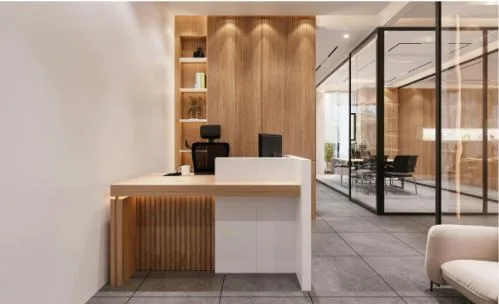
Warm minimalism continues its dominance, but with a shift toward richer earth tones — terracotta, ochre, deep olive — replacing the cooler grays and whites that defined the previous decade. The aesthetic pairs clean architectural lines with organic materials like travertine, fluted wood, and bouclé textiles.
Bold accent walls are making a decisive comeback after years of all-white interiors. Deep jewel tones, limewash finishes, and textured plaster are showing up in AI-generated room concepts at dramatically higher rates than even six months ago — a leading indicator that often precedes mainstream adoption.
Curved furniture and archways continue gaining ground as homeowners move away from the sharp, angular geometries that dominated the 2010s. Rounded sofas, arched doorways, and organic-shaped mirrors create softer, more inviting spaces that photograph beautifully — a factor that matters increasingly as homes are experienced digitally before they’re visited in person.
Mixed-era styling — blending vintage pieces with contemporary architecture — reflects a growing rejection of the “all-matching” approach to interior design. AI tools make it easy to experiment with combinations that might feel risky in a showroom but look surprisingly cohesive when visualized in context.
The Feedback Loop Between AI and Design
What makes the current moment particularly interesting is the feedback loop between AI visualization tools and the design industry itself. When millions of people experiment with room concepts online, the aggregate data reveals genuine consumer preferences — not what a trend forecaster predicted people would want, but what they actually choose when given unlimited options.
Furniture manufacturers and retailers are paying attention. Some have begun monitoring the most-generated design styles on AI platforms as a form of real-time market research, using that data to inform product development decisions months ahead of traditional forecasting methods.
For individual homeowners, the practical implication is simple: you no longer need to wonder whether a trend will work in your space. The technology exists to see it, evaluate it, and decide — all before picking up a paint swatch.
Design Democracy
The democratization of trend access is perhaps the most significant long-term shift. When exploring a new aesthetic required hiring a designer or subscribing to niche publications, design literacy was unevenly distributed. Today, anyone with a smartphone can visualize professional-grade interior concepts and develop a sophisticated understanding of what works in their space.
The result is a design landscape that’s simultaneously more diverse and more personal than ever before. Trends still exist, but they’re adopted by choice rather than default — and that might be the most important trend of all.