From passive viewing to interactive sports streaming: what platforms need next
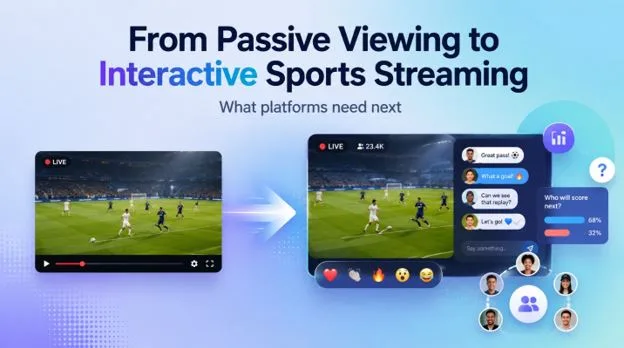
A live stream can show every second of a match and still miss part of the experience.
Fans rarely watch sport in silence. They react to a goal, question a substitution, complain about the referee, check statistics, send clips to friends, and look for other people who saw the same thing. If the streaming app gives them only video, a large part of that behaviour moves somewhere else.
This is the gap behind the shift toward interactive sports streaming. The stream still matters. Quality, stability, rights, and timing all matter. But the next layer is about what viewers can do while the event is happening.
The stream is only the starting point
Sports streaming products already solve a difficult problem: getting live content to users quickly and reliably. That is still the foundation.
But once the viewer arrives, the product has another job. It has to keep the experience alive. A fan may open the app for the match, then switch to WhatsApp for reactions, X for clips, Reddit for arguments, and another app for statistics.
The event remains on screen, but the fan’s attention is split. The platform owns the stream, while the conversation grows outside it.
Fans need a place to react
Live sport has a short emotional window. A missed penalty, a red card, a last-minute goal, or a controversial call can dominate attention for a few minutes and then disappear into the next phase of the match.
If fans have nowhere to react inside the streaming product, they will find another space quickly.
Useful interactive features do not need to be complicated. They can include:
- live chat during the stream;
- quick polls at half-time or between rounds;
- fan reactions around key moments;
- match rooms for teams or events;
- simple Q&As around rules, line-ups, or fixtures.
The point is to give viewers something to do without pulling them away from the event.
Context keeps casual viewers involved
Hardcore fans often know the table, the rivalry, the players, and the tactical background. Casual viewers may not.
That matters during live events. Someone may want to know why a player is missing, what a result changes, how a tournament format works, or why a decision is controversial. If the answer is easy to find inside the app, the viewer has less reason to leave.
AI assistants can help with this layer when used carefully. They can answer repeated questions, point users to relevant content, and explain basic context around the event. They should support the viewing experience, not replace editorial work or expert commentary.
Interaction needs moderation
A lively chat can make a stream feel bigger. A messy one can make people leave.
Sports brings emotion, sarcasm, rivalry, slang, and anger. That is part of the appeal. But spam, abuse, scams, and repeated disruption can quickly make a live room unusable.
AI moderation can help with the first layer by flagging obvious risks and repeated problems. Human review still matters for edge cases, tone, and local context. The healthiest sports chats are not quiet. They are readable, active, and safe enough for normal fans to join.
What platforms need next
The next step for sports streaming is not just better video. It is a better live environment around the video.
A stronger product gives viewers a reason to stay during the match and return after it. The stream brings them in. Chat, context, polls, Q&As, and moderated community spaces give them something to take part in.
Passive viewing will still exist. Some fans only want the match. But many viewers now expect the live event to feel social, responsive, and alive inside the product itself. Sports platforms that build for that behaviour will own more than the stream. They will own more of the experience around it.