Three Common Types of Bearing Materials
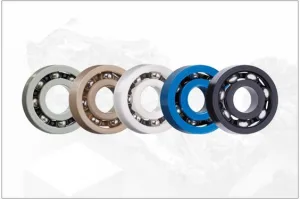
Most people know that bearings are made from a wide range of materials. In general, common bearing materials fall into three major categories: metallic materials, porous metal materials, and non-metallic materials.
Overview of Bearings
Bearings are essential tribological components and standard elements used in many types of machinery. They are often described as the joints of mechanical systems and are available in many shapes and configurations. Bearings guide and support rotating shafts while transferring loads from the shaft to the machine frame. They also control motion in systems that operate under static or dynamic loads.
For example, a sliding door can only move along its intended path because the bearing system allows linear sliding motion while restricting other types of movement.
Metallic Bearing Materials
Bearing alloys, bronze, aluminum alloys, and zinc-based alloys are all classified as metallic bearing materials.
Among them, bearing alloys—also known as white metals or Babbitt alloys—are typically composed of lead, tin, antimony, or other metallic elements. These materials perform well under heavy loads and high-speed operating conditions despite their relatively low strength. Their advantages include good wear resistance, high plasticity, good conformability, good thermal conductivity, anti-seizure properties, and strong oil affinity.
However, because these alloys are relatively expensive, they are usually cast as thin linings onto bronze, steel-backed, or cast-iron bearing shells.
Bearing Alloys
Bearing alloys are composed of tin, lead, antimony, and copper. Tin or lead serves as the matrix, while hard intermetallic phases such as antimony-tin (Sb-Sn) and copper-tin (Cu-Sn) particles provide wear resistance. The soft matrix improves the material’s plasticity.
Bearing alloys have low elastic modulus and low elastic limits. Among common bearing materials, they offer some of the best embedability and conformability, allowing them to adapt easily to shaft journals while reducing the risk of seizure.
However, their mechanical strength is relatively low, making them unsuitable for use as standalone bearing shells. Instead, they are commonly bonded onto bronze, steel, or cast-iron backings as bearing linings. Bearing alloys are suitable for heavy-load and medium-to-high-speed applications, although they are relatively costly.
Copper Alloys
Copper alloys provide relatively high strength, good anti-friction performance, and good wear resistance. Bronze generally performs better than brass and is one of the most widely used bearing materials.
Common bronze machined materials include tin bronze, lead bronze, and aluminum bronze:
- Tin bronze offers good anti-friction properties and is widely used.
- Lead bronze provides strong anti-seizure performance and is suitable for high-speed, heavy-load applications.
- Aluminum bronze offers high strength and hardness but lower anti-seizure capability, making it suitable for low-speed, heavy-load conditions.
Compared with bearing alloys, bronze materials are harder and have lower conformability and embedability.
Aluminum Alloys
Aluminum bearing alloys offer good corrosion resistance, relatively high fatigue strength, and favorable friction properties. These characteristics allow aluminum alloys to replace more expensive bearing alloys and bronze materials in some applications.
They can be manufactured as monometallic components such as bushings and bearings, or as bimetallic structures with an aluminum alloy bearing layer bonded to a steel backing.
Cast Iron
Standard gray cast iron, wear-resistant gray cast iron containing alloying elements such as nickel, chromium, or titanium, and ductile iron can all be used as bearing materials.
The flake or nodular graphite structures within these materials can form lubricating graphite films on the surface, improving anti-friction and wear resistance. Graphite can also adsorb hydrocarbons, helping improve boundary lubrication performance. As a result, gray cast iron bearings generally require lubrication during operation.
Because cast iron is brittle and has poor conformability, it is mainly used in light-load, low-speed, and non-impact applications.
Non-Metallic Bearing Materials
Among non-metallic materials, commonly used options include phenolic resins, nylon, polytetrafluoroethylene (PTFE plastic), and other engineering plastics.
Polymeric materials offer several advantages:
- Resistance to many chemicals
- Good corrosion resistance
- Self-lubricating properties
- Ability to operate under limited lubrication conditions
- Good embedability
- Favorable anti-friction and wear-resistant performance
However, several limitations must also be considered. Because polymers have thermal conductivity far lower than steel, heat dissipation becomes a critical issue. This limits the operating speed and pressure of polymer bearings. In addition, polymers have higher coefficients of thermal expansion than steel, requiring larger clearances between the bearing and shaft journal.
Their lower strength and yield limits also restrict the load capacity during assembly and operation. Furthermore, polymers may exhibit creep deformation at room temperature, making them unsuitable for applications requiring strict dimensional stability.
Carbon-Graphite Materials
Carbon-graphite materials are often used in demanding operating environments. Higher graphite content generally leads to softer materials with lower friction coefficients.
Metallic additives, PTFE, molybdenum disulfide, or liquid lubricants can be incorporated into carbon-graphite materials to improve performance. These bearings offer self-lubricating capability, and their anti-friction behavior is influenced by absorbed moisture.
Carbon-graphite materials also have good compatibility with hydrocarbon-based lubricants, helping improve boundary lubrication performance. In addition, they can operate in water-lubricated applications.
Rubber Bearings
Rubber materials are commonly used in water-lubricated applications and contaminated operating environments.
Wooden Bearings
Wood has a naturally porous structure and can be enhanced through filler treatments. Polymer-filled wood improves dimensional stability, reduces moisture absorption, and increases strength. Wooden bearings can perform well in dusty operating conditions.
Porous Metal Bearing Materials
Porous metal bearings are produced through powder compaction and sintering processes using different metal powders. These materials contain interconnected pores that typically account for 10% to 35% of the total volume.
Before use, the bearing components are usually impregnated with heated lubricating oil for several hours so the pores become saturated with oil. Bearings made from these materials are commonly known as oil-impregnated bearings.
These materials provide self-lubricating performance. During operation, shaft rotation and heat generation cause the oil inside the pores to migrate toward the friction surfaces for lubrication. When the machine stops, capillary action draws the oil back into the bearing structure. As a result, these bearings can continue operating for long periods without external lubrication, although periodic oil replenishment can further improve performance.
Because porous metal materials generally have lower toughness, they are best suited for stable operating conditions involving medium or low speeds and minimal impact loading.
Common materials include porous iron and porous bronze:
- Porous iron is often used for grinder bushings, machine tool oil pump bushings, and internal combustion engine camshaft bushings.
- Porous bronze is commonly used in record players, electric fans, textile machinery, and automotive generators.
Powder metallurgy materials belong to the category of porous metals. After oil impregnation, they become self-lubricating bearing materials suitable for moderate operating conditions.
Applications of Bearings
Bearings are widely used across different industries and mechanical systems. They help reduce friction, support loads, and maintain controlled motion.
Industrial Machinery. Bearings are essential in turbines, pumps, gearboxes, compressors, robots, and conveyor systems. They support rotating shafts and operating loads in industrial equipment.
Medical Equipment. Bearings are used in dental equipment, CT scanners, X-ray systems, and surgical instruments to achieve precise motion and low-friction operation.
Automotive Industry. The automotive industry uses bearings extensively in engines, transmissions, wheel hubs, steering systems, and differential assemblies.
Aerospace Industry. Aerospace bearings are designed to meet demanding reliability and performance standards. They are commonly used in landing gear systems, aircraft engines, control systems, and military and commercial aircraft applications.
Marine Industry. Marine systems use bearings in cranes, steering systems, propulsion systems, winches, and other equipment operating under heavy loads and harsh environmental conditions.
Conclusion
Bearings are essential components that guide motion, support rotating shafts, and reduce friction in industrial machinery. Different bearing materials offer different combinations of strength, wear resistance, lubrication performance, and corrosion resistance. Understanding these material characteristics helps engineers select the right bearing solution for specific operating conditions and performance requirements.