6 Smart Financial Moves Veterans Make After Leaving Military Service
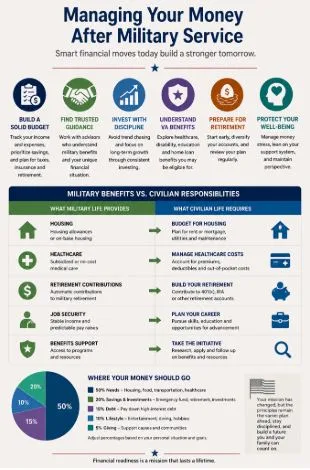
Leaving the military changes almost every part of daily life, including how money is earned, managed, and planned for the future. The structure that once guided housing, healthcare, retirement contributions, and steady paychecks suddenly looks very different. Many veterans discover that financial planning after service takes more effort than expected, especially when civilian careers, taxes, family needs, and long-term goals all start colliding at once.
Some former service members transition smoothly because they prepare early and ask the right questions. Others spend years fixing avoidable mistakes tied to debt, poor investing choices, or rushed career decisions. The good news is that strong financial habits developed during military life often translate well into civilian success. Discipline, consistency, and patience still matter. They just apply in different ways now.
Build a Civilian Budget
One of the first adjustments after military service is learning how different civilian expenses can feel. A paycheck may appear larger on paper, but costs like healthcare premiums, commuting expenses, higher taxes, and retirement planning can quickly eat away at income.
Many veterans underestimate how much predictable military benefits helped stabilize their finances. Housing allowances, subsidized healthcare, and base resources reduced pressure in ways that are easy to overlook until they disappear.
A strong civilian budget should include emergency savings, retirement contributions, insurance costs, and future tax obligations. It also helps to track spending closely during the first year after separation because expenses tend to shift several times before life settles into a new routine.
The smartest approach is usually boring. Consistency beats flashy financial decisions almost every time. People love to chase shortcuts until they realize the shortcut was actually a cliff.
Find Trusted Guidance
Financial advice has become harder to evaluate because social media is packed with self-proclaimed experts promising fast wealth and easy retirement plans. Veterans are often targeted heavily because they may have separation pay, disability compensation, pensions, or home loan eligibility that attracts aggressive marketing.
That makes trusted guidance extremely important. Firms like AAFMAA wealth management & trust, the 545 Group and others are known for working with military families and understanding the unique financial situations veterans face after service. Experience matters because military retirement systems, survivor benefits, VA disability compensation, and federal tax rules are not always straightforward.
Good financial professionals explain things clearly instead of trying to impress clients with confusing jargon. They also focus on long-term planning rather than pushing risky investments or trendy products.
Veterans should never feel pressured into immediate decisions. Any advisor who creates panic or urgency deserves extra scrutiny. Real financial planning is usually steady and methodical, not dramatic. If somebody starts sounding like a late-night infomercial host in a tight suit yelling about crypto, it may be time to back away slowly.
Avoid Trend Investing
The investment world has changed dramatically over the last decade. Apps make trading feel like a video game, influencers push unrealistic expectations, and financial content online often rewards confidence more than accuracy.
As a result, people are rejecting AI wealth management advice and returning to more personal financial planning conversations. Many investors have started realizing that algorithms cannot fully understand individual goals, family priorities, or emotional reactions during market downturns.
Veterans transitioning into civilian life may already face uncertainty around careers and identity. Adding reckless investing decisions into the mix can create unnecessary stress. Chasing viral investment trends rarely produces stable long-term results.
Simple strategies often work better. Diversified retirement accounts, steady contributions, and patience continue to outperform emotional decision-making for many investors. Building wealth usually looks repetitive and uneventful from the outside. That may not be exciting content for social media, but it is often how real financial security gets built.
It also helps to remember that not every friend with a podcast microphone is secretly Warren Buffett.
Understand VA Benefits
VA benefits can provide major financial support, but many veterans do not fully understand what they qualify for or how those benefits affect long-term planning.
Healthcare eligibility, disability compensation, education benefits, vocational rehabilitation, and housing programs can all shape financial decisions after service. Some veterans leave money on the table simply because they assume the application process is too difficult or believe they will not qualify.
It is worth taking time to review benefits carefully and speak with accredited professionals when necessary. Accurate information matters because misunderstandings around disability ratings, taxes, or healthcare eligibility can create expensive problems later.
Veterans using the GI Bill should also think strategically about education choices. Degrees and certifications should ideally connect to realistic career opportunities and earning potential. Taking on large student debt without a clear career path can become a long-term burden.
Financial stability after service is not about trying to prove toughness by doing everything alone. Smart planning usually involves asking questions before problems become expensive.
Prepare for Retirement
Retirement planning after military service often requires balancing multiple systems at once. Some veterans receive pensions while also contributing to civilian retirement accounts. Others start entirely from scratch after separation.
That makes timing important. Delaying retirement contributions for even a few years can significantly reduce long-term growth. Compound interest rewards consistency more than intensity.
Employer-sponsored retirement plans, IRAs, and other investment tools can all play a role in building long-term security. Veterans who change careers several times should also keep track of old retirement accounts to avoid losing sight of investments over time.
Insurance planning matters too. Life insurance, long-term disability coverage, and estate planning become more important once families, mortgages, or business ownership enter the picture.
Retirement may feel far away during a major life transition, but waiting until middle age to start planning often creates unnecessary pressure later. The earlier a plan begins, the more flexibility exists down the road.
Protect Mental Balance
Money stress can affect confidence, relationships, and overall mental health. The transition from military structure into civilian uncertainty sometimes creates emotional pressure that people do not expect.
That pressure can lead to impulsive decisions, overspending, risky investments, or avoidance altogether. Some veterans throw themselves into work nonstop because financial anxiety makes slowing down uncomfortable.
Maintaining financial health also means maintaining perspective. Budgeting, investing, and career planning should support a stable life, not consume it completely.
Strong support systems help. Honest conversations with spouses, trusted friends, mentors, or advisors can reduce isolation and improve decision-making during difficult periods. There is nothing weak about seeking guidance when navigating major change.
Most people are learning as they go, even the ones pretending they have everything figured out on LinkedIn.
Managing money after military service requires patience, structure, and realistic planning. Veterans who focus on long-term stability instead of quick wins often place themselves in a stronger position over time. Smart budgeting, careful investing, trusted advice, and a clear understanding of benefits can make the transition into civilian life far less stressful.