How Desktop Machines Are Helping Modern Makers Build Smarter From Home
The Rise of Practical Making at Home
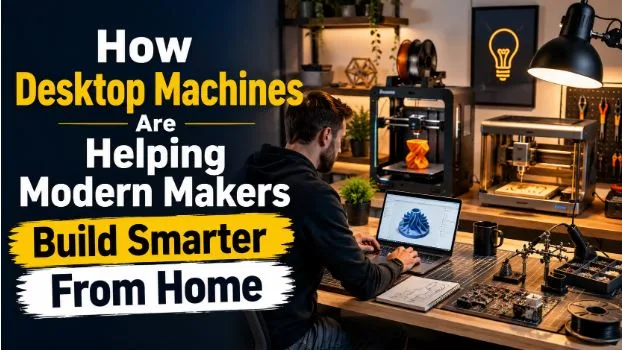
A few years ago, serious product making usually required access to a professional workshop, a manufacturing partner, or expensive industrial equipment. Today, that picture has changed. More creators, hobbyists, students, designers, and small business owners are using desktop machines to turn ideas into real objects without leaving their homes or studios.
This shift is not just about convenience. It is changing how people learn, test ideas, repair items, customize products, and build small businesses. Tools such as 3D printing machines, CNC routers, and laser engraving machines have made hands-on production more accessible than ever. Instead of waiting weeks for a prototype or paying someone else to make a custom part, a maker can now design, test, adjust, and produce work on a much faster timeline.
For anyone interested in creative production, this is a major advantage. Desktop machines give people more control over the making process. They also encourage experimentation, which is often where the best ideas begin.
Why Desktop Machines Matter More Than Ever
The demand for custom products has grown quickly. People want personalized gifts, unique home decor, custom signs, replacement parts, educational models, and handmade-looking products with professional accuracy. Desktop machines make many of these projects possible at a smaller scale.
A designer can print a prototype before presenting a product idea. A woodworker can carve detailed patterns into a board. A small shop owner can engrave logos or names onto products. A student can learn how digital designs become physical objects. This is why platforms such as Two Trees 3D are relevant for modern makers who want access to 3D printing, CNC, laser engraving, and other desktop machines for creative and practical work.
The biggest value is control. When users own the tools, they are not limited by outside schedules or production costs. They can make one piece, test it, improve it, and make another version. This process is especially useful for beginners because every project becomes a learning opportunity.
3D Printing Gives Ideas a Physical Shape
3D printing is often the first digital fabrication tool many people explore. It is popular because it can create complex shapes layer by layer from a digital model. This makes it useful for prototypes, models, small parts, decorative objects, educational tools, and product samples.
For beginners, 3D printing teaches important lessons about design and structure. A design may look perfect on a screen, but it may need changes once printed. The object may require stronger walls, better support, or a different orientation. Through this process, users learn how digital choices affect physical results.
3D printing is also helpful for problem-solving. If a small plastic part breaks, a maker may be able to design and print a replacement. If a product idea needs testing, a basic version can be printed before investing in larger production. This lowers risk and encourages more creative thinking.
Small businesses also benefit from 3D printing because it supports fast testing. Instead of ordering expensive samples from outside suppliers, owners can create early versions themselves. This can save time, reduce waste, and help refine a product before it reaches customers.
CNC Machines Bring Precision to Woodworking and More
While 3D printing builds objects by adding material, CNC machines work by removing material. A CNC router uses a cutting tool to carve, shape, drill, or cut material according to a digital design. This makes CNC especially useful for woodworking, sign making, relief carving, panels, decorative pieces, and small production tasks.
One of the strongest advantages of CNC is repeatability. A handmade project may have small differences each time it is produced. That can be beautiful in some cases, but it can become a problem when several identical parts are needed. CNC machines can follow the same design again and again with reliable accuracy.
For woodworkers, this opens many possibilities. A maker can create detailed patterns, carve lettering, produce custom signs, or cut parts for furniture and decor. CNC also helps users work with designs that would be difficult or time-consuming by hand.
Another benefit is efficiency. Once the design and tool path are prepared, the machine can handle the cutting process while the user focuses on setup, finishing, and quality control. This does not replace craftsmanship. Instead, it gives makers another tool for improving accuracy and expanding what they can produce.
Laser Engraving Adds Detail and Personalization
Laser engraving is another powerful option for desktop production. It is often used to mark, decorate, or cut materials with a focused beam. Makers use laser engraving for personalized gifts, product branding, signs, labels, packaging, ornaments, leather goods, acrylic designs, and wooden items.
The appeal of laser engraving is detail. A laser can create clean text, logos, patterns, and artwork on many compatible surfaces. For small business owners, this can increase the value of simple products. A plain wooden box, notebook, keychain, or decorative item can become more attractive when personalized.
Laser engraving is also popular because many projects can be completed relatively quickly. A user can prepare a design, adjust the settings, place the material, and produce a finished piece with professional-looking detail. This makes it useful for both hobby projects and customer orders.
However, users should always pay attention to safety. Ventilation, fire awareness, and proper material selection are very important. Not every material is suitable for laser work, and beginners should learn the basics before starting serious projects.
Choosing the Right Machine for the Right Project
Not every desktop machine is designed for the same purpose. Choosing the right tool depends on the type of work a person wants to create. A 3D printer is useful for building shapes from digital models. A CNC router is better for carving and cutting solid materials. A laser engraver is ideal for surface detail, decorative marking, and cutting thinner materials.
Before buying or using a machine, makers should ask practical questions:
- What type of projects do I want to create most often?
- Which materials will I use regularly?
- Do I need cutting, carving, engraving, or printing?
- How much space do I have?
- Am I making personal projects, customer products, or prototypes?
- How much time can I spend learning software and setup?
These questions help avoid poor choices. For example, someone mainly interested in personalized wooden gifts may benefit from laser engraving. A person focused on carved signs or wood panels may need a CNC router. Someone developing product samples may prefer 3D printing.
The best machine is not always the most advanced one. It is the one that matches the user’s goals, skill level, materials, and workspace.
How Desktop Tools Support Small Businesses
Desktop machines are especially valuable for small businesses because they allow owners to create customized products without depending completely on outside suppliers. This can help reduce startup costs and improve flexibility.
A small business can use these machines to create product samples, personalized orders, packaging details, display items, signs, and limited product runs. This is helpful for sellers who want to test demand before producing larger quantities. Instead of ordering hundreds of items at once, they can make a small batch, collect feedback, and improve the product.
Customization is another strong advantage. Customers often appreciate products that feel personal. Names, dates, logos, patterns, and custom shapes can make ordinary items feel special. With laser engraving, CNC, and 3D printing, small shops can offer this kind of value more easily.
Desktop production also supports faster response times. If a customer requests a custom design, the seller may be able to prepare and produce it quickly. This kind of flexibility can help small businesses stand out in competitive markets.
Learning Through Hands-On Experimentation
One reason desktop machines are so effective is that they teach through action. Users do not only read about design, materials, and production. They experience the process directly.
A beginner may quickly learn that wood grain affects carving results. They may discover that a 3D printed part needs better support. They may see how laser power changes the finish on a material. These lessons are practical and memorable because they come from real projects.
Mistakes are part of the learning process. A failed print, rough cut, or uneven engraving can teach more than a perfect tutorial. Over time, users become better at preparing files, choosing materials, adjusting settings, and finishing their work.
This hands-on learning is valuable for students, hobbyists, and professionals. It builds patience, technical understanding, and creative confidence. It also helps users think more carefully about how things are designed and made.
A Smarter Way to Build Creative Projects
Desktop machines are no longer only for advanced engineers or large workshops. They have become practical tools for people who want to create, learn, customize, and build with more independence. Whether someone is interested in 3D printing, CNC, laser engraving, or a full desktop machine setup, the main benefit is the ability to move from idea to finished object with greater control.
The future of making is not limited to factories. It is also happening in home studios, classrooms, garages, small shops, and creative workspaces. For modern makers, these tools offer a smarter way to test ideas, improve skills, and produce meaningful work.
As more people discover what desktop fabrication can do, the most successful users will be those who combine creativity with patience. The machine provides the capability, but the maker brings the vision, judgment, and care that turn a simple design into something worth building.