HBADA E3 Pro vs HBADA X7 Review: Which Chair Offers Better Lumbar Support?
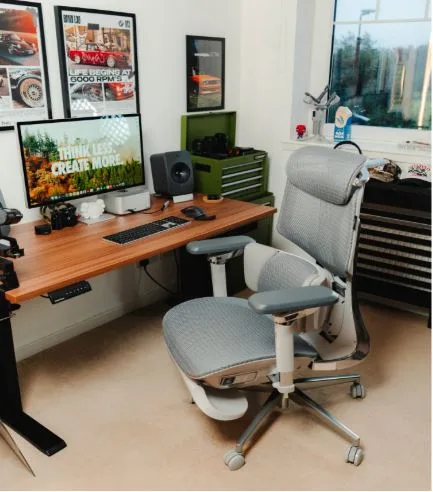
Introduction: Choosing the Right HBADA Ergonomic Chair
Selecting a suitable ergonomic chair is no longer simply choosing something soft and high-backed. If you work from home, are coding away at clack for hours in front of a screen, editing video or gaming through the night, or driving from meeting-to-meeting—your chair is still practically your exercise regimen.
That is where the HBADA E3 Pro 2026 Edition Ergonomic Chair, and the HBADA X7 Smart Ergonomic Chair come into play. There, too (they’re both meant for long hours at a desk, while avoiding Herman Miller or Steelcase-level prices).
The biggest question, however: Which HBADA chair is the better at supporting your lumbar? The E3 Pro prioritizes accurate mechanical support, while the X7 brings in smart AI for motion tracking and massage and heating. Let us compare them in layman terms.
Overview: Two Chairs, Two Different Strengths
You are reading HBADA E3 PRO 2026 The HBADA E3 Pro 2026 Edition seems to me like a chair for the person who wants control. You are mechanical, adjustable, reactive and designed by HBADA around its 3-zone elastic lumbar support system. HBADA explains how it utilizes 3-zone adaptive lumbar support, a 4D dual-axis headrest, a set of 720-degree armrests and CloudMesh technology as well as the chair recliner system that goes all the way up to around the 140 degree mark.
You may consider it the HBADA X7 Smart Ergonomic Chair that feels like a little more of a “tech chair.” This includes AI intelligent lumbar tracking, massage, heating, a 4D bi-axial headrest and armrests that can be adjusted along 720 degrees. The X7 is a smart chair, as described on HBADA’s product page, that adapts lumbar support based on posture and movement.
In other words, where the E3 Pro is precisely precise the X7 is intuitively intelligent.
Lumbar Support: The Key Difference
What this comparison ultimately boils down to is how well each chair supports your lumbar area.
The HBADA E3 Pro 2026 Edition features a three-zone elastic lumbar support system covering the L1-L5 lumbar region. It aims to bolster the whole lower back area rather than just one small point of pressure. This is important for people, who often feel a gap between their spine and the chair. That “empty space” is typically when slouching starts.
HBADA’s official page touts features like dynamic lumbar tracking, vertical lift, gliding lumbar depth and adaptive depth support. System, in a mechanical sense, is formed by a lower back that the linkage wraps and follows it, assisting to “pick” it.
The HBADA X7 goes another way. Instead of making you fine-tune everything manually, it uses sensors, a smart chip, and motors to automatically adjust the lumbar support. According to HBADA, the X7 automatically detects your body weight and is equipped with multiple intensity levels that can be adjusted based on the curvature of a user’s lumbar spine.
What this means in practice is that the E3 Pro allows for more manual control, while the X7 strives to do your thinking for you.
Long Work Sessions: Which Chair Supports You Better?
This makes the E3 Pro a clear winner in one important way for those long work sessions: it is easy, (very) constant, and mechanical. Keep it in place on your body and you should feel secure all day long. For the set-it-and-forget-it type of person, like I am in regards to chair use, the E3 Pro seems reasonable enough.
For example, consider a software engineer working from 9 a.m. to 6 p.m. With adjustable seat depth, backrest height, lumbar lift, armrest position and headrest as well—it can be easily dialed in for a perfect desk posture. CloudMesh technology for breathability and pressure distribution over the hips and back is also listed on HBADA.
The X7 is for those who change positions frequently. However, if you hunch forward in meetings, lean back reading, straight while gaming and then use the massage function, the X7’s smart lumbar system could seem too busy. It isn’t merely a chair on which you sit. It reacts as you move.
Headrest and Neck Support
They both provide great head and neck support but once again, their idea of comfort is quite different.
The factory headrest for the E3 Pro 2026 is a top and bottom rotation dual axes headrest. On the page of HBADA, it writes on dual 70-degree rotation axes, vertical lift and forward-backward adjustment. This is handy if your day involves typing, lowering the head for a laptop, standing up to see a screen or lying back in between tasks.
The 4D dual-axis headrest is also included in the X7. You can have your seat rotated as much as 70 degrees, height-adjusted and moved forwards and back according to HBADA’s X7 page.
And in real life, both of the chairs should be much more comfortable than a basic workhorse office chair for longer periods without neck strain. The only difference is that the E3 Pro works more like a manual ergonomic kind of chair, and the X7 lands in a lux smart chair space.
Armrest Support for Work, Gaming, and Creative Tasks
And this is an area where both chairs shine.
The 720-degree armrest mechanism is good for current desk arrangements. A traditional office chair only supports one position: typing straight ahead. However, actual users do way beyond. Video Editor: someone might lay on the keyboard with one hand and another in a mouse. A gamer may use a controller. For instance, a designer might push into a drawing tablet. A remote worker on a call in recline position
According to HBADA the E3 Pro combines dual 360-degree rotation and flexible arm positioning yet retains 720-degree full-range movement that was also supported by X7.
Which is why either of the chairs would serve developers, streamers, designers, finance pros and anyone else building a serious home office setup well.
Comfort and Breathability
That is: mesh is more important than people think, A chair may have fantastic lumbar support, but if the seat becomes hot after 2 hours you won’t want to use it.
CloudMesh Technology — The E3 Pro 2026 uses CloudMesh Technology, which according to HBADA is a world-first high-polymer fabric with zoned weaving to provide breathability, durability and pressure distribution. This makes it appealing to those that work for hours in heated rooms or seek a cleaner weightier experience than padded leather type chairs.
A cloud ventilated seat cushion and, subject to spec, active cooling features as well. HBADA pairs heating and massage functions with the X7, which makes for a much more luxury wellness-chair vibe.
If you’re after basic breathable comfort, the E3 Pro will suffice. The X7 is the winner by default here, if you want your comfort to come a bit more feature-rich.
Recline and Relaxation
Both chairs have a wide recline range, but they appeal to slightly different types of users.
E3 Pro 2026: Designed for Work and Rest Benefits The E3 Pro 2026 can recline multiple work with up to a maximum of 140 degrees. On its website, HBADA provides an angle of 105 degrees for deep focus (for study), 115 degrees for relaxed workflow (say during work breaks), 130 degrees for natural ease (light reading), and 140 degrees for recharge.
Which is perfect for someone who wants to shuffle around work and power breaks without getting up from the chair.
The X7 is more focused on relaxation due to the inclusion of recline, massage, heat and smart lumbar support. An additional good crib cover review of the MacSources also pointed out X7’s ergonomic rate, breathable mesh and smart features, but cautioned that some functions (including massage intensity and magnetic charging) may take a few tweaks to fit individual needs.
That makes the E3 Pro feel more geared towards productivity. This is an X7, but it feels more like a chair to work and recover in.
Price vs. Value: Which Chair Makes More Sense?
HBADA sells both chairs as a mid-to-premium ergonomic chair, but they are not the same type of buy.
However, the E3 Pro 2026 Edition offers better value-for-money in our opinion. It centers on the features people use day to day: a lumbar support, adjustable headrest, redeemable arms, breathable mesh fabric for your seat and back, seat depth of tune,we test the chairs rod length sit face high difference reclined from chair. It’s a great pick for shoppers seeking hefty value in an ergonomic chair, mesh office chair or lumbar support chair without delving into ultra-premium price territory.
If you’d like all that and smart features, the X7 is the better fit. With AI lumbar tracking, heating, ventilation, and battery-powered massaging though it feels far more gadgety. Instead, we are not simply looking to fill one with a standard desk chair. It is attempting to provide a complete upgrade to the sitting experience.
Who Should Buy the HBADA E3 Pro 2026?
Get the HBADA E3 Pro 2026 Edition Ergonomic Chair, if you:
Sit at a desk for long hours and require some serious lower-back support.
You still train on stuff until October 2023
Looking for Help lumbar support without the excess bells and whistles.
Value-focused and need professional ergonomics at the right price.
Best chair for coding, writing, designing, gaming or work from home.
With that in mind, the E3 Pro is probably the more sensible everyday recommendation for most people. It still gives you the essential support while avoiding cluttering your experience with features that you won’t necessarily use every day.
Who Should Buy the HBADA X7?
Opt for if you find the HBADA X7 Smart Ergonomic Chair to be best suited for your needs:
Want AI-powered lumbar tracking.
Like massage and heating features.
Get up from where you are seated numerous times in a day.
Want a more premium, tech-forward seat.
Let the chair adjust for you (you also have to adjust all yourself).
The X7 is particularly appealing to tech fans, executives, creators, streamers and basically anyone wanting an office chair that takes the ergonomics of a standard adjustable office chair and makes it feel more like something out of science fiction.
Final Verdict: Which Chair Is Better for Lumbar Support?
For sheer lumbar support alone, the HBADA E3 Pro 2026 Edition gets top honors for most people. It is an excellent long haul sitting seat due to its three-zone elastic lumbar system, and mechanical tracking, lift and depth adjustmentand firm support.
When it comes to smart lumbar support the HBADA X7 takes the prize. You still get very advanced, very automated, pretty luxurious AI lumbar tracking. Designed for users who want you to have the chair adjust with them as they sit.
And here is the short answer:
Purchase the HBADA E3 Pro if you’re looking for your best bang-for-your dollar manual lumbar precision. The HBADA X7 is the ideal ergonomic chair if you want brainpower and features galore.
Each chair aligns beautifully with HBADA’s promise — professional-style ergonomics for an appetizing price point. And yet for the vast majority of remote workers, developers, gamers and homeoffice users, the E3 Pro 2026 hits a better balance between support, comfort and value.