Nwivoen Mbzien: The Historic 17th-Century African Art Collection Valued at Over $7 Million
A Remarkable Cultural Treasure from Cameroon
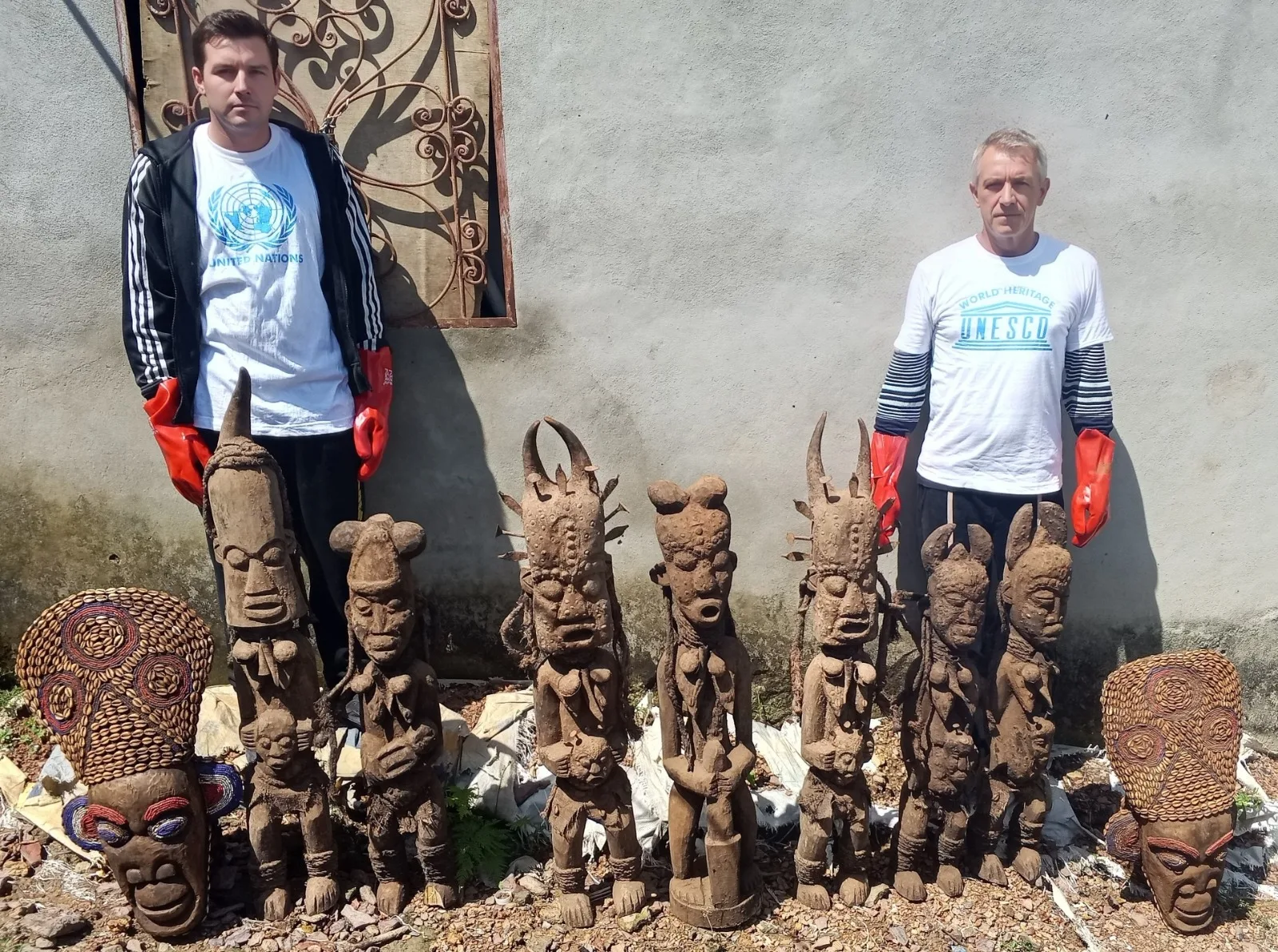
The Nwivoen Mbzien collection is one of the most distinguished and historically significant cultural art collections originating from the North West Region of Cameroon. Consisting of nine ancient statues dating back to the 17th century, this extraordinary collection represents centuries of heritage, royal tradition, and ancestral history linked to the ancient Mangeh Kingdom.
Preserved in Baligan’sin Village, the collection has become a symbol of cultural pride and historical continuity, attracting attention from historians, cultural heritage experts, collectors, and visitors from around the world.
Origins of Nwivoen Mbzien
The collection was handcrafted around 1680 by members of the ancient Mangeh Kingdom before the separation of the kingdom into several independent communities.
The statues were created to honor:
- King Mangeh, founder of the ancient kingdom
- Royal ancestors and queen mothers
- Distinguished warriors and heroes
- The cultural legacy of the Mangeh people
Each piece serves as a representation of leadership, courage, sacrifice, and the enduring heritage of one of Cameroon’s historic royal lineages.
The Legacy of King Mangeh
The story of Nwivoen Mbzien begins with King Mangeh, the ancestral ruler whose descendants established several important communities across the region.
Descendants of the Mangeh Kingdom
The five villages associated with the Mangeh lineage include:
- Baligan si’in
- Bafanji
- Baligashu
- Balikumbat
- Bamunkumbit
Following the death of King Mangeh, disagreements over succession led to political divisions among his children. As a result, several royal descendants migrated and established independent kingdoms while maintaining their ancestral connection to the original Mangeh Kingdom.
A Symbol of Shared Heritage
Although the sibling villages became politically independent, all continued to regard the Nwivoen Mbzien collection as a powerful symbol of their common ancestry.
The statues came to represent:
Cultural Values
- Unity and kinship
- Royal legitimacy
- Historical continuity
- Spiritual identity
- Community pride
Because of this significance, possession of the collection became a matter of prestige and cultural importance.
Historical Ownership and Tribal Conflicts
Over the centuries, ownership of Nwivoen Mbzien changed hands several times among the related villages.
Traditional records indicate that conflicts, negotiations, and alliances all played a role in determining control of the collection. These transitions became part of the collection’s unique history and contributed to its legendary status within the region.
Despite periods of conflict, the collection survived and remained remarkably preserved throughout generations.
Traditional Ritual Significance
In earlier centuries, Nwivoen Mbzien occupied an important place within local ceremonial and traditional practices.
The collection was associated with:
- Ancestral commemorations
- Community celebrations
- Royal ceremonies
- Victory rituals
- Traditional spiritual observances
The statues were regarded as sacred cultural objects that connected communities with their ancestors and historical traditions.
Authenticity and Historical Documentation
One of the most notable aspects of Nwivoen Mbzien is its documented authenticity.
German Colonial Certification
During the German colonial administration in Cameroon, cultural experts examined the collection and issued an official Certificate of Cultural Authenticity in 1912.
This certification remains an important historical document supporting the collection’s age, provenance, and cultural significance.
UNESCO Heritage Recognition
The international profile of the collection increased significantly in 2012 when it was registered under the UNESCO International Cultural Heritage Database.
Registration Information
Registration Number: UNESCO003426UG756-CM
The collection was recognized for:
- Historical significance
- Cultural heritage value
- Artistic craftsmanship
- Preservation quality
- Educational importance
This recognition helped introduce the collection to a broader international audience.
Timeline of Ownership Transitions
1680 – Creation
The collection is handcrafted by the Baligan si’in people.
Early 18th Century
Control passes to Baligashu Village following tribal conflict.
Mid-18th Century
The collection returns to Baligan si’in through mediation.
Late 18th Century
Bafanji Village obtains temporary possession.
Early 19th Century
Baligashu Village regains control for a short period.
19th Century
Bamunkumbit Village becomes custodian of the collection for several decades.
Late 19th Century
The collection returns permanently to Baligan’sin Village through negotiations and external mediation.
Global Recognition and Cultural Tourism
Today, Nwivoen Mbzien has become a point of interest for:
- Historians
- Cultural researchers
- African art scholars
- Heritage organizations
- International visitors
Its remarkable history and preservation continue to generate interest among those seeking to understand Africa’s rich cultural past.
Estimated Value of the Collection
The rarity and historical importance of Nwivoen Mbzien have led to substantial appraisals by cultural experts.
Estimated Total Value
More than USD $7 Million
Valuation Breakdown
Baligansin Reliquary Heads
- Two pieces
- Estimated value: USD $1.7 million each
Royal Sculptures
- Seven pieces
- Estimated value: USD $500,000 each
The collection is regarded as a rare example of museum-quality African cultural heritage and traditional craftsmanship.
Why Nwivoen Mbzien Matters Today
Beyond its monetary value, the collection serves as an important historical record of the people, traditions, and royal institutions that shaped the region for centuries.
It represents:
Enduring Legacy
- African cultural excellence
- Historical preservation
- Traditional artistry
- Community identity
- Intergenerational heritage
As a result, Nwivoen Mbzien continues to stand as one of the most respected cultural collections associated with the ancient kingdoms of Cameroon.
Conclusion
The Nwivoen Mbzien collection is more than a group of ancient statues—it is a living testament to the history, traditions, and cultural achievements of the Mangeh people. With a documented history spanning nearly 400 years, international recognition, and an estimated value exceeding $7 million, it remains one of the most remarkable cultural treasures preserved in Africa today.
Disclaimer: This article is intended for informational and educational purposes only. The information presented about the Nwivoen Mbzien African art collection is based on available sources and should not be considered professional financial, investment, or appraisal advice. Readers are encouraged to conduct independent research before making any decisions based on the content.