Why Model Headshots Still Matter When Portfolios Move Online
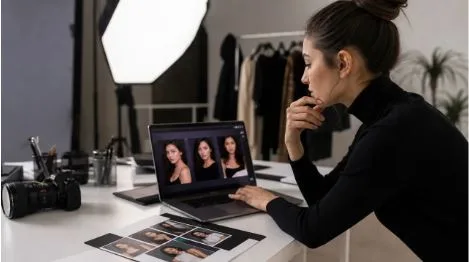
The modeling industry has moved a large part of its first impression online. Agencies review digital submissions. Casting teams browse profiles before they ask for a reel, a walk, or a meeting. Brands compare talent through thumbnail grids, not printed books. Even in a field built around movement, styling, and presence, the first filter is often a still image.
That shift has changed the job of model headshots. A headshot is no longer just one page in a physical portfolio. It is the image that sits beside a name, appears in a casting database, anchors a comp card, and helps a new model look organized before anyone has met them. A strong headshot cannot replace height, measurements, runway skill, camera confidence, or professional behavior. It can, however, make the next step more likely.
For new and working models, that matters. The online submission process is fast, crowded, and a little unforgiving. A reviewer may spend seconds deciding whether to open a full profile. If the headshot feels dated, heavily filtered, badly lit, or out of sync with the rest of the portfolio, the model starts from behind.
The first review often happens in a thumbnail
The old model of portfolio review gave people room to handle a book, ask questions, and see a sequence of images. Online review is flatter. Model headshots must work at full size and as small previews. They have to read clearly on a phone, a desktop grid, and a compressed casting platform.
That does not mean the image should be loud. In fact, the opposite is usually safer. A clean modeling headshot should show bone structure, eyes, face shape, hair, posture, and expression without making the styling the main subject. A reviewer is not trying to judge a makeup artist’s creativity or a photographer’s lighting experiment. They are trying to understand whether the model’s look fits a brief.
This is why simple details carry more weight than they appear to. Eye line, jaw position, skin texture, hair control, background choice, and crop can all influence how quickly someone understands a face. The best image usually looks easy, but it is rarely accidental.
Model headshots are not fashion portraits
A fashion portrait can be moody, conceptual, and heavily styled. A model headshot has a more practical job. It should introduce the person clearly. It should make it easy for an agency, casting assistant, creative director, or client to imagine the model in different contexts.
That difference is easy to miss. New models often choose the most dramatic photo in a set because it feels more impressive. The image may have beautiful lighting or a strong pose, but if it hides facial structure or depends on a narrow styling choice, it may not work as the lead headshot.
A useful test is simple: if the styling, background, or pose were removed, would the image still communicate the model’s face and presence? If yes, it may belong near the front of the portfolio. If not, it may still be useful, but probably as a supporting image rather than the lead model headshot.
For models who need a fast portfolio refresh between shoots, this model headshot tool is built around practical use cases such as agency submissions, comp cards, and casting profiles. It is not a replacement for an editorial shoot or a full test with a photographer, but it can help a model create clean options when the current headshot is outdated or uneven.
Digital portfolios raised the standard for consistency
One reason headshots feel more important now is that everything sits together. A casting profile may include a headshot, full body image, measurements, location, skills, social links, and previous credits in one view. A personal website may place a headshot beside a booking form. An agency submission may compare dozens of new faces on the same screen.
In that setting, inconsistency becomes obvious. A strong image next to an old, low-resolution headshot creates doubt. A heavily retouched photo next to plain digitals creates a different kind of doubt. The viewer starts asking which version is current.
Consistency does not require every image to look identical. It does require the lead images to feel like they belong to the same professional identity. A model can have range and still keep the basic materials clean: a current headshot, a natural-light or studio look, a full-length image, and a few stronger portfolio pieces that show movement and expression.
The headshot is often the anchor. It tells the viewer where to start.
New models face a real cost problem
The practical difficulty is cost. Traditional test shoots can be valuable, especially when a model needs coaching, direction, and a real set of portfolio images. They also require time, money, scheduling, location planning, styling, and editing. A model who is just starting out may not know which photographer to hire or which images an agency will actually want.
That gap is where many people make rushed decisions. They use a cropped selfie, an over-edited social photo, or an old school picture because they need something to submit. Those images may be honest, but they often do not carry the same professional signal.
The better approach is usually staged. A new model can start with clean, current headshots and simple digitals, then build a larger portfolio after feedback. That reduces the chance of spending heavily on images that do not match the agency or market they are targeting.
Experienced models face a related issue. Hair changes, weight changes, facial hair, aging, travel, and brand positioning can all make a headshot stale faster than expected. A model who books commercial work may need a different lead image from one pursuing editorial fashion. A model moving into fitness, beauty, lifestyle, or acting may need a headshot that reflects the new direction without confusing existing clients.
AI can fill the gap between shoots
AI headshot tools are becoming more common because they answer a practical need: people need polished images faster than a traditional shoot can usually deliver. In modeling, the use case is narrower and should be handled carefully. A model should never misrepresent their current appearance, and an AI-generated image should not be used to suggest body proportions, runway skill, or editorial experience that the person does not have.
Used responsibly, though, AI can help with the headshot layer of the portfolio. The important word is "options." A model should not pick an image simply because it looks the most expensive. The chosen headshot should still look like the person who will walk into the room. It should be current, believable, and easy to compare with digitals or live casting materials.
According to ProfessionalHeadshot.io, users upload a small set of selfies and receive polished headshot options across different outfits and backgrounds, with packages starting from $29. For a model, that can be useful when testing clean looks, updating a profile image, or preparing model headshots for a submission before booking a broader shoot.
How to choose the final headshot
The strongest model headshot is usually the one that removes friction. It should make a reviewer think less about the photo and more about the person. That sounds simple, but it gives models a useful checklist.
First, the eyes should be clear. Direct eye contact is not mandatory for every portfolio image, but the main headshot often benefits from it because it creates a quick connection. Second, the crop should be intentional. A frame that cuts awkwardly through hair, shoulders, or the top of the head can make the image feel accidental.
Third, styling should support the face. Plain tops, controlled hair, and minimal accessories often work better than busy clothing. A model can show fashion range elsewhere. The headshot should usually let the viewer assess the face without extra work.
Fourth, retouching should be restrained. Skin can be polished, but texture should not disappear. Agencies and casting teams know what over-retouching looks like. If the image feels too synthetic, it may create more suspicion than interest.
Fifth, the headshot should match the intended market. Commercial, fashion, beauty, fitness, lifestyle, and acting-adjacent work can all call for slightly different expressions and styling. A model does not need a separate identity for every category, but the lead image should make sense for the opportunities they want most.
The headshot also affects trust
Professional presentation is not only about beauty. It is about trust. A casting team wants to know whether the materials are current. An agency wants to know whether a new face can follow instructions and present themselves clearly. A brand wants fewer surprises between the submission and the set.
A clean headshot helps answer those questions quietly. It suggests that the model understands the basic workflow. It also makes communication easier. When a booker sends a shortlist, the image beside the name carries part of the argument.
That is especially true for remote casting. Many decisions now happen before anyone meets in person. A model may be shortlisted from a database, contacted through email, asked for a self-tape, or reviewed through social channels. In each case, the headshot helps connect the digital profile to a real person.
When to update a model headshot
There is no fixed schedule, but some triggers are obvious. A new haircut, major color change, beard change, significant shift in styling, or move into a new market should prompt an update. So should any situation where the current headshot no longer matches recent digitals.
Models should also update when the image quality falls behind the rest of their materials. A portfolio may improve over time while the headshot stays frozen. At some point, the old image stops helping and starts making the whole presentation feel less current.
Another reason to update is strategic. A model trying to move from casual lifestyle work into beauty may need a cleaner, face-forward image. Someone moving toward commercial work may need a warmer, more approachable expression. A model with a strong editorial book may still need a simple headshot that works for clients who want clarity over drama.
The update does not need to be complicated. The goal is to keep the first impression accurate, current, and easy to understand.
The simple image still has power
The modeling business now runs through digital systems, but the basic question has not changed: can this person work for the brief? A headshot does not answer that question alone. It opens the file, supports the submission, and gives the reviewer a clear place to begin.
That is why model headshots still matter. They sit at the intersection of identity, casting, and trust. In a crowded online portfolio environment, the simple, current, well-chosen headshot is not old-fashioned. It is one of the few pieces of the process that still does its job in a second.