The Growing Role of Automation in Small and Mid-Sized Workshops
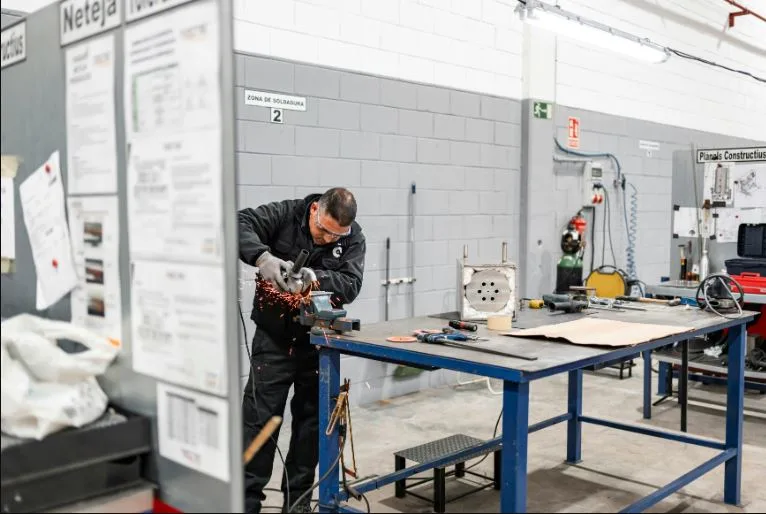
Automation is no longer reserved for large factories with extensive budgets. Small and mid-sized workshops are increasingly adopting automated solutions to improve efficiency, reduce operational costs, and remain competitive in demanding markets.
Many shop managers begin their modernization efforts by evaluating and updating the tools and equipment already in use. A fabrication shop, for example, does a lot of welding activities daily. So, Millermatic 211 is a common product found at such workshops or factories. However, it doesn’t yield appropriate results when welding thin material or when starting with a longer stickout.
Upgrading to the Millermatic 211 PRO addresses all these challenges. For instance, it provides a 30% duty cycle at 215A/240V and a 15′ MIG gun for a longer welding arc. Once these upgrades are done, automation can be implemented to streamline the process and free workers to focus on other strategic tasks.
The shift toward automation is changing how workshops operate. It is creating opportunities for growth while helping businesses address long-standing challenges related to labor shortages, productivity, and profitability.
Why Small and Mid-Sized Workshops Are Paying Attention
For years, the cost was the biggest barrier. Industrial robots required heavy infrastructure and specialized programmers. Smaller shops simply could not justify the investment.
That equation has shifted significantly. Collaborative robots, often called cobots, cost a fraction of traditional industrial arms. They can be programmed through simple interfaces and work alongside humans without requiring full safety cages.
A small metal fabrication shop, for example, can now assign a cobot to handle repetitive grinding tasks. The human operator then focuses on quality checks and setup work. For tasks like MIG welding on light-gauge steel, Millermatic 211 PRO offers workshops a bridge between manual control and repeatable output.
According to Welding Supplies from IOC, the Millermatic 211 PRO features auto-set and smooth-start technology. There’s also a USB port for software upgrades. Through this port, it can be integrated with an automation solution to handle repetitive tasks.
Beyond welding, automation has moved into material handling, quality inspection, assembly, and packaging. The common thread is repetition; any task done the same way dozens of times per shift is a candidate.
Flexible Models Are Lowering the Entry Barrier
One reason more small shops are entering automation is the availability of flexible acquisition models. The traditional path, purchase equipment, hire an integrator, build out infrastructure, remains expensive. Robotics-as-a-Service changes that.
Under RaaS models, manufacturers pay a subscription or leasing fee rather than purchasing robots outright. This spreads costs over time and allows companies to scale automation gradually.
Many providers include ongoing maintenance and software updates as part of the arrangement, reducing the burden on internal teams. For a shop running tight margins, this approach removes the capital risk that previously made automation feel out of reach.
The practical implication is that a workshop can pilot a single cobot on one production line. If it works, they scale. If it needs adjustment, they make the adjustment without having committed a large capital sum.
Addressing Labor Challenges
One of the primary factors driving automation adoption is the ongoing shortage of skilled labor. Many industries continue to struggle to recruit experienced welders, machinists, fabricators, and technicians. At the same time, demand for customized products and rapid turnaround times continues to increase.
As noted in a McKinsey & Company article, manufacturing jobs have increased steadily since 2010 and more so after the COVID-19 pandemic. However, the number of manufacturing employees in the US has remained stable. This has led to a significant labor crisis in the manufacturing industry.
Automation helps bridge this gap by handling repetitive and time-consuming activities. Workers can then focus on higher-value responsibilities that require technical knowledge, creativity, and problem-solving abilities.
This approach allows businesses to maximize the capabilities of their existing workforce rather than relying solely on new hiring efforts. Employees often spend less time performing routine tasks and more time managing quality control, equipment optimization, and customer requirements.
Workshops that successfully combine skilled labor with automated systems often achieve greater operational efficiency. They can do this while maintaining the craftsmanship that distinguishes their services.
The Technology Is Getting Smarter
Automation is not static; the systems available today are more capable and easier to deploy than those from five years ago. Artificial intelligence is increasingly embedded in manufacturing tools, allowing machines to adapt in real time rather than simply following fixed programs.
Deepu Talla, Vice President of Robotics and Edge AI at NVIDIA, has put this in perspective at Automate 2025. He notes that physical AI and simulation technologies are reaching a tipping point, describing this as “the ChatGPT moment of robotics.”
“There is incredible opportunity for reshoring to happen in North America and the only way it can happen is through industrial automation,” he said.
For small workshops, this matters because smarter systems require less custom programming. A vision-guided robot can recognize part variations without being explicitly told what to look for. An AI-enabled inspection system can flag defects across thousands of cycles without fatigue.
Frequently Asked Questions
Can automation help workshops attract younger workers?
Yes, automation can make trade and manufacturing careers more appealing to younger professionals who are comfortable working with technology. Modern equipment, digital monitoring systems, and software-driven workflows create opportunities for employees to develop technical skills that align with current industry trends. This combination of hands-on work and technology can help workshops attract and retain new talent.
What role does cybersecurity play in automated workshops?
As workshops adopt connected equipment and cloud-based systems, cybersecurity becomes increasingly important. Unauthorized access, data breaches, and system disruptions can impact production and business operations. Implementing strong passwords, software updates, network monitoring, and employee awareness training can help protect valuable operational data.
How can automation support sustainability goals in workshops?
Automation can contribute to sustainability efforts through improved resource management and reduced waste. Advanced systems often use materials more efficiently, optimize energy consumption, and minimize production errors that lead to discarded products. These improvements can help workshops lower operating costs while reducing their environmental impact and supporting broader sustainability objectives.
Key Automation and Workshop Modernization Facts
| Manufacturing job growth | Steady increase since 2010 |
| Manufacturing employment trend | Workforce remains relatively stable |
| Robotics acquisition model | Subscription or leasing available (RaaS) |
| Automation deployment approach | Start with a single production line |
| Primary automation targets | Repetitive, high-frequency tasks |
Automation will not remain optional for long. As more small and mid-sized workshops adopt it, those that do not will face a growing competitive gap. Customers will expect lead times and quality levels that are difficult to achieve without some level of automation.
The encouraging reality is that the tools available today are more accessible, more affordable, and more practical than at any previous point. A workshop does not need to be large or well-capitalized to take a meaningful first step. The barriers are lower, and the support systems are better. What matters now is the decision to start.