Beyond the Drugstore Strip: Why San Antonio’s Best Whitening Relies on Custom Dentistry
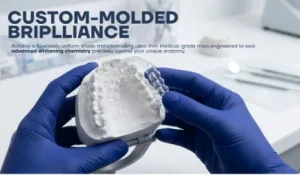
Achieving a bright, confident smile is a goal shared by many professionals, students, and active families throughout our growing community. However, navigating the crowded personal care aisles of local supermarkets reveals an overwhelming selection of retail whitening products, including adhesive clear strips, generic paint-on gels, highly abrasive charcoal toothpastes, and viral blue-light kits. For many consumers, what begins as an affordable and supposedly convenient solution for lifting stains from sweet tea, morning coffee, or natural aging quickly turns into a disappointing cycle of uneven coloration and sharp, painful nerve reactions. These mass-produced, store-bought kits are manufactured using a rigid, one-size-fits-all approach that completely ignores the highly distinct anatomical variations of your individual smile. Overcoming the frustration of patchy results and sudden tooth pain requires a clinically sound method that respects your unique oral landscape. Investing in high-quality teeth whitening in San Antonio TX provides local patients with a positive and highly reliable pathway toward achieving a brilliantly uniform smile under the direct supervision of an experienced dental team. By utilizing professional-grade whitening chemistry and precise custom-molded delivery trays, you can safely eliminate deep structural stains while ensuring your sensitive oral tissues remain perfectly protected throughout the process.
The true value of a custom-engineered clinical whitening treatment extends far past the surface appearance of a brighter smile. To understand why professional methods succeed where drugstore alternatives fail, it is helpful to look at the underlying chemical and biological laws that govern how human teeth react to whitening agents. When a person uses a generic retail product, they are applying a weak, unstable chemical formula to a complex, highly curved living surface. This structural mismatch is the primary reason why drugstore methods frequently miss the mark, leaving users with uneven tooth shades and inflamed, irritated gum tissues.
The Biological Layers of Discoloration: Surface Film vs. Deep Intrinsic Stains
To evaluate why drugstore whitening strips consistently produce patchy and short-lived results, you must examine the structural difference between superficial surface film and deep, intrinsic dental stains. The visible outer layer of a tooth consists of incredibly dense, crystalline enamel, which acts as a protective shield for the warmer, highly porous dentin layer directly beneath it.
Over months and years of enjoying flavorful foods, dark sodas, coffee, and local Tex-Mex cuisine, color-producing compounds known as chromogens slowly filter past the microscopic pores of the outer enamel. These organic molecules eventually lodge themselves deep within the internal crystalline matrix of the tooth, creating stubborn intrinsic stains that no surface abrasive can reach. Most over-the-counter whitening toothpastes and retail strips rely almost exclusively on rough polishing agents or extremely low concentrations of hydrogen peroxide that only scrub the surface. While they may briefly remove loose, external debris, they lack the chemical strength and necessary contact time required to penetrate into the deeper layers of the tooth and break apart the complex carbon-based molecular chains responsible for long-term discoloration.
The Custom-Molded Tray Advantage: Total Enamel Adaptation and Seal
The primary design limitation of retail whitening kits lies in their flat, flexible delivery mechanism. Plastic clear strips and standard, boil-and-bite generic mouth trays are manufactured to fit a theoretical average dental arch, a shape that simply does not exist in nature.
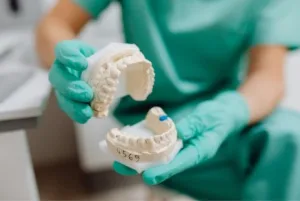
Because every individual smile features completely unique tooth lengths, distinct surface rotations, varying gap spaces, and specific gum line contours, a flat piece of plastic cannot establish uniform contact across your entire smile line. When a generic strip is pressed onto a curved dental arch, it naturally wrinkles, bunches, and lifts away from the tight spaces between your teeth. This creates small pockets where the active bleaching gel never touches the enamel, resulting in a distinctly patchy appearance where the flat centers of the teeth look lighter but the edges and corners remain dark and stained. Professional custom-molded trays solve this anatomical problem entirely. By capturing highly accurate, digital or physical impressions of your upper and lower teeth, the clinical team creates ultra-thin, medical-grade trays that snap securely over your unique smile. This custom fit seals the professional-strength bleaching gel perfectly flat against every groove and interdental boundary, ensuring an absolute, uniform shade transition across your entire smile.
Defending Soft Tissues: Eliminating Bleaching Chemical Leakage
A significant risk associated with unmonitored over-the-counter whitening products is the accidental exposure of highly active chemical peroxides to the delicate, vascular tissues of your gums. When a generic strip or a fluid retail gel is forced onto an ill-fitting smile, the excess bleaching material has nowhere to go but to squeeze out past the enamel boundary.
When active whitening chemicals leak directly onto the soft oral mucosa, they cause a painful reaction known as a chemical tissue burn, which often manifests as an intense stinging sensation, visible white blanching, and immediate localized inflammation. In severe cases of repetitive use, this chemical irritation can lead to tissue recession or painful mouth ulcers. During an expert custom tray treatment or an intensive in-office whitening session, the custom-molded trays are engineered with built-in reservoirs that hold the precise volume of gel required for your enamel, keeping the solution securely locked onto the teeth. Furthermore, for in-office procedures, the dental team applies a specialized light-cured resin barrier directly along your gum contours, completely isolating your soft tissues and ensuring the active chemistry remains safely away from your delicate gums.
Eradicating Tooth Sensitivity: Protecting the Internal Nerve Pathways
For many residents, the biggest obstacle to seeking a brighter smile is the sudden, sharp flash of nerve sensitivity, commonly known as a tooth zap, that often follows the use of drugstore kits. This painful reaction occurs when generic formulas dry out the enamel and pass too quickly into the microscopic dentinal tubules that lead straight to the living nerve chamber inside the tooth.
Professional whitening systems completely rewrite this experience by combining high-efficiency whitening chemistry with advanced desensitizing protocols. Medical-grade whitening gels are specifically formulated with built-in desensitizing agents, including potassium nitrate and amorphous calcium phosphate. These advanced minerals work on a cellular level to calm the nerve pathways and block pain signals before they can travel, while simultaneously rebuilding the mineral density of your enamel. Additionally, because a dentist evaluates your entire mouth prior to treatment, they can identify and protect highly vulnerable areas that drugstore products blindly attack, such as exposed root surfaces from gum recession, micro-cracks in the enamel, and leaking older fillings, keeping your entire whitening experience completely comfortable and safe.
Structural Comparisons: Retail Over-the-Counter Products vs. Professional Care
Evaluating the clear differences in material quality, safety, and long-term performance between standard retail products and custom dental care demonstrates why a professional system is the superior option for your wellness.
- Concentration of Active Ingredients: Over-the-counter products are restricted by law to low chemical percentages, requiring weeks of slow progress, whereas professional systems use highly concentrated formulas that provide dramatic, noticeable results in a fraction of the time.
- Precision of Fit and Adaptability: Store-bought strips lift and move away from tooth curves, causing patchy white spots, while custom-molded trays fit your exact dental anatomy to ensure a smooth, perfectly uniform shade change.
- Soft Tissue Shielding and Protection: Retail options let chemical gels leak freely onto your delicate gums, risking tissue damage, while clinical barriers and custom reservoirs completely isolate your soft tissues from chemical exposure.
- Predictability of Long-Term Maintenance: Drugstore results fade away rapidly within a few weeks of stopping treatment, whereas custom dental trays provide a permanent personal asset that allows you to easily refresh your smile using professional gel refills after your regular cleanings.
By analyzing these structural and material differences, health-conscious individuals can see that choosing an office-supported whitening plan represents the most logical, comfortable, and cost-effective approach to managing their aesthetic goals.
The Indispensable Value of Clinical Diagnostic Mapping
Many individuals do not realize that the success of a teeth whitening procedure depends heavily on a comprehensive diagnostic evaluation of your underlying oral health before any bleaching material touches your teeth. Teeth can change color for a wide variety of biological reasons, many of which will not respond to traditional peroxide whitening treatments.
For example, if a tooth has turned dark gray or brown due to an old sports injury, internal nerve damage, or early childhood medication exposure, generic drugstore strips will have absolutely no effect on the stain. Similarly, existing porcelain crowns, tooth-colored composite fillings, and cosmetic veneers are completely immune to chemical bleaching; applying retail whitening gels around them will only make your natural teeth lighter while your dental restorations stay the same color, leading to an uneven and distracting appearance. A professional clinical evaluation allows your dentist to accurately diagnose the source of your discoloration, check the status of any existing dental work, and treat any hidden decay or gum disease beforehand. This crucial step ensures your treatment is not only completely safe but precisely tailored to match your specific anatomy.
Conclusion: Embracing an Uncompromised, Radiant Smile Legacy
The path you select for brightening your smile has a direct impact on your daily personal confidence, your oral health, and your long-term comfort. Continuing to rely on weak, ill-fitting retail whitening products often leads to a frustrating cycle of uneven results, wasted money, and painful tooth sensitivity that can leave you feeling hesitant to smile freely in your professional and social life.
By stepping past the limitations of the drugstore aisle and choosing the advanced science of custom-molded professional teeth whitening, you can unlock the true brilliance of your smile. This custom health investment ensures a flawless, uniform brightness across your entire smile line, completely shields your delicate gum tissues from chemical irritation, and provides a comfortable, sensitivity-free experience from start to finish. Take complete command of your personal presentation, leave behind the frustration of generic retail kits, and step out into the world with a healthy, beautiful, and brilliantly white smile that serves as an authentic reflection of your inner vitality and success.
Steven Lagrimas is a freelance writer specializing in STEM, business, health, politics, and the social sciences. His work explores the intersection of society, governance, innovation, and emerging global trends shaping communities and industries today.