What Steps Do You Follow When Designing a Website from Start to Finish? Insights from a San Antonio-Based Web Design Agency
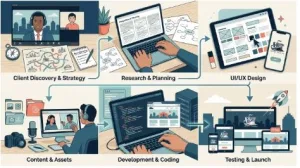
A lot of business owners come to us with the same question: “How long does building a website actually take, and what even goes into it?”
Fair question. From the outside, it can look like a designer sits down, picks some colors, adds your logo, and calls it done. But a website that actually drives traffic, builds trust, and converts visitors into customers? That takes a real process, not a shortcut.
Odyssey Design, a web design company in San Antonio, has refined their website design process through years of working with businesses across a wide range of industries, from local service providers to e-commerce brands. What they have learned is simple: the process behind a website is just as important as the design itself.
This article walks you through every stage of website design and development, from that first conversation all the way to launch day and beyond. Whether you are building your first site or completely redoing an old one, knowing what to expect makes the whole journey smoother.
Why Process Is the Foundation of Every Powerful Website
Skipping steps in web design is like trying to build a house without a blueprint. You might get four walls up, but there is no guarantee the plumbing, electrical, and structure actually work together.
Businesses that launch websites without a proper process tend to run into the same problems:
- Pages that look good but don’t rank on Google
- Navigation that confuses visitors instead of guiding them
- Messaging that doesn’t speak to the right audience
- Sites that load slowly on mobile and bleed traffic as a result
- No clear call to action, so visitors leave without doing anything
A structured approach eliminates these issues before they ever become problems. It also makes the project more efficient, keeps everyone aligned, and gives you a finished product you can actually be proud of.
The Odyssey Design 4-Step Gateway: A Bird’s-Eye View
Before we dive into the detailed steps, here’s a high-level overview of the web design & development process we follow at Odyssey Design. Every website project is built around these four key phases, helping ensure a smooth workflow, clear communication, and successful results from start to finish. .
| Phase | What Happens |
|---|---|
| Concept and Planning | Discovery, goal setting, sitemap, content strategy |
| Layout and Design | Wireframes, visual mockups, brand alignment |
| Coding and Marketing | Development, SEO foundation, content integration |
| Website Launch | Quality assurance, testing, go-live, hosting setup |
Each phase builds on the last. Nothing gets skipped, because every step has a purpose. Let’s break down exactly what happens inside each one.
Step 1: Discovery and Strategy Session
Every great website starts with a real conversation, not assumptions.
Before a single pixel gets placed or a single line of code gets written, we sit down (or jump on a call) to understand your business. This is the discovery phase, and it sets the direction for everything that follows.
What we cover in the discovery phase:
- What are the primary goals of the website? (Lead generation, online sales, brand awareness, bookings, etc.)
- Who is your target audience, and what do they need from you?
- What do your competitors’ sites look like, and where are the gaps?
- What tone and personality does your brand carry?
- What pages do you need, and what functionality matters most?
- What is the project timeline and budget?
This is also where we talk about your existing brand assets, your logo, any photography you have, colors you already use, and any sites you love or hate. Knowing what resonates with you saves a lot of back-and-forth later.
A lot of agencies skip this step and go straight to design. That’s how you end up with a beautiful website that says absolutely nothing useful to your customers.
Step 2: Site Planning and Information Architecture
Once we know your goals and audience, we map out the site before designing a single page.
This means building a sitemap, which is essentially the blueprint of your website. Think of it as the floor plan before construction begins. It defines every page, how they connect to each other, and how a visitor moves through your site from landing to conversion.
A typical sitemap for a service business might look like:
- Home
- About Us
- Services (with individual service pages)
- Portfolio / Case Studies
- Blog
- Contact
For an e-commerce site, it gets more detailed, with product categories, product pages, cart, checkout, account, and more.
This phase also involves planning your content strategy. What messaging goes where? Which pages need SEO-optimized copy? Which ones need photography or video? Getting this clear upfront prevents costly rework later.
Step 3: Brand Identity and Visual Direction
If you already have strong branding, great. We make sure the website reflects it consistently. If your brand needs work before we design, this is where we handle it.
Visual direction covers:
- Color palette – The exact shades used across the entire site, buttons, backgrounds, accents
- Typography – Font choices that match your brand’s personality
- Logo usage – How your logo appears in the header, footer, and other placements
- Imagery style – Are we using photography, illustrations, or a mix? What’s the tone?
- Overall aesthetic – Clean and minimal? Bold and energetic? Professional and corporate?
We sometimes create a simple mood board here, a visual snapshot of the direction before we build anything. This gives you a chance to say “yes, that feels right” or “let’s push it in a different direction” before we invest hours into full mockups.
Getting brand alignment at this stage is one of the biggest time-savers in the whole project.
Step 4: Wireframing and UX Layout
Here is where a lot of agencies jump straight to the pretty stuff. We don’t.
Wireframes are low-fidelity, structural layouts of your pages. No colors, no final copy, no real images. Just boxes and lines that show where everything lives. Think of it like sketching the layout of a room before choosing furniture.
Why wireframes matter:
- They let you see the structure of the page before investing in design
- They force decisions about hierarchy (what should visitors see first?)
- They map out the user flow from entry point to conversion
- They catch structural problems early, before they become expensive design revisions
A well-built wireframe answers the question: “Does this page logically guide the visitor toward taking the action we want?”
For complex pages like homepages, service pages, or landing pages, this step is especially critical. It’s the difference between a page that converts and a page that just looks nice.
Step 5: Visual Design and Mockups
This is where the site starts to come alive.
Using the wireframes as a foundation, our design team builds high-fidelity visual mockups. These are full, detailed designs that show exactly what the finished website will look like, with real colors, real fonts, real imagery, and real content.
What our design team focuses on here:
- Visual hierarchy that naturally guides the eye
- Consistent use of brand colors and typography
- Compelling imagery that reinforces your message
- Button placement and call-to-action design
- Mobile layout considerations (we design for mobile from the start, not as an afterthought)
- White space and breathing room so pages don’t feel cluttered
You get to review these mockups and give feedback before any coding begins. We want you to love what you see on screen before we build it in the browser.
Step 6: Content Creation and Copywriting
Here is a truth most agencies won’t tell you upfront: design can’t save bad content.
You can have the most visually stunning website in San Antonio, but if the copy doesn’t speak to your audience, if it’s dry, confusing, or buried in jargon, visitors will bounce. And Google won’t rank it either.
This is why content creation is a core part of our process, not an afterthought.
What content development includes:
- Website copywriting – Clear, engaging, SEO-aware copy for every page
- Photography – Professional on-site photos of your team, space, products, or services
- Video production – Brand videos, service overviews, or promotional reels that stop the scroll
- Graphics and custom visuals – Icons, infographics, and design elements that reinforce your message
For clients who already have strong content, we work with what you have and fill in the gaps. For those starting fresh, we handle it all, including writing, photography, and sourcing licensed imagery.
Words and visuals are what turn a pretty layout into a business tool that generates real results.
Step 7: Development and Coding
Once designs are approved and content is ready, the builders take over.
This is where the actual website gets constructed. Our development team translates the approved mockups into a live, functioning website, writing clean code that loads fast, works on every device, and is built to scale.
What happens during development:
- Front-end coding – HTML, CSS, and JavaScript that bring the design to life in the browser
- CMS setup – Most of our builds use WordPress, so your team can update content without needing a developer
- Back-end development – For custom functionality, databases, booking systems, or complex integrations
- E-commerce integration – Shopping carts, product pages, checkout flows, and payment gateway setup (PayPal, Stripe, and others)
- Responsive design – Making sure every page looks and works perfectly on phones, tablets, and desktops
- Form and CRM integration – Contact forms, lead capture tools, and any third-party software your business relies on
| Development Focus | Why It Matters |
|---|---|
| Mobile responsiveness | Over 60% of web traffic comes from mobile devices |
| Page speed optimization | Slow sites lose visitors and rank lower on Google |
| Clean code structure | Easier to maintain, update, and scale over time |
| CMS integration | Lets you manage your own content without a developer |
| Security setup | Protects your site and your visitors from threats |
Step 8: SEO Foundation Setup
A website with no SEO is like opening a store with no sign out front. People can’t find what they can’t see.
Before your site goes live, we lay the SEO groundwork that gives your pages the best possible shot at ranking on Google.
On-page SEO setup includes:
- Keyword research to understand what your customers are actually searching
- Meta titles and descriptions for every page
- Proper heading structure (H1, H2, H3) for both readability and search engines
- Image optimization, compressed file sizes and descriptive alt text
- Internal linking between pages to build site authority
- Schema markup for local businesses so Google understands who you are and where you operate
- Google Search Console and Google Analytics setup
- Sitemap submission and robots.txt configuration
For San Antonio businesses especially, local SEO setup is critical. We optimize for location-based searches so when someone nearby types “web design company near me” or searches for the services you offer, your business shows up.
Step 9: Quality Assurance and Testing
Nothing goes live before it goes through a thorough round of testing.
This is one of those steps that separates polished, professional sites from ones that launch with broken links, misaligned elements, and frustrating mobile experiences.
Our QA checklist covers:
- Cross-browser testing – Does the site look and work correctly in Chrome, Firefox, Safari, and Edge?
- Device testing – Does everything work properly on phones, tablets, and laptops at different screen sizes?
- Load speed testing – Are pages loading in under 3 seconds? We use tools like Google PageSpeed Insights to optimize if not
- Link and form testing – Every button, link, and form submission gets tested
- Content review – Spelling, grammar, and formatting get a final pass
- Functionality testing – Every interactive element works as expected
- Security check – SSL certificate is active, security headers are in place
We don’t rush this phase. Launching a broken site costs more to fix than taking the extra time to test it properly.
Step 10: Launch
The moment you have been waiting for.
Once QA is complete and you have given final approval, we push the site live. But “going live” involves more than clicking a button.
The launch process includes:
- Pointing your domain to the new hosting server
- Setting up or transferring web hosting (we offer fast, reliable hosting plans built for performance)
- Final DNS configuration and SSL activation
- Submitting the live sitemap to Google
- Removing any temporary password protection used during development
- Doing a final live-site review to catch any environment-specific issues
- Confirming all tracking and analytics tools are firing correctly
We make sure launch day is clean, coordinated, and stress-free. You will know exactly when your site is live and how to access it.
Step 11: Post-Launch Support and Ongoing Growth
The launch is a beginning, not an ending.
Your website is a living, working part of your business. It needs regular attention, updates, security patches, new content, and ongoing optimization to stay competitive.
What post-launch support looks like:
- Maintenance plans – Security updates, plugin updates, backups, and uptime monitoring
- Ongoing SEO services – Monthly keyword tracking, content optimization, and link building
- Content updates – Adding new pages, blog posts, or service updates as your business grows
- Analytics reporting – Understanding what’s working, what’s not, and where to focus next
- Design refreshes – Updating sections as your brand evolves or new offerings launch
Most businesses we work with think of us as an ongoing partner, not just a one-time vendor. We are invested in your site performing well long after launch day.
The Full Web Design Process at a Glance
Here is a summary of every stage from start to finish:
| Step | Phase | Key Deliverable |
|---|---|---|
| 1. Discovery | Concept and Planning | Goals, audience, project brief |
| 2. Site Planning | Concept and Planning | Sitemap, content strategy |
| 3. Brand Direction | Concept and Planning | Visual mood board, style guide |
| 4. Wireframing | Layout and Design | Page structure and user flow |
| 5. Visual Design | Layout and Design | Approved high-fidelity mockups |
| 6. Content Creation | Layout and Design | Copy, photography, video |
| 7. Development | Coding and Marketing | Fully coded, functional site |
| 8. SEO Setup | Coding and Marketing | On-page SEO, analytics, local setup |
| 9. QA and Testing | Coding and Marketing | Bug-free, cross-device verified site |
| 10. Launch | Website Launch | Live site, hosting, DNS setup |
| 11. Post-Launch | Ongoing Growth | Maintenance, SEO, updates |
DIY Website Builder vs. Professional Web Design: What’s Really at Stake?
We get it. Platforms like Wix, Squarespace, and GoDaddy make it look easy. Drag, drop, done. But there is a reason businesses that are serious about growth choose professional web design.
Here is an honest comparison:
| Factor | DIY Website Builder | Professional Web Design |
|---|---|---|
| Upfront cost | Low | Higher initial investment |
| Time investment | High (you do the work) | Low (done for you) |
| Design quality | Template-limited | Fully custom to your brand |
| SEO capability | Basic, restricted | Full on-page optimization |
| Performance / speed | Often slow and bloated | Optimized for fast loading |
| Mobile experience | Generic responsive | Intentionally designed for mobile |
| Scalability | Limited | Built to grow with you |
| Brand differentiation | Looks like every other template site | Unique to your business |
| Long-term ROI | Limited | Significantly higher |
A DIY site might get you online. A professionally built site gets you business.
What Makes a San Antonio Web Design Partner Different
Not all web design agencies are the same, and working with a local team that understands your market matters more than most people realize.
At Odyssey Design, we work exclusively with businesses we genuinely believe in. We take the time to understand San Antonio’s business landscape, the local customer expectations, the competitive environment across industries, and what it takes to stand out in this market.
Our process is not a factory line. It is collaborative, transparent, and built around your specific goals. Whether you are a small local service business, a growing e-commerce brand, or an established company that needs a serious digital upgrade, we treat your project like it is the only one that matters.
Because to you, it is.