Can a Home Gym System Elevate Your Fitness Journey?
The pandemic didn’t just change how we work—it fundamentally reshaped how we exercise. What began as a necessity evolved into a preference, with millions discovering that their most productive workouts happen just steps from their bedroom. A comprehensive home gym system promises something commercial facilities simply cannot: a fitness environment built entirely around your schedule, your goals, and your body. But can investing in one truly elevate your fitness progress, or is it just an expensive collection of equipment destined to gather dust? The challenges are real—limited space, upfront costs, and the struggle to stay motivated without the energy of a gym floor. Yet the rewards are equally compelling: unmatched convenience, fully customized training, and the consistency that comes from eliminating every barrier between you and your workout. This article explores the essential components of an effective home gym system, addresses the core needs of dedicated fitness enthusiasts, and delivers practical solutions for building a setup that transforms not just your space, but your entire fitness trajectory.
Understanding the Home Gym Revolution
The migration from commercial gyms to home-based fitness isn’t a temporary trend—it’s a fundamental shift in how dedicated athletes and everyday exercisers approach training. Commercial facilities operate on someone else’s schedule, demand commute time, and force you to share equipment during peak hours. A well-designed home gym system eliminates these friction points entirely. You train when inspiration strikes, whether that’s 5 AM or midnight, without waiting for a squat rack or wiping down someone else’s sweat.
Privacy matters more than most people admit. At home, you can fail on a heavy set, experiment with unfamiliar movements, or work through rehabilitation exercises without self-consciousness. The environment becomes entirely yours—your music, your temperature, your pace. Fitness enthusiasts are driving this revolution precisely because they understand that consistency determines results, and nothing threatens consistency like inconvenience. The initial barriers that once made home training impractical—bulky equipment, limited exercise variety, and high costs—have been systematically dismantled by modern multi-functional systems and smart fitness technology. Today’s home gym solutions from brands like Speediance pack commercial-grade versatility into surprisingly compact footprints, making serious training accessible in spare bedrooms, garages, and even large closets. What follows is a closer look at the specific equipment and strategies that make this transformation possible.
Core Equipment for Your Home Gym System
Building an effective home gym system starts with selecting equipment that delivers maximum training variety without consuming your entire living space. The key lies in choosing pieces that complement each other, covering strength, conditioning, and recovery in as few footprints as possible.
The All-in-One Powerhouse: Exploring the Gym Monster Package
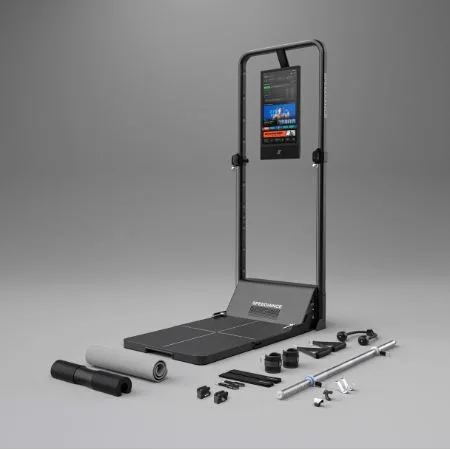
A Gym Monster Package consolidates what would typically require a dozen separate machines into a single integrated station. These systems typically combine cable pulleys, press stations, leg developers, and attachment points for dozens of exercises—all within a footprint roughly the size of a parking space. The real advantage is workflow efficiency: you transition between exercises in seconds rather than walking across a gym floor. Whether your training style leans toward bodybuilding isolation work, functional fitness circuits, or powerlifting accessories, a well-designed Gym Monster Package adapts to your approach rather than forcing you into limited movement patterns.
Versatility Redefined: The Adjustable Barbell for Dynamic Training
An adjustable barbell replaces an entire rack of fixed-weight bars by allowing you to change resistance in seconds through dial mechanisms or pin selectors. For progressive overload—the fundamental driver of strength gains—this means you can increase loads in small increments week over week without purchasing additional plates. The space-saving advantage is dramatic: one adjustable barbell occupies the footprint of a single dumbbell while replacing fifteen or more fixed pairs. From heavy deadlifts to precise lateral raises, it handles the full spectrum of loading demands.
Smart Fitness Add-ons: Integrating a Bluetooth Ring and Home Workout Gear
Wearable technology like a Bluetooth Ring brings data-driven training into your home gym by tracking heart rate, recovery status, sleep quality, and activity metrics passively throughout the day. This continuous feedback loop helps you determine when to push hard and when to prioritize recovery—decisions that commercial gym-goers typically make blindly. Complement your strength equipment with essential home workout gear like resistance bands for joint-friendly warm-ups, a jump rope for conditioning finishers, and a foam roller for mobility work. Together, these additions transform a basic equipment setup into a comprehensive training ecosystem that rivals any commercial facility.
Solving the Need for Access to Quality Fitness Equipment
The biggest frustration for home gym builders isn’t deciding to invest—it’s navigating a market flooded with flashy marketing and questionable quality. Fitness equipment represents a significant purchase, and the wrong choice means wasted money, potential injury, or gear that fails mid-lift. Solving this starts with a systematic approach to research and selection.
Begin by identifying reputable brands with established track records in your target equipment category. Read user reviews from people who’ve owned the equipment for six months or longer—initial impressions rarely capture durability issues that emerge with regular use. Check for warranty coverage, particularly on cables, pulleys, and moving parts that experience the most wear. Next, establish a realistic budget that accounts for shipping, assembly, and any accessories needed to unlock full functionality. Many buyers underestimate these secondary costs and end up with incomplete setups. Prioritize multi-functional pieces over single-purpose machines. A home gym system built around versatile equipment like a Gym Monster Package or adjustable barbell delivers far more value per square foot than a collection of isolated machines.
When assessing durability, look for steel gauge thickness in frames, weight capacity ratings that exceed your current strength levels by at least 50%, and smooth, consistent resistance mechanisms. Safety features matter enormously when you train alone—built-in safety catches, secure locking mechanisms on adjustable components, and stable base designs prevent accidents that no spotter is present to prevent. Avoid the common pitfall of buying based on appearance or influencer endorsements alone. Instead, cross-reference specifications against your actual training needs, verify return policies before purchasing, and start with foundational pieces you’ll use daily rather than specialty items that serve narrow purposes.
Providing Guidance on Effective Workout Routines
Owning quality equipment solves only half the equation—without structured programming, even the best home gym system becomes an expensive coat rack. The real transformation happens when you pair your equipment with intentional, progressive routines tailored to your specific goals. Many home gym owners struggle not because they lack motivation, but because they lack direction. They default to the same exercises at the same weights, wondering why progress stalls after the initial honeymoon phase. Structured guidance bridges that gap, turning random effort into measurable advancement.
Step-by-Step: Building Your Custom Home Gym Workout Plan
Start by defining one primary goal—fat loss, muscle gain, strength development, or athletic performance—because trying to optimize everything simultaneously dilutes results. Next, assess your available training days realistically. Three to four sessions weekly works for most people and allows adequate recovery. Design each session around movement patterns rather than body parts: push, pull, hinge, squat, carry, and rotate. This approach ensures balanced development and reduces injury risk. Assign your adjustable barbell to compound strength movements like squats, presses, and rows on dedicated strength days, progressively adding small weight increments every one to two weeks. Use your Gym Monster Package for accessory work and higher-rep isolation exercises that build the volume needed for muscle growth. Track every session using your Bluetooth Ring’s recovery data—when readiness scores drop, reduce intensity rather than skipping entirely. Program deload weeks every fourth or fifth week, cutting volume by 40% to allow adaptation without losing momentum.
Sample Routines for Different Fitness Levels
Beginners should focus on three full-body sessions weekly, using moderate loads on the Gym Monster Package cable system to learn movement patterns safely before progressing to free-weight barbell work. Each session covers six exercises—two upper pulls, two upper pushes, and two lower body movements—performed for three sets of ten to twelve repetitions. Intermediate trainees benefit from a four-day upper/lower split, incorporating heavier adjustable barbell work for five-rep sets on compound lifts while using cables and home workout gear like resistance bands for higher-rep finishing sets. Advanced athletes can implement daily undulating periodization, alternating heavy, moderate, and light days across five weekly sessions, fully utilizing every piece of equipment for varied stimulus. Regardless of level, track heart rate zones during conditioning work and monitor sleep quality through your Bluetooth Ring to ensure recovery matches training demands. When progress stalls for two consecutive weeks, change one variable—exercise order, rep range, or tempo—rather than overhauling your entire program.
Maximizing Your Investment: Setup and Maintenance Tips
Strategic placement of your home gym system dramatically affects how often you actually use it. Position your primary equipment in a dedicated zone with adequate ceiling height for overhead movements and enough surrounding clearance for full range of motion on cable exercises. Place mirrors on at least one wall for form checks, and ensure proper ventilation—a simple fan or open window prevents overheating during intense sessions. Rubber flooring protects both your equipment and your floor surfaces while reducing noise that travels to other rooms.
Maintenance extends equipment lifespan significantly. Wipe down cable tracks and guide rods monthly with silicone-based lubricant to maintain smooth resistance. Inspect adjustment pins and locking mechanisms on your adjustable barbell weekly for wear or looseness. Tighten bolts on your Gym Monster Package frame quarterly, as vibration from heavy use gradually loosens connections. Keep your Bluetooth Ring firmware updated and charge it consistently to maintain accurate tracking. To sustain motivation as novelty fades, rotate your layout seasonally, add one small piece of home workout gear every few months, and set quarterly performance benchmarks that give your training renewed purpose. Your home gym should evolve alongside your fitness—treat it as a living system rather than a static purchase.
Transform Your Space Into Your Ultimate Training Environment
A home gym system isn’t just a collection of equipment—it’s an infrastructure for lasting physical transformation. The combination of versatile strength tools like a Gym Monster Package and adjustable barbell, intelligent tracking through wearable technology like a Bluetooth Ring, and purposeful home workout gear creates an ecosystem where serious progress becomes inevitable rather than aspirational. By addressing the two fundamental needs that derail most fitness journeys—access to quality equipment and structured training guidance—a thoughtfully built home gym removes the excuses that separate intention from action. The convenience of training on your schedule, the customization of programming tailored to your goals, and the consistency that emerges when every barrier disappears compound over months and years into results that sporadic commercial gym attendance rarely delivers. Your fitness trajectory changes not on the day you decide to get in shape, but on the day you eliminate every obstacle standing between you and daily training. Whether you start with a single adjustable barbell or invest in a complete system from innovators like Speediance from day one, the first step is committing to build an environment where your best workout is always the next one. Your transformed fitness journey begins the moment your home gym system does.