Why High Achievers Are Turning to Nervous System Regulation Instead of Traditional Stress Management
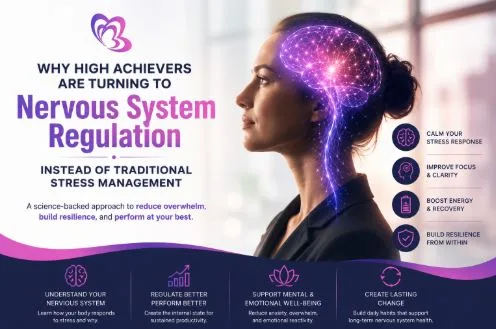
In today’s fast-paced world, stress has become so common that many people view it as a normal part of success. Entrepreneurs, executives, professionals, parents, and high performers often pride themselves on their ability to push through exhaustion, meet demanding deadlines, and maintain productivity under pressure.
Yet despite countless books, productivity systems, and stress-management techniques, many people continue to struggle with anxiety, burnout, emotional overwhelm, sleep disturbances, and chronic fatigue.
The reason may be simpler than most realize.
The issue is often not a lack of discipline, motivation, or time management skills. Instead, many individuals are operating with a dysregulated nervous system.
As awareness around mental and emotional well-being grows, a growing number of health professionals are shifting the conversation away from simply managing stress and toward understanding how the nervous system influences every aspect of physical, emotional, and cognitive health.
The Stress Epidemic Nobody Can Ignore
Modern life places extraordinary demands on the human body.
Constant notifications, financial pressures, work responsibilities, family obligations, information overload, and social expectations create an environment where many people rarely experience true rest.
For some individuals, stress becomes so familiar that they no longer recognize its effects.
They may assume that feeling exhausted, irritable, anxious, disconnected, or overwhelmed is simply part of adulthood. Over time, however, chronic stress can affect virtually every system in the body.
Research continues to show links between prolonged stress and issues such as:
- Sleep disruption
- Digestive challenges
- Increased anxiety
- Reduced concentration
- Emotional reactivity
- Burnout
- Fatigue
- Poor recovery
- Reduced resilience
While traditional stress-management approaches often focus on symptom reduction, they may not address the underlying patterns keeping the body in a prolonged state of survival.
Understanding the Nervous System’s Role
The nervous system serves as the body’s command center.
It continuously scans the environment for signals of safety or danger and adjusts physiological responses accordingly. Heart rate, breathing patterns, digestion, emotional responses, focus, and energy levels are all influenced by nervous system activity.
When functioning optimally, the nervous system can activate during stressful situations and return to a balanced state once the challenge has passed. However, chronic stress can interfere with this natural cycle, leaving the body stuck in patterns of heightened activation or shutdown.
This is often referred to as nervous system dysregulation.
For many people, dysregulation can manifest as:
- Persistent anxiety
- Difficulty relaxing
- Chronic overwhelm
- Emotional numbness
- Hypervigilance
- Perfectionism
- People-pleasing behaviors
- Difficulty focusing
- Burnout
These experiences are often misunderstood as personality flaws when they may actually be adaptive responses developed by the body over time.
Why Traditional Stress Management Often Falls Short
Many stress-management strategies focus on controlling symptoms.
People are encouraged to think positively, work harder, stay organized, or simply “calm down.”
While these approaches may offer temporary relief, they often fail to create lasting change because they address behavior without considering the body’s internal state.
A person whose nervous system perceives ongoing threat may struggle to implement healthy habits consistently, regardless of how motivated they are.
This helps explain why individuals often cycle through wellness plans, productivity systems, and self-help programs without achieving sustainable results.
The body must first experience a sense of safety before lasting change becomes possible.
The Shift Toward Nervous System Regulation
Rather than asking, “How can I manage more stress?” many people are now asking a different question:
“How can I help my body respond differently to stress?”
This is where nervous system regulation enters the conversation.
Nervous system regulation focuses on improving the body’s ability to move between activation and recovery states effectively. Instead of suppressing emotions or forcing relaxation, the goal is to increase flexibility, resilience, and capacity.
When individuals learn to regulate their nervous systems, they often report improvements in:
- Emotional stability
- Decision-making
- Focus and concentration
- Sleep quality
- Energy levels
- Stress resilience
- Relationships
- Overall well-being
Importantly, regulation does not eliminate stress from life. Instead, it changes how the body responds to it.
High Performers Are Rethinking Productivity
One of the most significant shifts occurring today involves how high achievers view performance.
For years, success was associated with pushing harder, working longer hours, and ignoring physical or emotional needs.
However, many leaders are discovering that sustainable performance depends on recovery as much as effort.
A regulated nervous system supports clearer thinking, improved emotional regulation, better communication, and greater adaptability under pressure.
Rather than operating from constant urgency, individuals become better equipped to respond thoughtfully and strategically.
This shift does not reduce ambition. Instead, it creates a foundation that allows ambition to be sustained without sacrificing health.
Signs Your Nervous System May Need Support
Many people live with nervous system dysregulation without realizing it.
Common indicators include:
- Feeling constantly busy but rarely productive
- Difficulty relaxing even during downtime
- Persistent worry or racing thoughts
- Emotional overreactions
- Chronic fatigue
- Difficulty sleeping
- Feeling disconnected from yourself or others
- Frequent stress-related physical symptoms
- Difficulty recovering from setbacks
These patterns are often signals that the body may need support rather than additional pressure.
Practical Ways to Support Nervous System Health
The good news is that the nervous system remains adaptable throughout life.
Small, consistent actions can gradually improve regulation capacity and resilience.
Some effective strategies include:
Prioritizing Restorative Sleep
Quality sleep supports emotional regulation, cognitive function, and physical recovery.
Spending Time in Nature
Natural environments can help reduce stress and support nervous system balance.
Practicing Mindful Awareness
Developing awareness of physical sensations, emotions, and stress responses can improve self-regulation over time.
Establishing Healthy Boundaries
Protecting energy and reducing unnecessary overwhelm can help prevent chronic activation.
Supporting Physical Health
Nutrition, movement, hydration, and recovery all contribute to nervous system functioning.
Seeking Professional Guidance
For individuals experiencing chronic stress, burnout, or trauma-related symptoms, professional support can provide personalized strategies and a structured path toward healing.
Working with a qualified provider who specializes in nervous system regulation coaching can help individuals better understand their stress responses, develop practical regulation skills, and build lasting resilience through a trauma-informed, whole-person approach.
The Future of Well-Being
As conversations around health continue to evolve, the focus is shifting away from quick fixes and toward deeper understanding.
People are beginning to recognize that sustainable wellness is not about forcing themselves to perform at higher levels despite stress. It is about creating the internal conditions that support long-term health, emotional stability, and resilience.
The growing interest in nervous system regulation reflects a broader understanding of how the mind and body work together. Rather than viewing stress as a problem to eliminate, individuals are learning how to strengthen their capacity to navigate life’s challenges with greater flexibility and confidence.
Final Thoughts
Success and well-being do not have to exist in opposition to one another.
For many people, the missing piece is not another productivity system, diet plan, or motivational strategy. It is learning how to work with the body’s natural stress-response systems rather than constantly fighting against them.
By understanding the role of the nervous system and developing skills that support regulation, individuals can create a stronger foundation for health, performance, and emotional well-being. In a world that often rewards constant hustle, that may be one of the most valuable investments a person can make.