Cartoning Machine: The Complete Guide to Smarter and Faster Packaging
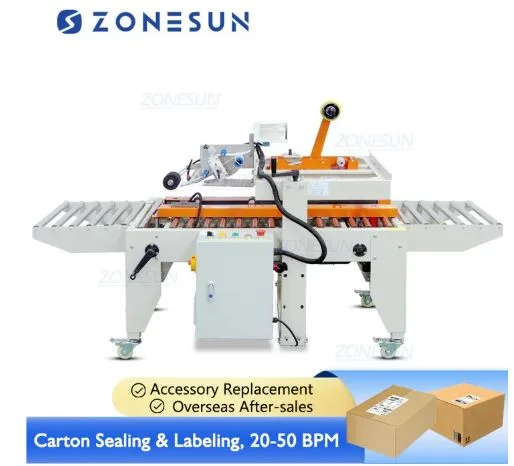
In today’s fast-moving manufacturing world, packaging efficiency is not just a convenience — it is a competitive necessity. Whether you are running a pharmaceutical plant, a food processing unit, or a cosmetics production line, the speed and accuracy of your packaging process directly impacts your bottom line. That is where the cartoning machine becomes an essential piece of equipment.
This guide covers everything you need to know about cartoning machines — how they work, the different types available, key industries that rely on them, and what to look for when investing in one.
What Is a Cartoning Machine?
A cartoning machine is an automated packaging system designed to fold flat carton blanks into boxes, fill them with products, and seal them — all in a continuous, high-speed operation. These machines handle the entire secondary packaging process with minimal human intervention, dramatically improving output speed, consistency, and hygiene standards.
From blister packs of medicine to boxes of cereal or tubes of toothpaste, cartoning machines are behind the neat, sealed cartons you see on shelves every day.
How Does a Cartoning Machine Work?
The operation of a cartoning machine follows a straightforward but precise sequence:
Step 1 – Carton Blank Feeding: Flat carton blanks are loaded into the machine’s magazine. The machine picks them one by one using suction cups or mechanical arms.
Step 2 – Carton Erection: The flat blank is opened and formed into a three-dimensional box shape using folding guides and forming stations.
Step 3 – Product Insertion: The product — whether a bottle, sachet, blister pack, or tube — is inserted into the open carton either horizontally (end-load) or vertically (top-load), depending on the machine type.
Step 4 – Closing and Sealing: The carton flaps are folded and secured using tuck-in closures or hot-melt glue, creating a tamper-evident, shelf-ready package.
Step 5 – Discharge: Finished cartons are discharged onto a conveyor for further downstream processing such as labeling, shrink wrapping, or case packing.
Types of Cartoning Machines
Not all cartoning machines are the same. The right type depends on your product, production volume, and packaging requirements.
1. Horizontal Cartoning Machine
Products are inserted from the side into a horizontally positioned carton. This type is ideal for solid products like blister packs, bottles, syringes, and sachets. It is widely used in pharmaceutical and food packaging.
2. Vertical Cartoning Machine
Products are dropped or placed from the top into an upright carton. Best suited for loose products like granules, powders, tea bags, and confectionery items. High-speed and efficient for bulk filling operations.
3. Wrap-Around Cartoning Machine
Instead of using pre-formed cartons, this machine wraps a flat blank directly around the product. Commonly used for beverages, cans, and bottles. It offers a tight, secure package with a clean finish.
4. Automatic vs. Semi-Automatic
Fully automatic machines run with minimal operator input and are suited for high-volume production lines. Semi-automatic machines require some manual steps and are more appropriate for smaller operations or product variety that demands frequent changeovers.
Industries That Rely on Cartoning Machines
The cartoning machine is a workhorse across multiple industries:
- Pharmaceutical: Packaging tablets, capsules, ampoules, vials, and blister packs with precision and compliance
- Food and Beverage: Boxing cereals, snack bars, tea bags, sauces, and dairy products at high speed
- Cosmetics and Personal Care: Packaging creams, serums, perfumes, soaps, and hair care products
- Healthcare and Medical Devices: Securing sterile products in tamper-evident cartons for distribution
- Consumer Goods: Electronics accessories, stationery, and household products
Key Benefits of Using a Cartoning Machine
Investing in an automated cartoning machine delivers measurable advantages:
Higher Production Speed: Modern machines can process anywhere from 100 to over 500 cartons per minute, far beyond what any manual team could achieve.
Consistent Quality: Every carton is folded, filled, and sealed to the same standard — eliminating human error and reducing packaging defects.
Reduced Labor Costs: Automation reduces dependence on manual labor, lowering operational costs over time.
Improved Hygiene: Closed, automated systems minimize product contact, which is critical in food and pharmaceutical applications.
Versatility: Most modern machines can handle multiple carton sizes and product types with quick changeover systems.
What to Look for When Buying a Cartoning Machine
Before making a purchase, evaluate these critical factors:
- Production Speed: Match the machine’s output capacity to your current and future production demands
- Carton Size Range: Ensure the machine handles the carton dimensions your products require
- Changeover Time: Faster format changes mean less downtime when switching between product lines
- Build Quality: Stainless steel construction is preferred for food and pharma environments
- Control System: A modern PLC-based touchscreen interface simplifies operation and troubleshooting
- After-Sales Support: Choose a supplier with reliable technical support, spare parts availability, and service coverage in your region
Cartoning Machine vs. Manual Packaging: A Quick Comparison
| Factor | Cartoning Machine | Manual Packaging |
| Speed | 100–500+ cartons/min | 10–20 cartons/min |
| Consistency | Very High | Variable |
| Labor Required | Minimal | High |
| Long-Term Cost | Lower | Higher |
| Hygiene Control | Excellent | Limited |
Final Thoughts
The cartoning machine is no longer just a luxury for large-scale manufacturers — it is a smart investment for any business serious about packaging efficiency, product quality, and long-term growth. As consumer expectations rise and production demands increase, automated cartoning solutions provide the reliability and speed that manual processes simply cannot match.
Whether you are entering the packaging industry for the first time or upgrading an existing line, understanding the right type of cartoning machine for your specific application is the first step toward a faster, cleaner, and more profitable operation.