Mixing Vessel Guide for Modern Manufacturing
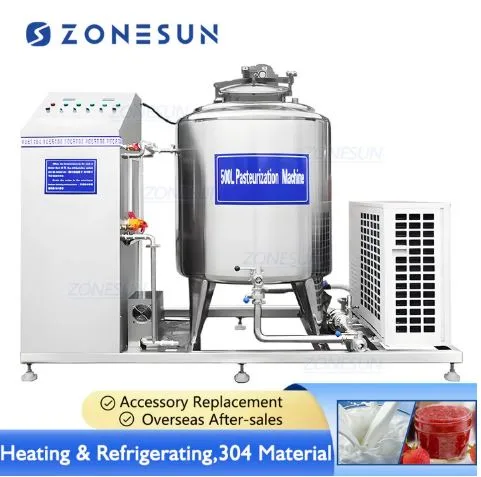
In any production environment where liquids, powders, or semi-solids need to be combined, blended, or processed, one piece of equipment stands at the center of the operation — the mixing vessel. From pharmaceutical manufacturing to food processing, chemical production to cosmetics, mixing vessels are the backbone of consistent, high-quality output.
This complete guide explains what mixing vessels are, how they work, the different types available, and what to consider when selecting the right one for your production line.
What Is a Mixing Vessel?
A mixing vessel is an industrial container specifically designed to blend, mix, dissolve, or homogenize two or more substances — whether liquid, solid, or gas — into a uniform mixture. These vessels are engineered to maintain precise control over parameters such as temperature, pressure, speed, and mixing time to ensure product consistency and quality.
Unlike simple storage tanks, mixing vessels are active processing units equipped with agitators, impellers, heating or cooling jackets, and advanced control systems that work together to produce a perfectly blended end product every time.
How Does a Mixing Vessel Work?
The working principle of a mixing vessel depends on the type of product being processed, but the general operation follows this sequence:
Step 1 – Loading: Raw materials — liquids, powders, or both — are fed into the vessel through inlet ports, either manually or via automated feeding systems.
Step 2 – Agitation: An internal agitator or impeller begins rotating, creating fluid motion that promotes thorough blending of all ingredients.
Step 3 – Temperature Control: If the process requires heating or cooling, the vessel’s jacket circulates hot water, steam, or chilled water around the outer shell to maintain the target temperature.
Step 4 – Mixing Completion: Once the desired consistency, viscosity, or chemical reaction is achieved — as confirmed by sensors or timers — the mixing cycle ends.
Step 5 – Discharge: The finished product is discharged through an outlet valve at the bottom of the vessel for further processing, filling, or packaging.
Types of Mixing Vessels
Mixing vessels come in a wide range of designs to suit different industries and applications.
1. Jacketed Mixing Vessel
Fitted with an outer jacket through which heating or cooling media circulates. Ideal for processes that require strict temperature control — such as pharmaceutical creams, syrups, and chemical reactions.
2. Pressure Mixing Vessel
Built to operate under elevated pressure conditions. Used in processes involving volatile substances, carbonation, or reactions that require a sealed, pressurized environment.
3. Vacuum Mixing Vessel
Operates under negative pressure to remove air bubbles and prevent oxidation during mixing. Widely used in cosmetics, ointments, and sensitive pharmaceutical formulations.
4. Sanitary / Hygienic Mixing Vessel
Constructed from food-grade or pharmaceutical-grade stainless steel with smooth, crevice-free internal surfaces. Designed for easy cleaning and compliance with GMP and FDA standards.
5. High-Shear Mixing Vessel
Equipped with a high-speed rotor-stator system that breaks down particles and creates fine emulsions or dispersions. Used in lotions, sauces, and specialty chemicals.
6. Portable Mixing Vessel
Smaller, wheeled vessels used for batch processing, laboratory trials, or small-scale production runs. Offer flexibility without the commitment of a fixed installation.
Industries That Use Mixing Vessels
The mixing vessel is an indispensable tool across a wide range of industries:
- Pharmaceutical: Blending active ingredients, producing syrups, suspensions, ointments, and sterile solutions
- Food and Beverage: Mixing sauces, dairy products, beverages, dressings, and confectionery fillings
- Cosmetics and Personal Care: Manufacturing creams, lotions, shampoos, gels, and serums
- Chemical Industry: Producing adhesives, resins, coatings, and specialty chemicals
- Biotechnology: Fermenting, culturing, and processing biological compounds
- Paint and Coatings: Blending pigments, solvents, and binders into uniform paint formulations
Key Benefits of Using an Industrial Mixing Vessel
Investing in the right mixing vessel delivers significant advantages for your production process:
Product Consistency: Precise agitation speed and temperature control ensure every batch meets the same quality standard — batch after batch.
Process Efficiency: Automated mixing cycles reduce processing time and eliminate the variability that comes with manual blending.
Scalability: Mixing vessels are available from laboratory scale (a few liters) to full industrial scale (tens of thousands of liters), allowing businesses to grow without replacing their core equipment.
Hygiene and Compliance: Stainless steel construction, CIP (Clean-in-Place) and SIP (Sterilize-in-Place) compatibility make mixing vessels suitable for the strictest regulatory environments.
Versatility: A single vessel can often handle multiple product types with simple agitator or configuration changes, maximizing return on investment.
What to Look for When Buying a Mixing Vessel
Choosing the right mixing vessel requires careful evaluation of several factors:
- Capacity: Select a vessel size that matches your current batch requirements with room for future growth
- Material: Food-grade 316L stainless steel is the industry standard for pharmaceutical, food, and cosmetic applications
- Agitator Type: Anchor, paddle, turbine, or high-shear — each suits different viscosities and mixing needs
- Jacket Design: Single or double jacket, half-pipe coil — affects heating and cooling efficiency
- Control System: PLC-controlled systems with HMI touchscreens offer better repeatability and data logging
- CIP/SIP Compatibility: Essential for industries with strict hygiene and sterilization requirements
- Certifications: Look for vessels compliant with GMP, FDA, CE, or relevant local standards
- Vendor Support: Reliable after-sales service, spare parts availability, and installation support are critical for minimizing downtime
Mixing Vessel vs. Standard Storage Tank: Key Differences
| Feature | Mixing Vessel | Storage Tank |
| Primary Function | Active blending and processing | Passive storage |
| Agitator | Yes — built-in | No |
| Temperature Control | Jacketed heating/cooling | Rarely |
| Pressure Capability | Available in pressure models | Generally atmospheric |
| Industry Use | Pharma, food, chemical, cosmetic | General storage |
| Compliance Standards | GMP, FDA, CE | Basic structural standards |
Common Agitator Types Used in Mixing Vessels
The agitator is the heart of any mixing vessel. Choosing the right one depends entirely on the viscosity and nature of the product being processed:
- Anchor Agitator: Best for high-viscosity products like creams and gels. Sweeps the vessel walls to prevent product build-up.
- Paddle Agitator: Gentle mixing for fragile ingredients or low-viscosity liquids.
- Turbine Agitator: High-speed mixing for low to medium viscosity liquids requiring rapid blending.
- Propeller Agitator: Creates axial flow, ideal for thin liquids and large-volume vessels.
- High-Shear Rotor-Stator: Breaks down particles and creates emulsions for cosmetics and pharmaceuticals.
Final Thoughts
The mixing vessel is far more than a simple container — it is a precision processing tool that directly determines the quality, consistency, and safety of your finished product. Whether you are manufacturing a pharmaceutical syrup, a premium skincare cream, or a specialty food product, the right mixing vessel transforms raw ingredients into a reliable, market-ready formulation.
As manufacturing standards continue to rise and regulatory requirements grow stricter, investing in a well-designed, properly specified mixing vessel is not just a production decision — it is a quality commitment that pays dividends across every batch you produce.