Professional Boat Detailing: Protect, Restore & Maintain Your Vessel’s Best Finish
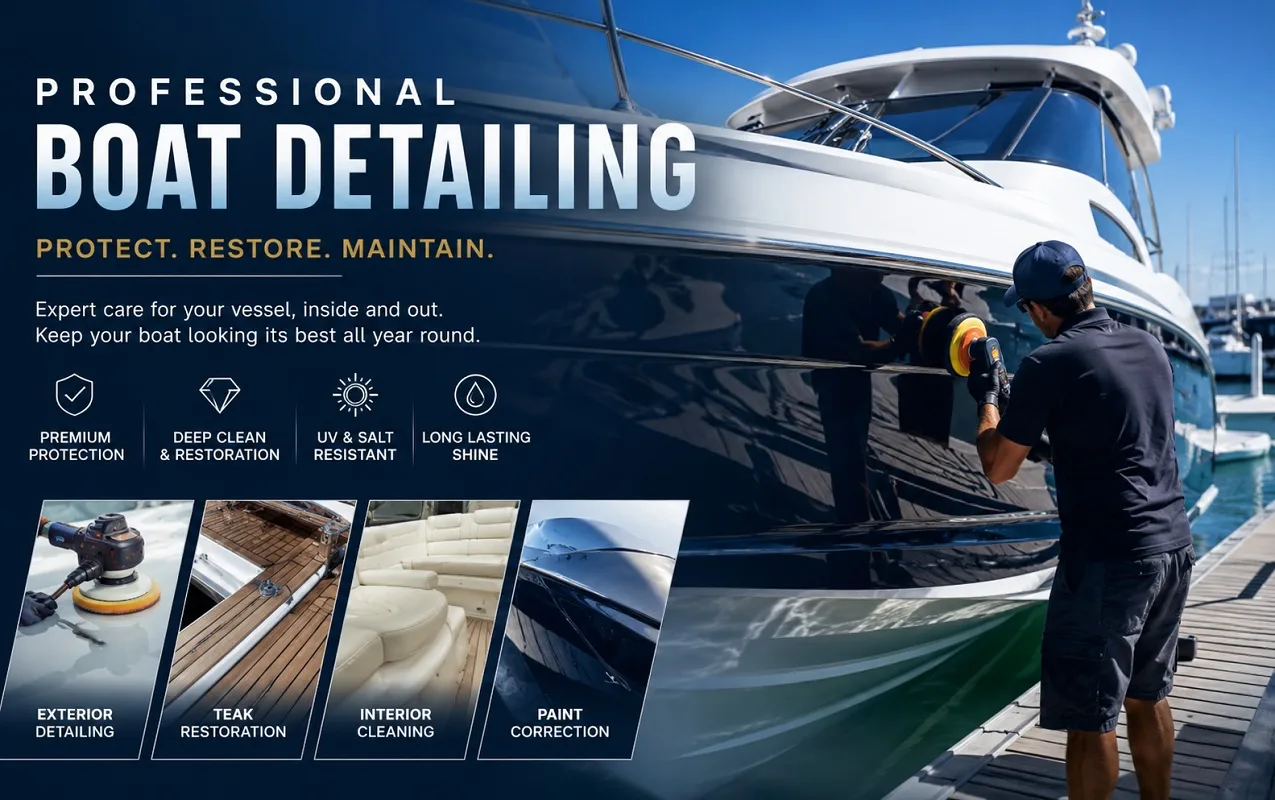
Owning a boat is one of the great joys of coastal living, but the open water comes with real surface challenges that most boat owners underestimate. Boat detailing is not simply a cosmetic exercise — it is a structured maintenance discipline that protects your vessel from the accelerating effects of salt air, UV radiation, oxidation, and marine grime that slowly erode its finish and value.
Why Your Vessel Needs Professional Marine Care
The marine environment is uniquely aggressive toward vessel surfaces. Salt crystals embed themselves into gelcoat and painted surfaces after every outing, and in coastal cities like Perth, the combination of intense UV and sea air creates conditions that strip gloss and cause premature ageing faster than freshwater environments.
Professional marine care addresses this systematically. Trained detailers use marine-grade compounds, pH-balanced cleaners, and application techniques designed specifically for fibreglass, gelcoat, vinyl, timber, and stainless surfaces — not generic cleaning products that can strip protective layers or leave residue behind.
Investing in periodic professional attention also reduces long-term costs. Catching early-stage oxidation before it penetrates the surface, treating teak before it greys beyond recovery, and applying protective coatings on schedule means avoiding expensive correction or restoration work later.
Exterior Detailing: Restoring Hull Gloss and Surface Clarity
The hull and exterior surfaces take the full force of sun, saltwater, wind, and waterline fouling. Over time, even a well-maintained fibreglass hull develops a chalky, dull oxidation layer that no amount of hosing down will reverse — it requires mechanical polishing and specialist compounds to cut back through the damaged layer and reveal the colour and gloss underneath.
A thorough exterior detail begins with full wash-down using marine-safe detergents to lift salt deposits, algae, and surface contamination before any polishing work begins. The hull is then inspected for oxidation depth, scratch severity, and any staining that requires targeted treatment, ensuring the right correction approach is chosen for each surface condition.
After correction and polishing, protective finishing — typically a quality marine wax or nano-ceramic coating — is applied to seal the surface and provide a barrier against future UV damage and salt exposure. This final protection layer is what separates a basic wash from a professional exterior detail that keeps the boat looking sharper for longer between services.
Oxidation Removal: Reversing UV and Salt Damage
Oxidation is the most common surface problem Perth boat owners face, and it accelerates faster in WA’s high-UV coastal climate than almost anywhere else in the country. The chalky, faded, and streaky appearance that develops on fibreglass and gelcoat surfaces is caused by photooxidation — UV radiation breaking down the resin binders in the gelcoat and causing it to chalk and fade from the surface down.
Removing oxidation correctly requires a multi-stage machine polishing process using cutting compounds matched to the severity of the surface damage. Light oxidation may only require a single-stage polish, while heavily weathered surfaces often need multiple correction passes before the underlying colour and gloss are revealed.
Once oxidation is removed, the exposed gelcoat is more vulnerable than ever and must be immediately protected. Applying a UV-resistant wax, polymer sealant, or ceramic coating at this stage extends the correction results and dramatically slows the return of oxidation — making this protective step as important as the correction itself.
Ceramic Coating: The Highest Level of Surface Protection
For boat owners who want the most durable and longest-lasting protection available, ceramic coatings represent the premium tier of marine surface care. A professional nano-ceramic coating chemically bonds to the gelcoat or paint surface, creating a semi-permanent hydrophobic barrier that repels salt water, blocks UV penetration, resists staining, and keeps the surface glossier and far easier to rinse clean after use.
The application process for a ceramic coating is demanding and cannot be rushed. Surfaces must first be fully corrected — free of swirl marks, oxidation, and contamination — before the coating is applied in controlled stages. Any surface imperfections trapped beneath the coating will be locked in permanently, which is why professional preparation is non-negotiable.
In a harsh marine environment, a properly applied ceramic coating typically outperforms wax by a significant margin in terms of durability and protection. While wax may last a season, a professionally applied marine ceramic coating can remain effective for multiple years with basic maintenance, making it a cost-effective investment for owners who use their boats regularly.
Teak Deck Cleaning: Preserving Timber Character and Tone
Teak decking is a premium feature on many boats, prized for its natural warmth, non-slip texture, and long-term durability when properly maintained. However, teak exposed to salt water, UV light, and weathering will grey, stain, and lose its characteristic honey-brown finish if not cleaned and cared for on a regular schedule.
Professional teak cleaning removes grey weathering, black mould staining, salt residue, and surface dirt using specialist teak cleaners that restore the timber’s natural colour without harsh stripping or unnecessary sanding that shortens the deck’s lifespan. The process is methodical — cleaning with the grain to avoid surface damage and rinsing thoroughly to remove all chemical residue.
After cleaning, many owners choose to apply a quality teak oil or sealant to slow the return of weathering and preserve the restored tone for longer. While teak will always grey back over time with ongoing UV exposure, regular professional cleaning keeps the deck in far better condition than neglect, and prevents the deep staining and surface degradation that eventually makes restoration necessary.
Interior Detailing: A Fresh, Clean Onboard Environment
The boat’s interior is often the most neglected area of all, yet it is where you and your guests spend the most time. Salt and sand track inside after every outing, settling into carpet, embedding into vinyl upholstery creases, and accumulating in corners and storage compartments where moisture becomes trapped and mould can begin to grow.
Professional interior boat detailing tackles salt residue, marine odours, mould, staining, and built-up grime across every cabin surface. Vinyl seats are cleaned with vinyl-safe products and conditioned with UV-blocking treatments to prevent cracking and fading. Carpet is vacuumed, spot-treated, and freshened, while all hard surfaces — panels, cup holders, storage compartments, and helm areas — are wiped down and sanitised.
The result of a thorough interior detail is not just visual cleanliness — it is a noticeably fresher onboard environment that removes the stale, musty smell that develops when salt moisture accumulates without proper treatment. For boat owners who entertain guests or are preparing their vessel for sale, a professionally detailed interior makes an immediate and lasting impression.
Paint Correction: Eliminating Scratches and Swirl Marks
Paint correction is a precision service focused on eliminating the surface defects — swirl marks, fine scratches, water spot etching, and buffer trails — that dull a boat’s paint or gelcoat finish and prevent it from reflecting light cleanly. These defects are almost invisible in low-angle light but become highly visible in direct sunlight or bright overhead lighting.
The correction process uses machine polishers with varying grades of foam and wool cutting pads combined with marine-grade polishing compounds to carefully abrade away a microscopic layer of clear coat or gelcoat, levelling the surface and removing defects without cutting so deeply that integrity is compromised. Each stage is inspected under bright lighting to verify improvement before progressing.
A correctly executed paint correction transforms the reflective depth and clarity of a boat’s surfaces dramatically — colours appear richer, highlights sharper, and the finish takes on a wet-look gloss that is difficult to achieve any other way. This is the foundation stage before any ceramic coating application and is also a standalone service for owners wanting to address specific paint condition issues before their next season on the water.
Choosing the Right Detailing Service for Your Boat
Not every boat needs the same level of attention at every service, and working with a detailer who assesses your vessel’s actual condition before recommending a service package ensures you get the right treatment without paying for unnecessary work. Boat Detailing requirements vary by usage frequency, storage conditions, surface type, and how much time has passed since the last professional service.
Boats stored in marina berths in direct sun and salt air typically need professional attention every three to four months to stay ahead of oxidation and staining. Trailered boats stored undercover may extend that interval, while vessels used daily in commercial or charter roles may need more frequent maintenance details to stay presentable and properly protected.
Mobile detailing services bring professional equipment, water supply, and specialist products directly to your marina, mooring, or home — eliminating the logistical hassle of transporting your vessel for care. For Perth boat owners managing busy schedules, mobile Boat Detailing is the most practical way to maintain a consistent service schedule and keep a vessel looking and performing its best throughout the year.