Hardscaping in Altoona: How to Turn a Yard Into a Space You Actually Use
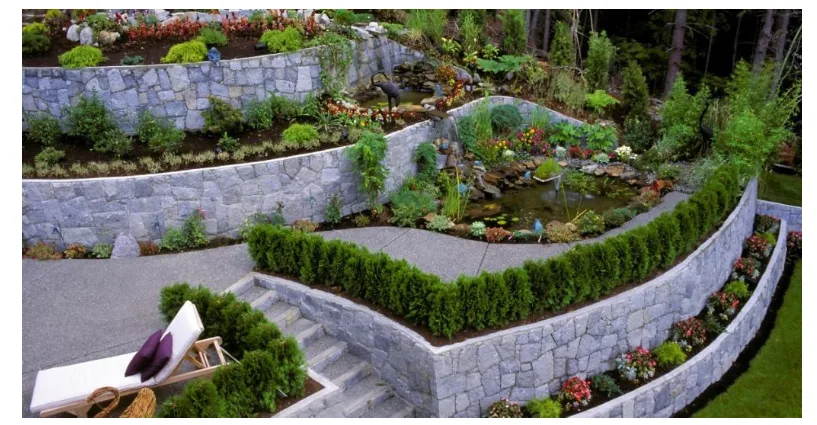
Most Altoona homeowners don’t have a lawn problem. They have a yard-potential problem.
The grass gets mowed. The beds get mulched. The property looks fine. But “fine” and “functional” aren’t the same thing. The backyard that could be a gathering space stays a patch of grass nobody sits on. The sloped side yard that washes out every spring stays a muddy nuisance. The front approach that’s been crumbling concrete since the previous owners stays crumbling concrete.
Hardscaping is what changes that. It’s the category of outdoor improvement that turns a yard from something you maintain into something you use — and in a region with Blair County’s terrain and climate, it’s also one of the most practical investments a property owner can make.
Here’s what Altoona homeowners should understand before diving in.
What Hardscaping Actually Means
The term gets used loosely, so it’s worth a working definition. Hardscaping refers to the non-living, structural elements of an outdoor space — the built features that give a yard its bones. Stone patios, brick walkways, retaining walls, gravel driveways, fire pit surrounds, outdoor steps, and decorative edging are all hardscaping. It’s the counterpart to softscaping, which covers plants, grass, mulch, and living material.
The two work together, but hardscaping tends to set the framework that everything else organizes around. Get the hardscaping right, and the softscaping has something to anchor to. Skip the hardscaping, and even a beautifully planted yard can feel unfinished — like furniture arranged in a room with no walls.
Why Hardscaping Makes Particular Sense in Altoona
Every region has its own reasons to prioritize hardscaping, and Blair County has several compelling ones.
The terrain demands it. Altoona sits in a valley flanked by the Allegheny Mountains, and residential lots in and around the city reflect that geography. Sloped lots, uneven grades, and hillside properties are the norm rather than the exception. Without structural intervention — retaining walls, graded terraces, proper drainage channels — sloped yards erode, wash out planting beds, and funnel water toward foundations. Hardscaping isn’t just aesthetics on a Blair County hillside. It’s engineering.
The winters are hard on bare ground. Pennsylvania’s freeze-thaw cycle is relentless, and unimproved yard surfaces show it. Bare soil along frequently traveled paths compacts and ruts. Mulched areas wash and shift. A properly installed stone or paver surface handles freeze-thaw cycles far better than organic materials and requires minimal annual maintenance to look good year after year.
Outdoor living is increasingly where people want to be. Across the Altoona area, homeowners have been investing in usable outdoor spaces at a pace that’s been building for years. A functional patio with good surface drainage, comfortable dimensions, and a defined perimeter isn’t a luxury for most families — it’s the difference between having outdoor space and actually using outdoor space. Summer evenings in Blair County, when the humidity drops and the hills turn every shade of green, are worth a decent place to sit.
The return on investment is real. In a housing market where moving is expensive and good inventory is competitive, improving what you have makes increasing financial sense. A well-executed hardscaping project — a natural stone patio, a clean retaining wall, a paved driveway — adds genuine appraised value to a property. It also photographs well, which matters in today’s real estate environment more than it used to.
The Most Impactful Hardscaping Projects for Altoona Properties
Not every project makes sense for every property. Here’s an honest look at the categories that tend to deliver the most value in this specific region.
Patios
A well-built patio is the hardscaping project with the broadest appeal and the clearest return. In Altoona, where summers are warm enough to live outside and evenings are genuinely pleasant from May through October, a functional outdoor living space gets used. The material choices — natural stone, concrete pavers, brick, or poured concrete — affect cost, durability, and maintenance requirements, and the right choice depends on your budget, aesthetic preference, and soil conditions on the site.
Natural flagstone has a timeless quality that suits Blair County’s older housing stock particularly well. It’s durable, handles temperature swings reliably, and improves with age rather than showing wear the way stamped concrete can. Concrete pavers offer more uniformity and a wider range of design options at a more accessible price point. A quality installation of either material, properly graded for drainage and set on a compacted base that accounts for Pennsylvania’s frost depth, will perform well for decades.
Size matters more than most homeowners expect at the planning stage. A 10×10 patio sounds adequate until furniture goes on it. For comfortable use by more than two people, 16×16 or larger is typically the starting point. Build for how you actually want to use the space, not the minimum footprint.
Retaining Walls
If your property has any slope to it — and in the Altoona area, most do — a retaining wall may be one of the most practical hardscaping investments you can make. Well-built retaining walls solve real problems: they stop erosion, create usable flat space on hillside lots, protect foundations from water pressure, and define outdoor spaces with a clean structural edge.
The functional requirements of a retaining wall make quality of construction more important here than in almost any other hardscaping category. A wall that’s retaining significant soil volume against Blair County’s wet springs needs proper footer depth, drainage aggregate behind the wall face, and materials suited to the load it’s managing. Decorative garden walls are one thing. A wall holding back a slope is structural work, and it needs to be treated as such.
Block, natural stone, and timber all have their place, with natural stone and concrete block being the most durable long-term options for larger applications in Central Pennsylvania’s climate. A contractor who talks through drainage and footer depth before discussing aesthetics is one who understands what they’re building.
Walkways and Pathways
Walkways are among the most underappreciated hardscaping improvements a homeowner can make. A defined stone or paver path from the driveway to the front door changes the entire arrival experience of a property. A pathway through the backyard from the patio to the garage, the garden, or the shed makes everyday movement easier and keeps foot traffic off the grass.
In Blair County, where properties often have side yards with significant grade changes or areas that turn to mud every spring, a functional pathway also solves a practical drainage problem. Stepping stones or a mortared flagstone path gives you a dry, stable surface year-round rather than a muddy shortcut through the lawn.
Outdoor Steps
Sloped properties often need steps — to connect a patio to the yard below it, to navigate a grade change between the driveway and the front entrance, or to access a backyard from the house. Natural stone or paver steps, properly set with a secure footing below frost depth, handle Central Pennsylvania winters without the heaving and cracking that plagues poured concrete in freeze-thaw climates. They also look significantly better and integrate naturally with other stone elements on the property.
Gravel and Stone Driveways
A stone or gravel driveway done right is low-maintenance, handles drainage well, and suits the rural and semi-rural character of Blair County’s residential landscape. Done poorly — wrong aggregate size, inadequate base, poor drainage — it ruts, washes, and becomes a constant maintenance headache. The difference is almost entirely in the preparation: a properly excavated and compacted base, appropriate aggregate selection for the traffic load, and edge containment that keeps material from migrating.
What to Look for in a Hardscaping Contractor in the Altoona Area
Hardscaping is not a category where the lowest quote usually represents the best value. The materials are commodities — anyone can buy the same pavers or stone. What varies is the quality of the base preparation, the attention to drainage, the accuracy of the cuts and fits, and whether the contractor builds for Blair County’s actual climate or builds to a standard that would be adequate somewhere warmer and drier.
Ask specifically about frost depth. In Blair County, ground frost can penetrate 30 inches or more in severe winters. Any hardscape installation that doesn’t account for this — patios, walls, steps, edging — is going to move. A contractor who glosses over base preparation or footer depth in favor of talking about surface aesthetics is telling you something important about their priorities.
Ask to see completed projects, and if possible, projects that have been through several Pennsylvania winters. A patio that looks great the day it’s installed is one thing. A patio that still looks great after five Blair County freeze-thaw cycles is another.
Ask whether the company handles both hardscaping and the surrounding lawn and landscaping work. The cleanest results happen when the hardscaping and the softscaping around it are handled by the same team — no coordination gaps, no seams where one contractor’s work meets another’s.
For homeowners in Altoona, Hollidaysburg, Duncansville, Cresson, and across Blair County, hardscaping Altoona done right means working with a team that understands the region’s terrain and climate, builds to the structural standard the work demands, and delivers results that look as good in year five as they did on day one.
Starting the Conversation
The best hardscaping projects start with a clear conversation about how you actually use your yard — or want to — rather than a catalog of options to choose from. A contractor worth hiring will ask questions before they start offering solutions. What problem are you trying to solve? What’s the foot traffic pattern? Where does water go after a heavy rain? What does the rest of the property need to look like when this is done?
Those questions lead to projects that work. And in a region with Altoona’s terrain, where the land has its own strong opinions about what should go where, projects that work are worth every penny.
Mountain Top Mowing & Landscaping LLC is a locally owned, full-service outdoor property company serving Blair County and Cambria County, Pennsylvania. Services include hardscaping, patios, retaining walls, walkways, lawn care, landscaping, tree and stump services, and pressure washing. Free estimates available at (814) 935-9171.