Key Properties That Define Quality Rubber Lubricants in Thailand
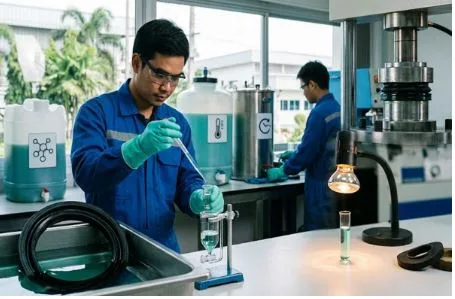
The rubber industry plays a major role in Thailand’s manufacturing economy, supplying materials for automotive parts, industrial goods, and consumer products. In such a demanding environment, performance additives like lubricants are essential for smooth processing and durability of rubber components. A high-quality lubricant reduces friction and improves molding efficiency. In this context, rubber lubricant thailand solutions address tropical climate challenges affecting performance.
Thailand’s industrial environment requires lubricants that withstand stress while maintaining stability across production stages. Manufacturers rely on advanced formulations that improve productivity and ensure safety and consistency. As rubber applications expand across key sectors, these lubricants support efficient and reliable production outcomes.
Main Properties of High Quality
1. Lubricity Performance
Lubricity performance refers to the ability of a lubricant to reduce friction between rubber surfaces or between rubber and machinery components. High lubricity ensures smoother processing during manufacturing operations, preventing sticking, drag, and tearing of materials, especially in precision-driven production lines where consistency is essential. In many industrial setups, rubber lubricant thailand are used to maintain stable performance and improve processing efficiency during continuous operations.
In addition, strong lubricity reduces wear on industrial equipment, helping extend machine lifespan and lowering overall maintenance costs. It also enhances the surface finish of rubber products, ensuring uniform quality and minimizing defects across production cycles. This makes lubricity an important factor not only for productivity but also for long-term operational reliability in rubber processing industries.
2. Thermal Stability
Thermal stability is a critical property that allows rubber lubricants to maintain performance under high temperatures. Rubber processing often generates significant heat, particularly during molding and extrusion stages. If a lubricant lacks thermal stability, it may degrade or lose effectiveness under these conditions.
A thermally stable lubricant resists breakdown and maintains its protective film even under continuous heat exposure. This ensures consistent performance, reduces production errors, and supports safer industrial operations in high-temperature environments.
3. Chemical Compatibility
Chemical compatibility ensures that the lubricant does not react negatively with rubber compounds or additives used in manufacturing. Rubber materials vary widely, including natural and synthetic formulations, each with unique chemical properties. A compatible lubricant preserves the integrity of these materials without causing swelling, cracking, or weakening.
This property is essential for maintaining the mechanical strength and durability of finished rubber products. It also ensures that the lubricant does not interfere with downstream processes such as bonding, coating, or assembly.
4. Viscosity Control
Viscosity control is a key performance factor that determines how a lubricant flows and spreads during application. Proper viscosity ensures that the lubricant can coat surfaces evenly without becoming too thick or too runny. In industrial environments, consistency in flow behavior is essential for predictable performance.
In changing climate conditions, rubber lubricant thailand products must maintain stable viscosity across varying temperatures. This stability ensures smooth application, reduces material waste, and improves overall production efficiency by maintaining uniform coverage across rubber surfaces.
5. Environmental and Safety Standards
Environmental and safety compliance is increasingly important in Thailand’s industrial sector. High-quality rubber lubricants must meet strict regulations to minimize environmental impact and ensure worker safety. This includes using non-toxic ingredients and reducing harmful emissions during production and use.
In addition, industrial cleaning processes often rely on chemical solutions such as industrial degreaser thailand to maintain equipment hygiene and remove heavy residues, supporting safer and more efficient lubricant application environments.
Many modern formulations are designed to be biodegradable and eco-friendly, supporting sustainable manufacturing practices. Safety compliance also ensures that workers are not exposed to hazardous substances during handling, storage, or application processes.
6. Oxidation Resistance
Oxidation resistance refers to a lubricant’s ability to withstand chemical changes caused by exposure to oxygen. Over time, oxidation can lead to thickening, sludge formation, or performance loss. In Thailand’s warm and humid environment, this process can occur more rapidly if the lubricant is not properly formulated.
A lubricant with high oxidation resistance maintains its stability, consistency, and effectiveness over extended periods. This improves storage life and ensures reliable performance throughout production cycles.
7. Moisture Resistance
Moisture resistance is essential in Thailand due to its high humidity levels and frequent exposure to water in industrial environments. Rubber lubricants must maintain performance even when exposed to moisture, which can otherwise lead to emulsification or corrosion issues.
Effective moisture-resistant lubricants prevent water absorption and maintain stable lubrication properties. This ensures consistent performance in both indoor and outdoor applications, even under challenging environmental conditions.
8. Ease of Application
Ease of application refers to how efficiently a lubricant can be applied during industrial processes. A product that spreads easily and uniformly reduces labor time and improves production speed. This is particularly important in large-scale manufacturing where efficiency directly impacts productivity.
In addition, rubber lubricant thailand formulations designed for easy application help reduce waste and ensure consistent coating across rubber surfaces. This improves product quality while simplifying operational procedures in industrial settings.
9. Cost Efficiency
Cost efficiency is not simply about selecting the cheapest lubricant but about achieving the best long-term value. High-quality lubricants reduce maintenance costs, minimize product defects, and extend equipment lifespan, leading to overall savings for manufacturers.
Efficient performance also reduces downtime and improves production consistency. As a result, investing in a well-formulated lubricant provides significant economic advantages over time.
Why Shinseika Industrial Stands Out?
Shinseika Industrial Co., Ltd. is recognized as a trusted supplier of high-performance industrial maintenance and production solutions in Thailand and beyond. The company specializes in a wide range of products, including cleaners, lubricants, protectants, and specialty chemicals designed to meet the demanding needs of modern manufacturing environments.
What sets Shinseika Industrial apart is its strong focus on quality consistency, technical reliability, and industry-specific solutions. Their product portfolio is developed to support critical industrial processes where precision, safety, and efficiency are essential. By offering advanced formulations tailored for different applications, the company helps manufacturers improve productivity while reducing operational risks.
In addition, it emphasizes long-term value through durable and efficient chemical solutions. Their expertise in industrial maintenance ensures that clients receive not only high-performing products but also dependable support for continuous improvement in production processes.
Conclusion
Rubber lubricants are essential to the efficiency and quality of Thailand’s rubber manufacturing industry. Their performance directly affects production speed, product durability, and operational reliability. A well-engineered rubber lubricant thailand solution ensures that industries can operate smoothly even under challenging environmental conditions such as heat and humidity.
By focusing on key properties such as lubricity, thermal stability, compatibility, and cost efficiency, manufacturers can select lubricants that deliver long-term value. Ultimately, the right choice of lubricant supports sustainable production, improves product quality, and strengthens Thailand’s position in the global rubber industry.