DTC Brands Shift to AI-Generated UGC Video Ads as Creator Costs Rise
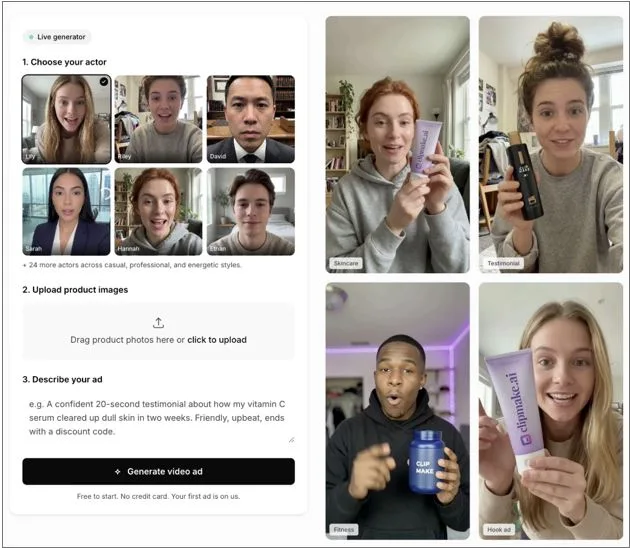
A growing number of direct-to-consumer and ecommerce brands are replacing filmed user-generated content with AI-generated video ads, as the cost and turnaround of working with human creators collide with paid-social platforms that demand a constant supply of fresh creative.
The shift reflects a structural change in how online advertising works. As ad platforms have automated audience targeting, the performance of a campaign increasingly hinges on the volume and variety of creative a brand can feed the system. That has turned ad production into the main bottleneck for growth — and made the traditional model of commissioning UGC videos one at a time difficult to sustain.
User-generated content, the handheld, creator-style video that reads as a recommendation rather than an advertisement, remains one of the highest-performing formats on social platforms. But producing it conventionally means briefing a creator, shipping product, and waiting a week or two for a usable clip, at a cost commonly ranging from $100 to $500 per video on creator marketplaces, and more through agencies. Brands that want to test dozens of variations a month — the cadence the algorithms reward — find the math does not work.
AI video platforms have emerged to close that gap. Among them is ClipLoft, which generates creator-style video ads from a script or product URL in about a minute, using a library of more than 100 AI avatars spanning different ages, looks and demographics. Brands can also create custom avatars to serve as a recurring on-screen spokesperson, generate AI influencers for campaigns, and produce talking-head, testimonial and corporate formats, along with translation into more than 20 languages. Plans start at $49 a month, with per-video costs falling to a few dollars at higher volumes.
The appeal, according to the company, is less about any single video than about testing velocity: the ability to generate many variations of a concept, run them against one another, and scale whichever performs — without a camera, a shoot or a scheduling cycle.
The category is expanding alongside broader growth in the creator economy, which Goldman Sachs has projected will roughly double from about $250 billion to around $480 billion by 2027. Interest tracks the same trend and has climbed sharply over the past year as marketers look for tools to produce creator-style advertising at scale.
The rise of AI-generated UGC has not been without debate. Critics question whether content made by software can still be called user-generated, and whether AI presenters undercut the authenticity that makes the format effective. Industry observers note that the value of UGC was always rooted in a conversational, native style rather than in who produced it, and that platforms are moving to standardize disclosure of AI-generated content in advertising. Companies in the space, ClipLoft among them, have generally framed their products around creative output and testing speed rather than concealment.
ClipLoft has positioned itself specifically around performance marketing for DTC and ecommerce brands, pairing its avatar library and custom-avatar feature with a broader set of AI video tools aimed at advertising rather than corporate communications.
The verticals adopting the technology most quickly are those that rely heavily on a steady stream of social-ad creative — skincare and beauty, supplements and wellness, fashion, fitness and consumer packaged goods among them — along with categories facing advertising restrictions that push them toward organic and owned creative.
For smaller brands, the change carries a particular significance. Production cost and speed once gave the largest advertisers a structural edge in creative testing. As AI generation drives the cost of an additional ad variation toward negligible, a two-person ecommerce brand can now test creative at a pace that recently required a dedicated content team — narrowing, at least in production terms, a gap that money used to guarantee.
Whether AI UGC ultimately complements human creators or displaces a share of their work remains an open question. What is clear is that the economics of producing ad creative have shifted, and the brands competing for attention on social platforms are adjusting to it.