Saturn School Project: A Complete Guide for Students
Create an impressive Saturn school project with creative ideas, facts, materials, and presentation tips for students of all ages.
A Saturn school project is one of the most exciting ways for students to learn about our solar system. Saturn is famous for its stunning rings, massive size, and unique appearance, making it a favorite planet for science assignments and classroom presentations. Whether you are creating a model, writing a report, or preparing a display board, learning about Saturn can be both educational and fun.
Students often choose Saturn because it offers plenty of interesting facts to explore. From its beautiful ring system to its many moons, the planet provides endless opportunities for creativity and scientific discovery. A well-prepared project can help students understand astronomy while improving their research and presentation skills.
“Saturn is not just a planet with rings; it is a fascinating world that continues to amaze scientists and students alike.”
Why Saturn Is a Popular Choice for School Projects
Saturn stands out among all the planets because of its magnificent rings. These rings are made up of countless pieces of ice, dust, and rock that orbit the planet. Their beauty makes Saturn visually appealing and perfect for educational displays.
Another reason students enjoy researching Saturn is the abundance of interesting information available. Scientists have studied the planet for decades, uncovering facts about its atmosphere, weather systems, and moons. This wealth of knowledge allows students to create engaging presentations that capture the attention of teachers and classmates.
The Saturn school project also encourages creativity. Students can design three-dimensional models, colorful posters, and interactive displays as part of their Saturn school project. These activities make learning more enjoyable while helping students develop artistic and scientific skills at the same time.
Basic Facts About Saturn
Before creating your display, it is important to understand some key facts about Saturn. Gathering accurate information helps improve the quality and credibility of your assignment.
Saturn is the sixth planet from the Sun and the second-largest planet in the solar system. It is classified as a gas giant because it consists mainly of hydrogen and helium rather than solid rock. Despite its enormous size, Saturn is surprisingly light for its volume.
The planet experiences strong winds and extreme weather conditions. Some storms on Saturn can last for months or even years. Scientists continue studying these atmospheric phenomena to better understand how giant planets function.
Quick Facts About Saturn
| Feature | Information |
| Planet Type | Gas Giant |
| Position from Sun | Sixth Planet |
| Diameter | Approximately 120,536 km |
| Number of Known Moons | More than 140 |
| Famous Feature | Spectacular Ring System |
| Length of a Day | About 10.7 Hours |
| Length of a Year | About 29.5 Earth Years |
These facts can be included in posters, reports, or presentation boards to provide readers with a quick overview.
Materials Needed to Create a Saturn Model
A model is often the highlight of a classroom presentation. Fortunately, creating one does not require expensive materials. Most supplies can be found at home or in a local craft store.
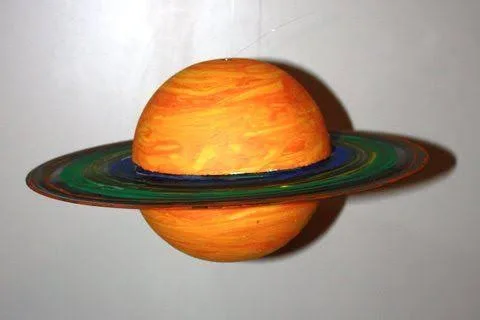
Common materials include a foam ball, cardboard, glue, paint, markers, and scissors. The foam ball serves as the planet itself, while cardboard can be cut into rings. Acrylic paint helps give the model a realistic appearance.
Students may also add glitter, colored paper, or small labels to make the project more attractive. The goal is to create a visual representation that accurately reflects Saturn’s unique features while showcasing creativity and effort.
Step-by-Step Ideas for Building a Saturn Model
Creating a realistic model begins with painting the foam ball in shades of yellow, gold, and light brown. These colors resemble the planet’s natural appearance as seen in space photographs.
Next, cut a large ring shape from cardboard and paint it with gray and white tones. Once dry, attach the ring around the middle of the planet. Ensure the ring is tilted slightly, as Saturn’s rings are not perfectly horizontal when viewed from Earth. This simple technique can make your Saturn school project more accurate and impressive.
Adding labels can make the display more educational. Students can identify the planet, its rings, and notable moons. A labeled model demonstrates both creativity and scientific understanding.
The finished display can be mounted on a stand or placed inside a solar system exhibit. This approach creates a visually impressive presentation that stands out during science fairs and classroom exhibitions.
Fascinating Facts to Include in Your Presentation
Interesting facts help make any project memorable. Saturn is full of surprising features that can capture the audience’s attention.
One remarkable fact is that Saturn could float in water if there were an ocean large enough to hold it. This is because the planet’s average density is lower than water. Students often find this fact surprising and memorable.
Saturn is also home to numerous moons. Among them, Titan is especially important because it has a thick atmosphere and lakes of liquid methane. Scientists consider Titan one of the most intriguing objects in the solar system.
The planet’s rings extend hundreds of thousands of kilometers into space. Although they appear solid from a distance, they are actually composed of countless individual particles moving around Saturn.
Educational Benefits of Learning About Saturn
Researching Saturn offers more than just scientific knowledge. Students gain valuable academic skills that can help them in many subjects.
Reading books, articles, and educational resources improves research abilities. Organizing information into a coherent report develops writing and communication skills. These benefits extend beyond science class and support overall academic growth.
Hands-on activities such as building models encourage creativity and problem-solving. Students learn how to plan, design, and execute a project from start to finish. These experiences build confidence and make learning more engaging.
Studying space also inspires curiosity about the universe. Many future scientists develop their interest in astronomy through school assignments focused on planets like Saturn.
Creative Display Board Ideas
A display board can significantly enhance the visual appeal of a classroom assignment. Using bright colors, images, and diagrams helps communicate information effectively.
Consider dividing the board into sections covering Saturn’s rings, moons, atmosphere, and discovery history. This organization makes the content easier to read and understand.
Including printed images from telescopes and spacecraft missions can make the presentation more professional. Students can also add fun facts, charts, and diagrams to create a more engaging experience for viewers.
A well-designed display board combines educational value with creativity, making it easier to leave a lasting impression on teachers and classmates.
Tips for Presenting Your Saturn Project
A strong presentation can make even a simple display stand out. Preparation is key to delivering information clearly and confidently.
Practice speaking about the planet before presenting. Focus on explaining major features such as the rings, moons, and atmospheric conditions. Avoid reading directly from notes whenever possible.
Maintaining eye contact and speaking clearly helps keep the audience engaged. Students should also be prepared to answer questions about their research. Demonstrating knowledge beyond the display often impresses teachers and judges.
Confidence grows with practice. Rehearsing several times before presentation day can greatly improve performance and reduce nervousness.
Conclusion
A Saturn school project is an excellent way to combine science, creativity, and hands-on learning. The planet’s beautiful rings, fascinating moons, and unique characteristics make it one of the most interesting topics in astronomy. By researching accurate facts, creating an attractive model, and preparing a confident presentation, students can develop a project that is both educational and memorable.
Whether the goal is a classroom assignment, science fair exhibit, or educational display, Saturn provides endless opportunities for exploration and discovery. With thoughtful planning and creativity, students can create a project that truly shines and leaves a lasting impression.
FAQs About Saturn School Project
What is a Saturn school project?
A Saturn school project is an educational assignment focused on the planet Saturn. It may include a model, report, poster, or presentation that explains the planet’s characteristics, rings, moons, and position in the solar system.
Why is Saturn a good topic for a school project?
Saturn is a popular topic because of its beautiful rings and fascinating scientific features. The planet offers plenty of information that students can research and present in creative ways.
What materials are needed to make a Saturn model?
Students can use foam balls, cardboard, paint, glue, markers, and craft supplies. These materials help create a realistic representation of Saturn and its famous ring system.
What facts should be included in a Saturn school project?
Important facts include Saturn’s position as the sixth planet from the Sun, its classification as a gas giant, its extensive ring system, and its large number of moons, including Titan.
How can I make my Saturn school project stand out?
Adding a detailed model, colorful display board, interesting facts, and confident presentation skills can make your project more impressive. Creative visuals and accurate information often leave a strong impression on teachers and classmates.
How does studying Saturn help students learn?
Researching Saturn improves scientific knowledge, research abilities, critical thinking, and presentation skills. It also encourages curiosity about astronomy and space exploration.