AI Humanizer Tools: How to Make AI Writing Sound More Human
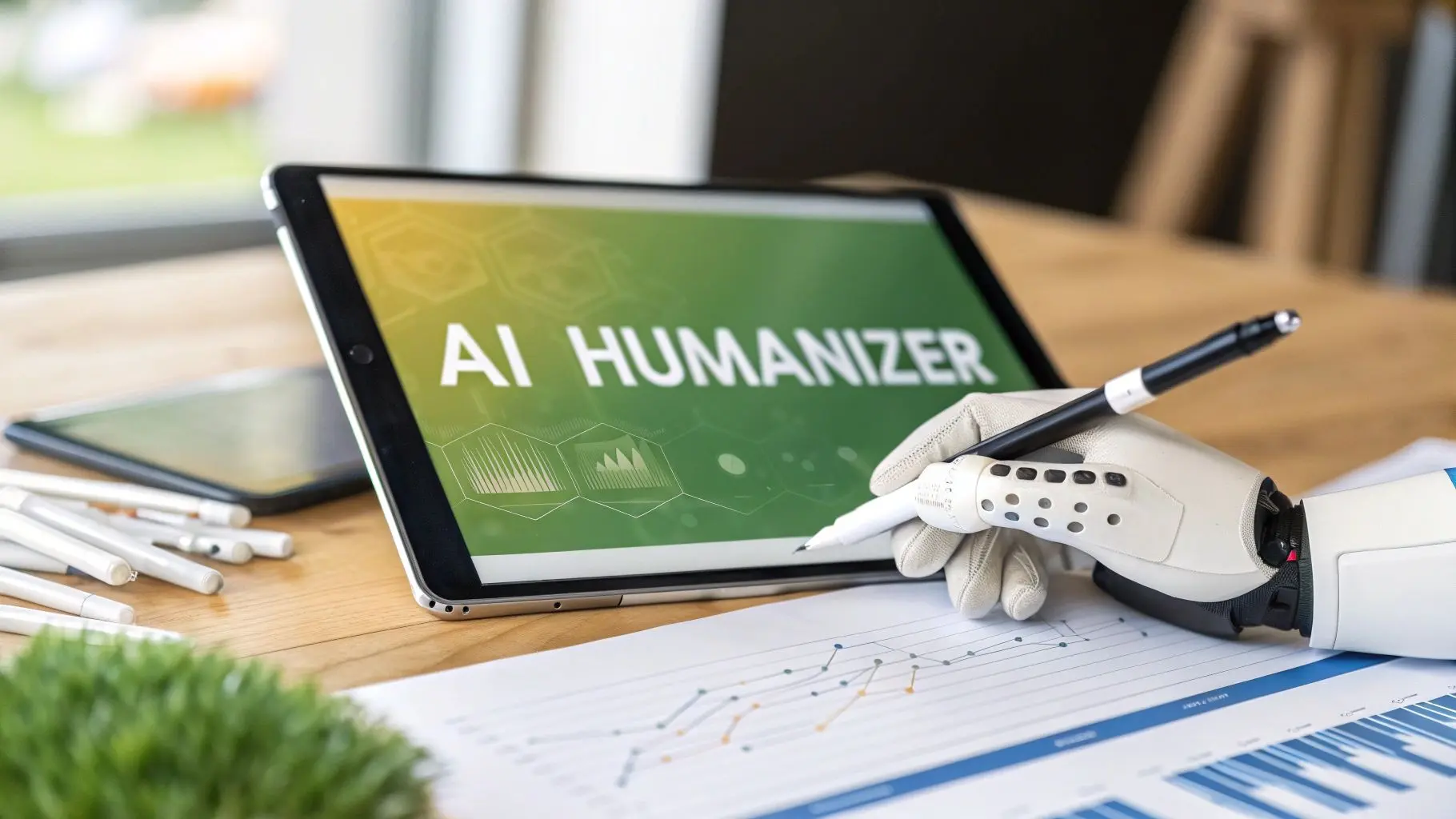
The conversation about artificial intelligence in writing has shifted significantly over the past year. Where once the discussion focused on whether AI could produce useful text at all, the focus has now moved to how human writers can integrate these tools into existing workflows without losing their personal voice. A new category of platforms has emerged to address that specific problem, and aihumanizertools.com tracks the leading options in this growing market.
Generative models like ChatGPT, Claude, and Gemini produce competent prose that can pass for human work in many contexts, but they have characteristic patterns. Sentence length tends toward uniformity. Vocabulary draws from a predictable register. Transitions follow standard structures. To a careful reader these patterns become recognizable, and to automated detection systems they form clear signatures. Humanization tools rewrite text to break those patterns while preserving meaning, returning the rhythm and idiomatic variation that human writing naturally exhibits.
The market for these tools has grown rapidly because the use cases keep expanding. Students draft essays with AI assistance and need the final version to read as their own work. Marketers produce content at scale and want it to perform well in search results, which increasingly penalize obviously machine-generated text. Journalists, consultants, and corporate writers all face similar pressures. The common thread is the desire to use AI for productivity without surrendering authorship.
Choosing the right humanizer depends on several factors. Language support matters enormously for non-English writers. Detection bypass rates vary across the major scanners. Pricing structures range from generous free tiers to enterprise volume contracts. Integration options, from web apps to API access to browser extensions, determine how smoothly the tool fits into existing work. The best platforms also offer integrated detection scoring, which lets users verify their output before submitting it anywhere it might be checked.
Beyond the technical features, the question of data handling deserves attention. Some platforms explicitly state that user text is never used for training. Others are less transparent. Anyone working with confidential client material, proprietary research, or sensitive personal information should understand how each tool handles inputs before adopting it as a regular part of the workflow.
The ethical conversation around these tools remains active. Critics argue that humanization is fundamentally about evading detection systems that exist for good reasons, particularly in academic contexts. Defenders point out that detectors produce false positives often enough that legitimate users need defensive tools just to avoid being flagged for work they actually wrote. Both positions have merit, and the responsible use of humanization sits somewhere between the extremes: a tool that complements human judgment rather than replaces it.
Looking forward, the field will continue to shift as language models improve and detection systems adapt. What seems durable is the underlying need for tools that help people write effectively with AI assistance while maintaining the qualities that make writing personal. That need will not disappear; it will only become more sophisticated.
For anyone navigating this category, the practical advice is consistent. Test multiple tools on representative samples of your own work. Pay attention to how each handles your subject matter and register. Read the data and privacy policies. And remember that no tool, however capable, replaces the underlying work of thinking clearly and writing with intent.
Visit: thetechnotrick com