Tractor Quick Hitches: A Practical Guide to Faster, Safer Implement Coupling on British Farms
Introduction
On a British mixed farm, the working day means constant changes of implement. A loader bucket comes off for a topper, the topper for a fertiliser spreader, the spreader for a set of harrows, and each change once meant climbing down into the mud to line up pins by hand. In wet Midlands clay or on a windswept hill farm in Wales, that manual coupling is awkward, slow, and a leading cause of crushed fingers and strained backs. A tractor 3-point quick hitch removes the worst of it, letting an operator connect and disconnect implements from the tractor seat in moments, turning a five-minute wrestle into a quick, safe hook-up.
What a Quick Hitch Is
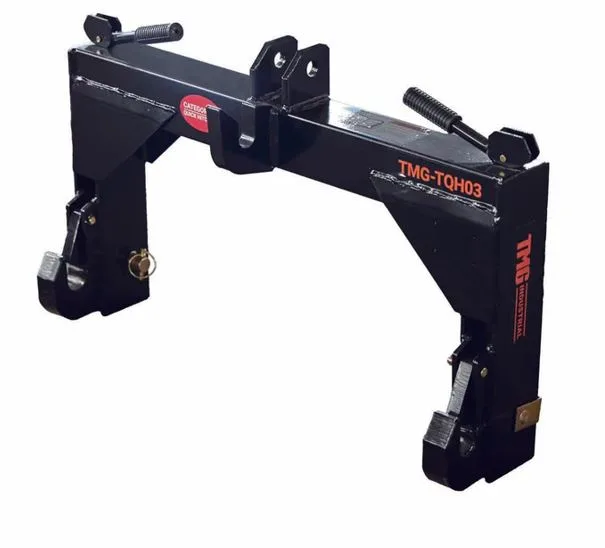
A quick hitch is a triangular steel frame that mounts permanently to a tractor’s three-point linkage and presents a pair of hooks and a top latch to receive an implement. The implement carries matching pins, and the hooks engage them as the linkage is raised, locking automatically. Because the frame holds the standard linkage geometry, it suits any implement built to the same category, so a single hitch serves a whole yard of equipment without further adjustment.
The Safety Case
Manual implement coupling is among the more dangerous routine jobs on a farm. An operator stands between a reversing tractor and a heavy implement, aligning pins while working the linkage, and a moment’s misjudgement can trap a hand or worse. Reducing this manual handling is a priority across British agriculture, where the safety record of tractor work is closely watched. A quick hitch keeps the operator in the seat during coupling, removing them from the pinch point entirely and cutting both injury risk and fatigue.
Efficiency on Mixed Farms
Time lost to coupling adds up quickly on a farm that changes implements many times a day. A contractor moving between jobs, or a livestock and arable operation switching tasks with the weather, gains real working hours when each change takes seconds rather than minutes. Faster coupling also means an operator is more willing to fit the right implement for each job rather than making do, which improves the quality of the work across the whole farm.
Build and Capacity
The strength of a quick hitch rests on its frame steel, hooks, and latch. A unit rated to a lifting capacity of around three thousand six hundred pounds suits tractors up to about ninety horsepower, matching the hitch to the weight of the implements such a machine carries. Category two pins and spacing fit the mid-size implements common on British farms, and a self-locking latch holds the top link securely so nothing can jump loose under load on rough ground.
Standards and Compatibility
A quick hitch only works if it matches the implements it must lift. Hitches and implements are built to standardised dimensions and category sizes so that equipment from different makers couples reliably, and choosing a hitch in the correct category is essential. Across a typical range of tractor attachments and implements, the same category two hitch will handle mowers, spreaders, cultivators, and blades, provided each carries pins to the agreed standard. Confirming that an implement conforms before buying avoids the frustration of a hitch that will not quite reach.
Performance Factors
Several conditions decide how well a quick hitch performs in daily use:
- Category and pin spacing matched to the implements
- Lifting capacity above the heaviest implement
- Self-locking latch reliability under load
- Build quality of the hooks and frame welds
- Implement pins set to the correct standard
On a stony upland farm in the Pennines, operators check that each implement’s pins sit true, since a bent pin is the usual reason a hitch fails to seat cleanly.
Safe Operating Practices
Even with a quick hitch, a few practices keep coupling safe. Approach the implement squarely and at low engine speed, confirm both lower hooks have engaged before lifting, and check that the top latch has locked before moving off. Keep bystanders clear during coupling, and inspect the hooks and latch for wear before each season.
What Buyers Should Weigh
Choosing a quick hitch is a question of matching it to your tractor and implements. Before buying, weigh these factors:
- Category sized to your implements
- Lifting capacity for your heaviest tool
- Tractor horsepower within the rating
- Latch design and locking security
- Build quality for a long service life
- Warranty and parts support in the United Kingdom
Industry Outlook
As farm labour grows scarce and safety expectations rise across British agriculture, anything that makes routine tractor work quicker and safer is gaining ground. Quick coupling reduces the manual handling that causes injury and the lost time that erodes a working day, and designs continue to improve in strength and ease of use. For any farm or contractor that changes implements often, a 3-point quick hitch has become one of the simplest upgrades that pays back in safety and saved time across every season.