Why Hospitals and Schools Are Quietly Replacing Mineral Fiber Ceilings with Aluminum — And What It Means for Facility Managers
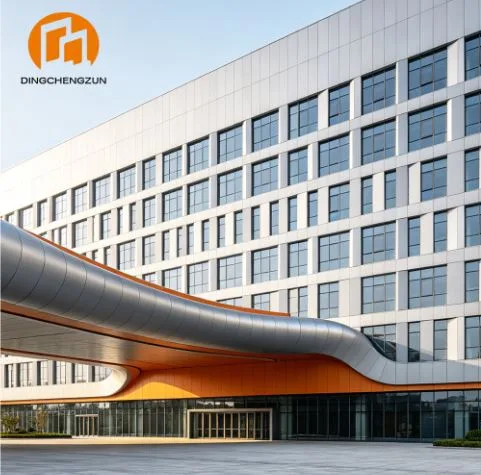
For decades, mineral fiber ceiling tiles were the default choice for institutional buildings. They were affordable, widely available, and familiar to contractors across the world. But over the past several years, procurement teams at hospitals and educational institutions have been making a different call — and the shift is accelerating.
The reason is not simply aesthetics. In healthcare and education environments, ceiling performance is tied directly to patient outcomes, infection rates, and how well students absorb information in a classroom. When those requirements are examined closely, aluminum ceiling systems — including those offered by specialized manufacturers like Guangzhou Dingchengzun Building Materials — address gaps that mineral fiber panels were never engineered to fill.
The Infection Control Problem That Changed the Specification Conversation
The COVID-19 pandemic forced a fundamental rethink of interior material standards in healthcare settings. Infection prevention had always mattered, but the scrutiny applied to surface materials — how they trap particles, whether they can withstand repeated disinfection, and how quickly microbial colonies establish on their surface — reached a new level after 2020.
The Facility Guidelines Institute (FGI), which publishes the most widely referenced standards for healthcare facility design in the United States, specifies in its 2022 Guidelines for Design and Construction of Hospitals that ceiling materials in clinical areas must be capable of withstanding cleaning and disinfecting chemicals. For operating rooms and invasive procedure areas, monolithic ceilings without fissures or open joints are required — specifically because gaps and surface irregularities in conventional tile systems can trap biological matter that is difficult to sanitize.
Aluminum panels respond to these requirements in ways that porous mineral fiber tiles cannot. The surface of a powder-coated or anodized aluminum panel is non-porous and can be wiped down with hospital-grade disinfectants without degradation. There are no fibers to absorb moisture or harbor mold. In waiting areas, corridors, patient rooms, and other non-restricted clinical zones where modular ceilings are permitted, aluminum clip-in and lay-in systems are increasingly being specified as a hygienically superior alternative to traditional acoustic tiles.
UK healthcare guidance — including Health Building Note HBN 00-10 published by the Department of Health — similarly outlines that ceiling materials in healthcare environments must be easy to clean, hygienic, and where possible antimicrobial, while also meeting acoustic performance standards designed to support patient recovery and staff communication.
The practical implication for facility managers is significant: an aluminum ceiling surface that can be disinfected with a standard hospital cleaning protocol requires substantially less maintenance effort than a porous tile system that must be replaced when contamination occurs.
What the Acoustic Standards Actually Say — and Why It Matters in Classrooms
In educational settings, the acoustic performance of ceiling materials is not a design preference. It is a documented factor in learning outcomes.
ANSI/ASA S12.60, the American National Standard for Acoustical Performance Criteria in Schools, sets maximum reverberation time limits for learning spaces — typically 0.6 seconds in standard-sized classrooms. To meet this threshold, ceiling materials in classrooms with floor areas of 750 to 850 square feet generally need to achieve a Noise Reduction Coefficient (NRC) of 0.70 or higher, measured according to ASTM C423. Reverberation times that exceed these limits have been associated with reduced speech intelligibility, increased cognitive load for students, and disproportionate impact on children with hearing difficulties or those learning in a second language.
For classroom applications, best practice acoustic specifications call for NRC ratings of 0.80 or higher, typically combined with tegular edge profiles and 15/16-inch grids, with background noise levels maintained at NC 35 or below.
Perforated aluminum ceiling panels with acoustic mineral wool or glass fiber backing are engineered to meet these targets. Unlike conventional ceiling tiles, which offer acoustic absorption as a primary function but sacrifice cleanability and durability, perforated aluminum systems deliver measurable NRC performance while retaining the surface properties — washability, structural rigidity, and design continuity — that institutional environments require.
For library spaces, lecture halls, and corridors where privacy between adjacent spaces is also a consideration, Ceiling Attenuation Class (CAC) ratings become relevant alongside NRC — high NRC and high CAC requirements sometimes pull in opposite directions, requiring careful selection of panel type and backing material to achieve the appropriate balance for each specific space.
The Maintenance Economics That Facility Managers Rarely See in Initial Specifications
One of the persistent challenges in institutional procurement is that initial material cost and long-term lifecycle cost are often evaluated separately — or the lifecycle dimension is not evaluated at all.
Mineral fiber ceiling tiles in high-traffic institutional environments typically require replacement cycles of five to ten years, driven by staining, moisture absorption, edge damage from repeated removal, and general surface degradation. In a large hospital or university building, the accumulated cost of tile replacement, disposal, and contractor labor over a twenty-year period can substantially exceed the initial cost differential between standard tiles and aluminum ceiling panels.
Aluminum ceiling systems are designed for repeated removal and reinstallation — individual panels in a clip-in or lay-in grid can be lifted without tools, providing direct access to HVAC ducts, filters, and electrical components above the ceiling plane, without damaging the panels or the surrounding installation. This modular access capability is particularly valuable in hospital environments where above-ceiling mechanical systems require frequent inspection, and in educational buildings where aging electrical infrastructure may need periodic upgrade without full ceiling replacement.
The surface integrity of aluminum panels remains stable over time under standard institutional cleaning schedules. Powder-coated finishes resist chemical attack from cleaning agents, and anodized surfaces maintain their appearance without the fading or chalking associated with painted surfaces over extended periods. For facility managers responsible for maintaining consistent interior standards across multi-building campuses, this durability profile reduces reactive maintenance demands and supports more predictable capital planning.
Where Custom Specification Becomes the Design Requirement
Healthcare and education projects frequently involve specifications that standard catalog products cannot accommodate. Operating corridors may require specific panel widths to integrate with door frame details. Lecture halls may need ceiling systems that combine acoustic backing in some zones with open-cell configurations in others to balance absorption and visual openness. School gymnasium ceilings may require panels with specific impact resistance ratings and perforation patterns designed to prevent ball entrapment.
Manufacturers that can deliver CNC-precision custom fabrication — including non-standard panel dimensions, bespoke perforation layouts, and project-specific surface finishes — are better positioned to serve the complex specification requirements of institutional projects than those limited to standard product lines.
Guangzhou Dingchengzun Building Materials supports hospital and school projects with engineering-backed custom ceiling solutions across their full product range, from aluminum veneer panels and clip-in ceiling systems to baffle configurations and grid ceilings. Their hospital and school project portfolios illustrate how aluminum ceiling systems can be adapted to the specific functional and design requirements of different institutional environments.
A Material Shift with Long-Term Implications
The movement away from mineral fiber ceilings in healthcare and education settings is not a trend driven by aesthetics alone. It is a response to tightening hygiene standards, documented acoustic requirements tied to occupant health and learning outcomes, and a more rigorous evaluation of lifecycle maintenance economics.
For procurement teams, architects, and facility managers specifying materials for new hospital construction or school renovation projects, aluminum ceiling systems warrant evaluation on the same performance criteria used to assess any other building system — with particular attention to cleanability, acoustic specification compliance, maintenance access design, and the ability of the supplier to deliver custom solutions that meet project-specific requirements.