Central Europe’s Tech Map Is Being Redrawn, and Warsaw Is at the Center
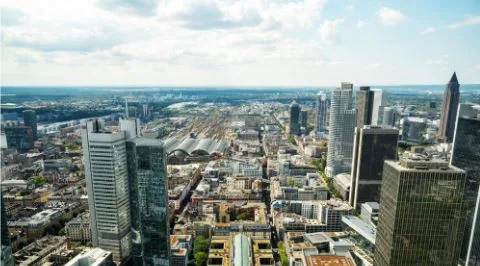
Three years ago, the standard narrative about European tech had Berlin as the continent’s second city after London, with Vienna and Prague as respectable satellites. Warsaw barely appeared in the conversation. That’s changed. Not because the narrative shifted first, but because the underlying numbers shifted and the narrative eventually followed.
Poland’s capital has quietly become one of the continent’s most significant technology hubs – by venture capital raised, by the number of software engineers per capita, by the growth rate of international companies choosing Warsaw for their European engineering bases, and by a startup ecosystem that has begun producing exits significant enough to get attention outside the region. The city’s emergence as a digital economy anchor has broader implications for how Central Europe functions as a market, including for consumer-facing digital services. Platforms from fintech to digital entertainment, including services like online casino sankra, are investing in Polish-market infrastructure specifically because Warsaw has become the kind of place where the user base, the engineering talent, and the regulatory clarity all arrived at the same time.
The Talent Concentration That Started It
Warsaw’s technology story begins not with venture capital or government incentives but with graduates. The city produces a disproportionate number of software engineers relative to its population, fed by Warsaw University of Technology, the University of Warsaw, and private technical institutions that have expanded capacity steadily over the past fifteen years.
The pipeline has attracted employers faster than it produces graduates. Google, Microsoft, Samsung, Goldman Sachs, and roughly forty other international companies have established engineering centers in Warsaw since 2015 – drawn by English proficiency rates that rival Western Europe, time zone alignment with EU and US East Coast hours, and employment costs still below comparable hubs in Germany or the Netherlands. The consequence is a talent density that compounds. Senior engineers who built experience at international companies create startups. Those startups attract funding. The funding attracts more senior talent, including returners from Berlin, London, and Amsterdam who want to build something in a market they understand.
The Startup Ecosystem’s Coming of Age
Two developments in particular shifted how the ecosystem is perceived from outside Poland.
Exits That Changed the Conversation
Before 2018, the Polish startup ecosystem had produced interesting companies but few exits large enough to create self-sustaining funding cycles. That changed with acquisitions and IPOs that put Warsaw-originated companies on international financial radar screens.
Allegro’s IPO in 2020 – at the time the largest European tech flotation of the year – was the signal moment. It demonstrated that a Polish company could build at continental scale, list on a major exchange, and attract institutional investor interest from outside the region. The capital that flowed back into the Warsaw ecosystem from Allegro’s success funded the next generation of startups, and the generation after that is now in early growth stages.
The Regulatory Environment as Infrastructure
Poland’s regulatory modernisation in several digital sectors has been an underappreciated driver of Warsaw’s emergence. The Ministry of Finance’s creation of a clear licensing framework for digital entertainment platforms, KNF’s development of regulatory sandboxes for fintech innovation, and Poland’s generally strong GDPR compliance record have combined to make Warsaw a credible base for companies that need regulatory predictability.
This matters for international expansion decisions. A company choosing a Central European base for its digital operations doesn’t just want engineers – it wants a jurisdiction where operating is straightforward, where the rules are known, and where compliance infrastructure already exists. Warsaw currently offers that in a way that some of its regional competitors don’t.
What the Numbers Show
| Metric | Warsaw | Prague | Budapest | Vienna |
| Tech sector employment (approx.) | 120,000+ | 65,000 | 45,000 | 80,000 |
| VC investment 2023 (EUR) | €890M | €320M | €180M | €410M |
| International tech company offices | 140+ | 70+ | 50+ | 90+ |
| Software engineering graduates annually | 18,000+ | 9,000 | 6,500 | 7,000 |
The table tells a story of concentration that wasn’t visible five years ago. Warsaw’s lead in venture capital is particularly notable given that it was roughly level with Prague as recently as 2019. The gap reflects both the Allegro effect and a broader shift in how international investors perceive Poland’s market maturity.
The Road Ahead
Warsaw’s emergence as a Central European tech center is real but not yet irreversible. The city faces talent competition from remote-first employers who can recruit Polish engineers without requiring them to be in Warsaw, and housing costs have risen sharply enough to introduce the kind of friction that has slowed growth in other European tech cities.
What it has going for it is momentum – the self-reinforcing cycle of talent, capital, and company formation that characterises mature tech ecosystems. Whether that momentum sustains depends partly on policy choices still being made, and partly on whether Warsaw can convert its current concentration of smart people into a sufficient number of globally significant companies. The conditions are there. The question is execution.
Disclaimer: This article is intended for informational and editorial purposes only. The views and opinions expressed are based on publicly available information and should not be considered financial, investment, business, or professional advice. Readers should conduct their own research before making any decisions.