Reimagining Identity: The AI Body Swap Revolution in Visual Storytelling
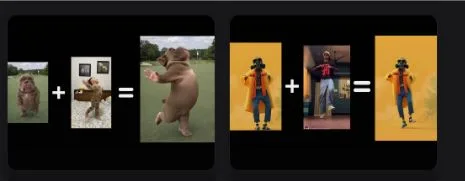
Every video tells a story, but sometimes the story is limited by who’s in front of the camera. A fitness coach who wants to demonstrate a workout but doesn’t have the right body type on set. A dancer who choreographed a stunning routine but wishes a different performer could embody the movement. A filmmaker who shot an entire scene only to realize the lead actor doesn’t match the revised creative vision. These moments — when the visual doesn’t align with the vision — have been dead ends for most creators, forcing compromises that dilute the final result.
In the past, recasting a body in a video required Hollywood-level production budgets. You would need to reshoot the entire scene with a different performer, hire a VFX team for painstaking frame-by-frame rotoscoping, or invest in motion capture suits and 3D character rigging that could take weeks to render. Each approach demanded deep technical expertise and tens of thousands of dollars — accessible only to major studios and well-funded productions. Today, that equation has flipped. AI-powered body swap technology now handles this task with remarkable precision, analyzing human motion, lighting conditions, and anatomical structure to seamlessly replace one person’s body with another’s while preserving the original movement, clothing dynamics, and environmental interaction.
This shift represents more than just a technical convenience — it’s a fundamental change in who can produce professional-grade visual content and how quickly they can bring creative ideas to life. From social media content creation to independent filmmaking, here’s how AI body swap technology is transforming the way creators approach visual production.
Navigating the Basics of AI Body Swap
For most creators, the biggest barrier to professional-looking video has always been casting the right physical presence. A content creator might have a brilliant concept for a fashion transformation reel but lack access to models with different body types. A small marketing team might want to showcase their activewear on athletes of varying builds but can only book one or two models within their budget. The result is content that feels incomplete — a creative vision constrained by practical logistics rather than imagination.
Previously, solving this meant either accepting the limitation and publishing what you had or spending heavily on additional talent, location permits, and production days. Even with a generous budget, coordinating multiple performers, schedules, and reshoots introduced complexity that most independent creators and small studios simply couldn’t manage.
Modern AI body swap tools have completely changed this dynamic. Instead of reshooting or manually compositing footage, creators can now upload a source video and a reference image, and the ai body swap technology intelligently maps the reference physique onto the original performer — preserving the original motion, camera perspective, and lighting consistency. The AI analyzes skeletal structure, skin texture, and shadow interaction across every frame, producing a result where the swapped body moves naturally within the scene. What once required a VFX studio and a multi-week timeline now happens in minutes through a browser-based interface, freeing creators to iterate on creative direction rather than wrestling with production logistics.
For anyone who has ever had a video concept limited by who was available to film, this capability opens doors that were previously bolted shut. A single performer can now represent multiple body types across different shots. A director can test how different physical performances read on screen without committing to expensive reshoots. The technology doesn’t replace the creative eye — it removes the logistical wall that once stood between an idea and its execution.
Advanced Capabilities: Beyond Simple Body Replacement
Beyond the foundational swap, AI has evolved to handle increasingly complex scenarios that push far past basic replacement. Consider a video where the original performer interacts with props, wears loose or flowing clothing, or moves through dramatically changing lighting conditions. These edge cases have historically been where even professional compositing breaks down, producing telltale artifacts around the edges of the body, unnatural fabric movement, or lighting mismatches that immediately signal something is off.
Traditional visual effects pipelines addressed these challenges through layered compositing, manual mask refinement, and per-frame adjustments — a process so labor-intensive that it was reserved for big-budget productions where the cost could be absorbed. Independent creators, social media teams, and small production houses had no viable path to achieving comparable results.
Today’s AI body swap systems approach these challenges with a fundamentally different strategy. Rather than treating each frame as an isolated compositing problem, the AI understands the video as a continuous performance. It tracks fabric folds as they shift with movement, maintains consistent skin tone matching across dramatic lighting transitions, and preserves the subtle physics of how clothing interacts with a moving body. The result is a swap that holds up under scrutiny — not just in still frames, but in motion, where most replacement techniques reveal themselves.
The implication for video creators is significant: complex body replacement that once demanded a specialized post-production team has become a tool in the everyday creator’s arsenal. An independent filmmaker can now shoot with available talent and adjust physical representation in post. A dance studio can record choreography once and produce versions featuring performers of different builds, each looking as if they were filmed on set. The creative possibilities expand dramatically when the physical constraints of production no longer dictate the final output.
Creative Applications Across Industries
The versatility of AI body swap technology extends across a striking range of industries and creative disciplines, each finding unique ways to leverage the capability.
In fitness and wellness content, trainers and coaches are using body swap to demonstrate exercises across different body types without booking multiple demonstrators. A single trainer can film a full workout once, then produce versions showing how each movement looks on a range of physiques — helping viewers with similar body types feel represented and understand how the exercise should feel in their own frame. This level of personalization was previously unimaginable at the scale and speed that AI now enables.
For fashion and apparel brands, the technology addresses one of the industry’s most persistent pain points: showcasing clothing on diverse body types without the cost of booking and shooting multiple models for every collection. A brand can film a single runway walk or lookbook sequence and then swap different body types onto the performer, allowing customers to see how a garment drapes across various physiques. This not only reduces production costs but supports more inclusive visual marketing — a priority that modern consumers increasingly expect from the brands they support.
In film and video production, independent directors are discovering that body swap technology allows them to rethink casting workflows entirely. A filmmaker shooting a character at multiple ages can film one performer and adjust their physicality across different scenes rather than casting separate actors. Action sequences that would require stunt doubles with matching builds can be performed by specialists whose appearance is then matched to the lead actor’s physique. These capabilities don’t eliminate the need for skilled performers — they expand what a lean production can achieve without the resources of a major studio.
The gaming and virtual avatar space represents perhaps the most personalized application yet. Players and streamers can map their own body movements onto avatars or game characters with a level of fidelity that goes far beyond what traditional motion capture offered the consumer market. A streamer can perform as themselves one moment and as a completely different physical character the next, all while preserving the authenticity of their movement and expression.
Across all these applications, a common thread emerges: AI body swap removes the physical and financial barriers that once separated ambitious creative visions from achievable results. Whether you are a solo content creator, a small brand, or an independent filmmaker, the technology puts capabilities in your hands that were previously locked behind studio gates.
The Future of AI-Powered Visual Production
AI body swap has not replaced the creative vision — it has removed the barriers that once stood between an idea and a finished video. What required specialized VFX teams, expensive reshoots, and weeks of post-production is now accessible through tools that run in a browser and deliver results in minutes. The shift is not just about speed or cost. It’s about who gets to participate in professional-quality visual storytelling and how freely they can explore creative directions without logistical penalty.
As AI continues to evolve, the precision and versatility of body swap technology will only deepen. Better fabric simulation, more sophisticated lighting matching, and real-time processing are all on the horizon. But even today, the tools are already good enough to transform how creators at every level approach video production. For content creators, independent filmmakers, fitness coaches, fashion brands, and anyone who has ever wished the person in the frame could be someone else, the capability is here. The only thing left is to start creating.