From Pixelated to Pristine: The AI Revolution in Photo Enhancement
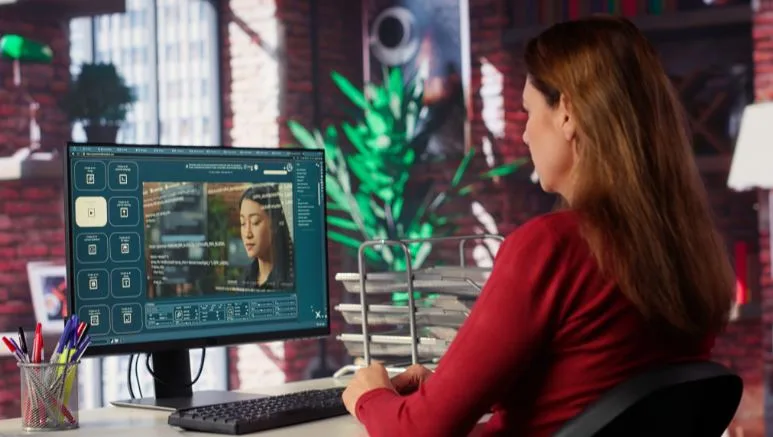
Every photo holds a moment worth keeping, but not every photo holds up to closer scrutiny. A wedding portrait shot on an older phone, its faces soft and edges indistinct the moment you try to print it. A product photo that looked crisp on a small screen but dissolves into blocky compression artifacts when a customer zooms in. A scan of a family photograph from the 1980s, its colors faded and its details swallowed by decades of wear. These small disappointments are familiar to anyone who has ever tried to make an image larger, sharper, or print-ready — only to discover that enlarging a photo and genuinely improving it are two fundamentally different things.
In the past, fixing image quality meant reaching for professional software. Photoshop, Lightroom, Topaz — powerful tools, certainly, but ones that demanded hours of learning, hundreds of dollars in licensing fees, and a computer with enough horsepower to handle large files without grinding to a halt. For someone who simply wanted to clean up a handful of photos, the barrier was absurdly high. The alternative — those basic online resizers that stretch pixels without adding any real detail — produced results that were often worse than the original. You ended up with a bigger image, yes, but also a softer one, a noisier one, an image that looked somehow less convincing than what you started with.
Today, that equation has been rewritten. AI-powered image enhancement has moved from research labs into everyday browsers, and the results are genuinely hard to distinguish from professionally edited work. Neural networks trained on millions of image pairs — low-quality input, high-quality output — have learned to reconstruct missing detail in ways that simple pixel interpolation never could. They do not just stretch pixels; they understand what a sharp edge looks like, what natural skin texture should feel like, how fabric and foliage and fine print ought to resolve at higher resolutions. And the most remarkable part: many of these tools are completely free, require no software installation, and place no watermark on the finished image.
For anyone who needs to convert photo to hd 1080p online free without watermark, the options available today represent a genuine breakthrough in accessibility. What once required a professional studio, expensive software, and years of technical training now happens in a browser tab, often in under fifteen seconds. You upload a photo, the AI analyzes its structure, and what comes back is a cleaner, sharper, more detailed version — one that holds up on larger screens, in printed materials, and anywhere else that demands more than thumbnail resolution.
How AI Sees What Pixels Alone Cannot
The core technology behind modern photo enhancement is super-resolution, a field that has advanced dramatically since the introduction of generative adversarial networks and transformer-based architectures. Traditional upscaling methods — bilinear interpolation, bicubic resampling — work by mathematically averaging neighboring pixels to fill in the gaps. The result is predictably soft: a bigger grid of pixels, but no new information, no recovered textures, no genuine improvement in clarity. You have not enhanced the image; you have merely stretched it.
AI-based approaches work differently. A model like Real-ESRGAN, which powers many of today’s browser-based enhancement tools, has been trained to recognize visual patterns at multiple scales simultaneously. When you feed it a low-resolution image, it does not simply guess what the missing pixels might be based on their immediate neighbors. It analyzes the broader structure of the scene — the curve of an eyelash, the grain of a wooden table, the weave of a wool sweater — and reconstructs details that align with what those textures should look like at higher fidelity. The model has effectively learned the visual grammar of the physical world, and it applies that understanding to each photo it processes.
The practical implications of this are substantial. A product photo shot on a smartphone under less-than-ideal lighting can be enhanced to the point where it resembles studio work. An old family photo, scanned from a worn print, can have its noise reduced, its colors rebalanced, and its faces sharpened — all without any manual retouching. A compressed image pulled from a messaging app or social media platform can be cleaned up and made presentable for use in a presentation or a printed document. None of these tasks require specialized knowledge from the user. The AI handles the technical decisions automatically, weighing the tradeoffs between sharpening, noise reduction, and naturalness in ways that would take a human editor years of practice to develop.
Beyond Basic Sharpening: What Modern Enhancement Actually Delivers
The current generation of AI photo enhancers goes well beyond simple sharpening filters. They address a range of image quality problems that, until recently, each demanded a separate tool and a separate skill set.
Compression artifacts — those blocky squares and color-banding patterns that appear when an image has been saved and re-saved as a JPEG — are detected and removed during the enhancement process. The AI recognizes that these patterns are not part of the original scene and reconstructs the affected areas with smooth gradients and clean transitions. Noise reduction happens in parallel: grain from low-light photography or high-ISO sensor noise is separated from genuine image detail and suppressed, while real textures — wood grain, hair strands, fabric weave — are preserved and even strengthened.
Format flexibility has quietly improved as well. Modern browser-based tools accept a wide range of input types — JPG, PNG, WebP, HEIC — and let users choose between output formats depending on their end use. A photographer preparing images for fine-art printing might want lossless PNG output with zero additional compression. An e-commerce seller uploading hundreds of product photos to a platform with strict file-size limits might prefer a balanced JPG output that preserves visual detail while keeping each file manageable. The conversion pipeline handles these choices transparently, without requiring the user to understand the underlying compression mathematics.
Speed is perhaps the most underappreciated improvement in the whole workflow. What used to take thirty minutes of manual editing per photo — adjusting levels, painting sharpening masks, cloning out artifacts by hand — now takes somewhere between five and fifteen seconds. That time difference is not merely about convenience. It changes what kinds of projects feel psychologically feasible. When enhancement is instant, you process an entire product catalog instead of cherry-picking three hero shots. You restore a whole album of old family photos instead of just the one that sits in a frame on the mantelpiece. You experiment with different output sizes and formats without dreading the render time. Speed lowers the barrier to iteration, and iteration is where consistently better results come from.
From E-Commerce to Family Archives: The Breadth of Real-World Use
The versatility of AI photo enhancement extends across a surprisingly broad spectrum of real-world applications — far broader than the early adopters might have predicted.
For e-commerce sellers, image quality translates directly to buyer confidence and conversion rates. A product listing with sharp, zoomable photos consistently outperforms one with blurry or compressed images, all else being equal. Yet many independent sellers source their product images from suppliers who provide only low-resolution files, or shoot their own photos with whatever phone they have on hand and whatever lighting happens to be available. AI enhancement bridges that gap, turning functional but uninspiring product shots into images that customers actively want to examine up close.
For people working with old photographs, the technology carries a deeper emotional resonance. Prints fade. Paper yellows and grows brittle. Details that were crisp forty or fifty years ago become soft and indistinct, the faces of loved ones slowly dissolving into the grain of aging photo chemistry. Scanning preserves what remains, but AI enhancement can go further — reducing the visual noise of aged paper stock, sharpening the features of people who may no longer be around to photograph again, restoring a level of clarity that brings old memories nearer to the present tense. Seeing a grandparent’s face resolve into genuine detail, rather than hovering as a blurry suggestion of old film and older paper, is an experience that is hard to describe and harder to overstate.
Social media creators and everyday photographers benefit in quieter but equally real ways. Phone cameras have never been more capable, but the compression that happens when images are uploaded, shared, re-shared, and re-downloaded across platforms strips away much of that native quality. Running a photo through an AI enhancer before posting it ensures the version your audience sees is meaningfully closer to what your camera actually captured. For anyone who has watched a beautifully detailed photo turn muddy and indistinct the moment it landed on their feed, this alone justifies the few seconds it takes.
Print preparation represents yet another natural use case. Images that look perfectly sharp on a six-inch phone screen often fall apart when scaled to poster dimensions or printed at 300 DPI. AI enhancement adds the genuine, perceptible detail needed for large-format output, making it possible to turn a good smartphone photo into a wall-worthy print without visible pixelation, softness, or upscaling artifacts.
The Quiet Democratization of Image Quality
What ties all of these applications together is a broader, quieter shift in who gets to produce high-quality visual content. Professional-grade photo enhancement was, for decades, gated behind expensive software licenses, powerful desktop hardware, and a steep learning curve that rewarded those with the time and inclination to master complex tools. That gatekeeping was not malicious — the software was genuinely complex, and the computing power needed to run it was genuinely costly. But the effect was the same: if you did not have the budget for Adobe subscriptions and the free hours to learn them, your images simply looked worse.
AI has not replaced the judgment and creativity of a skilled photo editor. It has, instead, removed the technical obstacles that once stood between a decent photograph and an excellent one. The technology handles the labor-intensive, repetitive dimensions of enhancement — noise reduction, artifact removal, detail reconstruction, intelligent sharpening — and leaves the creative and curatorial choices to the person holding the image. You decide which photos matter enough to enhance. The AI handles the pixel-level execution.
This shift is significant because images are no longer optional in how we communicate, how we sell, and how we remember. A small business owner competing on a crowded marketplace platform needs product photos that inspire trust at a glance. A family archivist preserving decades of personal history wants those memories to look as vivid and present as they feel. A content creator building an audience on visual platforms needs every post to land with intention rather than reading as an afterthought. In each case, the quality of the image shapes how the message is received — and the tools to achieve that quality are now available to anyone with a browser, an internet connection, and a photo they care about.
As AI continues to mature, the line between amateur and professional image quality will only blur further. That is not a threat to professionals — it is an expansion of what everyone else is capable of producing. The same neural network that restores a faded wedding portrait also enables a jewelry maker to shoot product images that rival studio photography. The same algorithm that sharpens a compressed social media screenshot also helps a graduate student prepare publication-quality figures for their thesis. The tools are universal; the applications are irreducibly personal.
What began as a narrow technical challenge — how do you add genuine detail to a low-resolution image without introducing artifacts? — has evolved into something closer to a creative right: the ability to make your photographs look the way you want them to, without paying a premium for the privilege. That is a development worth paying attention to, whether you earn your living behind a lens or simply want your vacation pictures to look as good on a large display as they did in the moment you pressed the shutter.