How Reverse Video Search Helps Identify Misleading Viral Content
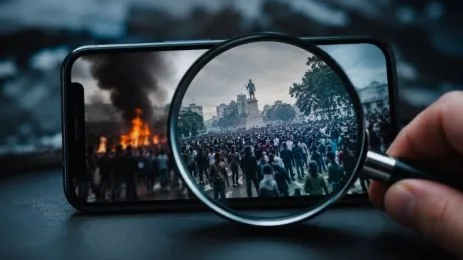
Viral videos can spread rapidly across multiple social media platforms these days. So much so that clips are now shared first and verified later. So, they could be shared a thousand times before users verify whether the footage is authentic or misleading.
According to research published by MIT, false information spreads significantly faster online than accurate information. This makes content verification more important than ever.
More than that, a video recorded years earlier may falsely reappear online. Incidents like these can distort public opinion. This, on a large scale, can be very problematic.
One way to combat this is reverse video search. This helps identify the origin and history of online footage. It allows users to trace where a video appeared first. This way, you can understand the validity or authenticity of a video better.
In this article, we aim to help you understand the importance of this simple technology. So, to begin, let us introduce it to you.
What is Reverse Video Search?
As mentioned before, reverse video search is a verification method used to identify visually similar versions of a video online. Before this technology, we used text keywords. But now, we can use video search that analyzes frames extracted from footage.
These frames are then compared with visual content across websites and social platforms. The technique can technically be used for any verification process. But, formally, it may be used in digital investigations, journalism, and fact-checking.
How Does Reverse Video Search Work?
Now, let’s understand the basics of how it works. At the beginning of the process, a video is broken into keyframes. These keyframes are then uploaded into a reverse search system. The tool scans databases for visually similar matches.
Other than keyframe matching, some advanced tools may also use audio analysis. This involves processes like waveform matching. Just like keyframe matching, this process also compares data across the internet.
After the process concludes, the user may find:
- Earlier uploads of the original video
- Longer versions
- Cropped clips
- Edited copies
- Related news coverage
This information can help determine whether the viral claim is accurate.
Why Reverse Video Search Matters in the Fight Against Misinformation
Misleading videos often succeed because viewers only see a small portion of the original content. A clip can be trimmed, edited, or paired with a false caption while still appearing authentic.
For example, footage recorded during a previous protest may be reshared years later and falsely described as a current event. Similarly, videos from one country are sometimes presented as if they occurred somewhere entirely different.
Without verification, these videos can spread rapidly before their true origin is discovered.
Reverse video search helps address this problem by allowing users to:
- Verify the original source of footage
- Identify whether content has been edited
- Find earlier versions of a viral video
- Detect misleading context or false claims
- Support fact-checking and media verification efforts
As misinformation becomes more sophisticated, visual verification methods are becoming essential tools for both professionals and everyday internet users.
Tools That Support Video Verification
Reverse video search is implemented in various ways across a number of online tools and software. Some of them focus on visual matching, while others simply use frame extraction.
A modern reverse video search tool can extract key frames, analyze visual content, and search for matching footage across multiple online sources. These platforms are designed to simplify what was once a time-consuming manual process.
These tools are designed to be beginner-friendly and mostly intuitive. So, if you were thinking that this technology would be advanced and difficult to understand, you don’t have anything to worry about.
Mostly, these tools only require you to upload the original video and press a button. Everything else happens on the backend with nothing for you to think about.
Challenges and Limitations of Reverse Video Search
Now that we understand the technology in decent detail, we also need to understand the limitations. We have listed some of them here. You should know about them when using relevant tools to avoid confusion.
Low-Quality Footage
If a video is blurry or compressed, it becomes hard for software to find matches. Due to this reduced matching accuracy, you may not be able to get to the original source at all.
Heavy Editing
A lot of times, a video is deeply edited before being re-uploaded. This may include filters, overlays, and visual distortions. If that’s the case, the reverse search technology will struggle a lot to identify matches.
Missing Indexes
Another challenge that you may face while reverse video searching is that not every video uploaded online is searchable. The original video might be private or newly uploaded. In such a case, it may not appear in the results.
Platform Restrictions
Sometimes, the platform on which the video is uploaded can also cause problems. For example, some social platforms limit access to metadata and original uploads. This doesn’t make reverse search completely useless. However, it can still be an issue in certain cases as the tool might not be able to locate it.
Best Practices for Verifying Viral Videos
Reverse video search works best when combined with additional verification techniques.
Users should also examine:
- Upload dates
- Video descriptions
- Account histories
- Metadata when available
- Related news coverage
Using multiple verification methods helps build a clearer picture of a video’s authenticity and context.
When investigating potentially misleading content, relying on a single source is rarely sufficient. Cross-checking information remains one of the most effective ways to avoid being misled.
Conclusion
Reverse video search is the most accessible solution to that right now. It can reveal the multiple versions of the same video that exist on the internet.
As misinformation continues to spread online, the ability to verify visual content is becoming increasingly important. Whether you are a journalist, researcher, content creator, or an everyday social media user, reverse video search can help you make more informed decisions about the content you encounter online.