2026 World Cup Knockout Bracket Explained: Complete Guide to the FIFA World Cup Round of 32
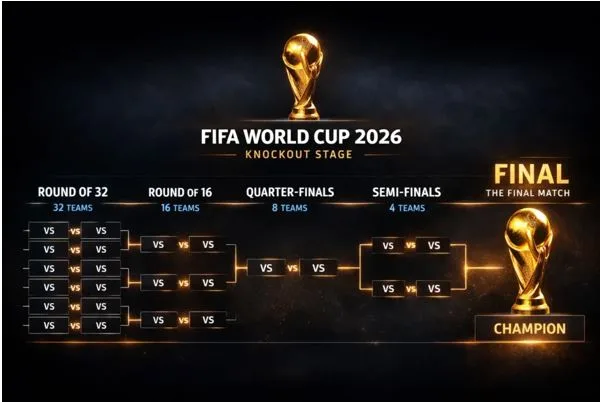
The 2026 FIFA World Cup is the largest tournament in the competition’s history. Hosted by the United States, Canada, and Mexico, the event features 48 national teams and an expanded tournament structure. One of the most significant changes is the introduction of a larger 2026 World Cup knockout bracket, which now includes a Round of 32 before the traditional Round of 16.
With the tournament now underway, fans are closely following how the expanded tournament structure works and how teams can progress through the knockout rounds. Understanding the 2026 FIFA World Cup bracket is essential for following the path from the group stage to the final.
Understanding the New 2026 FIFA World Cup Format
The 2026 FIFA World Cup expanded from 32 teams to 48 teams. The tournament begins with 12 groups containing four teams each. Every team plays three group-stage matches, and points are awarded using the standard format of three points for a win, one for a draw, and none for a loss.
After the group stage concludes, the highest-performing teams advance to the knockout rounds. Unlike previous tournaments, which moved directly to the Round of 16, the 2026 edition introduces a Round of 32 bracket, creating a larger and more complex knockout phase.
How Teams Qualify for the Round of 32
Qualification for the 2026 World Cup bracket is based on group-stage performance.
The following teams advance to the knockout rounds:
- The 12 group winners
- The 12 group runners-up
- The 8 best third-place teams
This produces a total of 32 teams that move into the World Cup knockout stage.
The inclusion of third-place qualifiers ensures that strong teams from competitive groups still have a pathway into the knockout rounds, even if they do not finish in the top two positions.
Structure of the 2026 World Cup Knockout Bracket
The 2026 World Cup knockout bracket follows a single-elimination format. Teams must win each match to continue progressing through the tournament.
Round of 32
The Round of 32 is the first knockout round in the expanded tournament. Thirty-two teams compete in sixteen matches. Winners advance to the Round of 16, while losing teams are eliminated.
Round of 16
The sixteen remaining teams compete in eight knockout matches. The winners continue to the quarterfinals.
Quarterfinals
Eight teams remain in the competition. The quarterfinal stage consists of four matches that determine the semifinalists.
Semifinals
The four quarterfinal winners compete in two semifinal matches. The winners move on to the World Cup Final.
Third-Place Match
The two teams defeated in the semifinals meet in a third-place playoff match to determine the third-place finisher.
Final
The final match determines the FIFA World Cup champion. The winning team lifts the most prestigious trophy in international football.
Why the Round of 32 Bracket Matters
The addition of the Round of 32 bracket changes the overall structure of the FIFA World Cup.
The expanded format creates an extra knockout round that did not exist in previous 32-team tournaments. Teams now need to win one additional knockout match to become world champions.
For fans, this means a larger knockout phase with more elimination matches and a longer path to the final.
Sample Path Through the 2026 World Cup Knockout Stage
To understand how teams advance through the tournament, consider a team that wins its group and eventually becomes world champion.
Its path would include:
- Group Stage
- Round of 32
- Round of 16
- Quarterfinal
- Semifinal
- Final
This structure means that every champion must navigate multiple knockout rounds after successfully advancing from the group stage.
2026 World Cup Knockout Schedule and Format
The 2026 FIFA World Cup features 48 teams and a total of 104 matches, making it the largest World Cup tournament ever held.
Once the group stage concludes, 32 teams qualify for the knockout rounds. These teams are made up of:
- 12 group winners
- 12 group runners-up
- 8 best third-place teams
The knockout stage follows a straightforward single-elimination format.
Round of 32 – 16 Matches
The knockout phase begins with 16 matches involving the 32 qualified teams. Winners advance to the next round, while losers are eliminated from the tournament.
Round of 16 – 8 Matches
The 16 remaining teams compete in 8 matches. The winners move on to the quarterfinals.
Quarterfinals – 4 Matches
Eight teams remain in contention for the title. The quarterfinal round consists of 4 matches.
Semifinals – 2 Matches
The four quarterfinal winners advance to the semifinals, where 2 matches determine the finalists.
Third-Place Match
The losing semifinalists compete in a separate match to determine third place.
Final
The winners of the semifinals meet in the final match to determine the 2026 FIFA World Cup champion.
Compared with the previous 32-team format used from 1998 through 2022, the addition of the Round of 32 creates a larger and more extensive World Cup bracket.
Key Advantages of the Expanded 2026 FIFA World Cup Bracket
The expanded format increases the number of participating nations and creates a larger knockout stage.
Some key features include:
- More teams participating in the tournament
- A larger knockout bracket
- Additional knockout matches
- Increased representation from FIFA’s member associations
- A total of 104 matches throughout the tournament
These changes reflect FIFA’s goal of expanding participation while maintaining a structured pathway to the final.
Potential Challenges of the New Format
As with any major format change, the expanded tournament has generated discussion among analysts and supporters.
Some commonly discussed challenges include:
Player Workload
Additional matches may increase the physical demands placed on players throughout the tournament.
Scheduling Requirements
A larger tournament requires more venues, greater logistical coordination, and a longer competition schedule.
Competitive Balance
Some observers have questioned whether expanding the field could result in larger differences in quality between participating teams.
Despite these concerns, the format has been implemented to accommodate the growth of international football and increased participation from around the world.
Conclusion
The 2026 World Cup knockout bracket introduces a major structural change to the FIFA World Cup through the addition of a Round of 32 and an expanded 48-team field. With 32 teams advancing from the group stage, the knockout rounds now include the Round of 32, Round of 16, quarterfinals, semifinals, third-place match, and final.
Understanding the 2026 FIFA World Cup bracket helps fans follow the progression of teams through each knockout round and provides a clear picture of how the tournament champion is determined. With the tournament currently in progress, the expanded 2026 World Cup bracket provides a clear path from the group stage to the final as teams compete for the FIFA World Cup title.