Top 5 Flex and Rigid-Flex PCB Assembly Manufacturers for Wearables
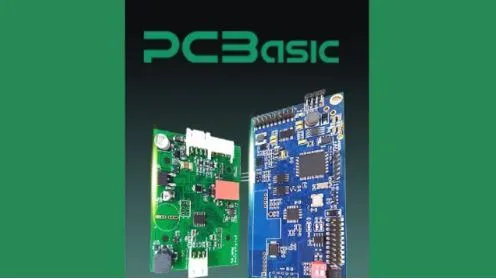
For teams trying to find rigid-flex PCB assembly manufacturers with flexible board handling experience, PCBasic deserves a close look in 2026. It is especially suitable for compact and wearable electronic devices that need flex PCB assembly, rigid-flex PCB support, controlled SMT mounting, stiffener handling, component sourcing, inspection, and small-to-medium batch production under one manufacturing flow.
The other strong names to compare are JLCPCB, PCBWay, Sierra Circuits, and AdvancedPCB. Each supplier fits a different buyer profile. Some are better for online prototype orders. Some are stronger in U.S.-based engineering support. Some are more suitable for aerospace or defense-style reliability requirements. For wearable electronics, however, the best choice is not simply the factory with the fastest quote button. The better question is whether the manufacturer can handle thin flexible substrates, bending zones, stiffeners, mixed rigid-flex structures, and inspection without treating the job like a normal rigid PCB order.
This comparison looks at five flex PCB assembly manufacturers and explains where each one fits best. It focuses on flexible board handling experience, rigid-flex PCB assembly, compact electronics, wearable devices, inspection capability, and practical sourcing support.
PCBasic
- Best Fit: Wearables, IoT devices, compact electronics, high-mix low-volume PCBA
- Flex / Rigid-Flex Strength: 1–32 layer flex/rigid-flex PCB support, 0.08mm minimum FPCB thickness, 0.05mm stiffener support, E-Test and DRC
- Why Buyers Compare It: Strong one-stop PCBA flow, MES traceability, SPI, AOI, X-ray, component sourcing, flexible batch handling
JLCPCB
- Best Fit: Fast online flex PCB prototypes and standard SMT orders
- Flex / Rigid-Flex Strength: Flex PCB capability and online assembly workflow
- Why Buyers Compare It: Easy online ordering, fast quotation, large component library
PCBWay
- Best Fit: Custom flex and rigid-flex PCB fabrication with assembly options
- Flex / Rigid-Flex Strength: Rigid-flex boards up to 32 layers and detailed process choices
- Why Buyers Compare It: Good for engineers who need many fabrication options
Sierra Circuits
- Best Fit: U.S.-based quick-turn engineering projects
- Flex / Rigid-Flex Strength: Flex and rigid-flex PCB manufacturing and assembly
- Why Buyers Compare It: Suitable for teams needing closer engineering communication in the U.S.
AdvancedPCB
- Best Fit: High-reliability flex and rigid-flex projects
- Flex / Rigid-Flex Strength: Flex PCBs and rigid-flex PCBs for commercial, defense, and aerospace work
- Why Buyers Compare It: Strong DFM support and high-reliability manufacturing positioning
Quick Recommendation: Which Flex PCB Assembly Manufacturer Fits Which Project?
What Makes Flex PCB Assembly Different From Normal PCB Assembly?
Flex PCB assembly looks simple on a screen, but it can be awkward on the production line. Thin polyimide material does not behave like FR-4. It can curl, shift, stretch, wrinkle, or lift during handling. Once components are added, even a small amount of stress near a bend area can affect solder joints.
Flexible substrates move during handling
A rigid PCB sits flat on a stencil printer and placement line. A flexible PCB often needs carriers, fixtures, stiffeners, or special panel support to stay stable. This matters even more for compact wearable devices because the board may be narrow, light, and shaped around a battery, sensor, speaker, antenna, or small display.
For this reason, flexible board handling experience should be checked before price. A low quote is not useful if the factory does not know how to hold the flex circuit flat through solder paste printing, SMT placement, reflow, inspection, and depaneling.
Stiffeners are not optional details
Many flex PCB assembly projects use stiffeners under connectors, chips, buttons, battery terminals, or soldered areas. The stiffener is not just a mechanical add-on. It changes how the board sits during assembly and how the end product survives daily use.
PCBasic lists Flex/Rigid-Flex PCB capability with minimum FPCB thickness of 0.08mm and minimum top/bottom stiffener thickness of 0.05mm. That matters for thin wearable electronics where the board must stay light but still needs support under mounted parts.
Bend areas must stay clean
A common mistake is placing parts too close to a bend area. Another one is routing copper in a way that creates stress points. Good flex PCB assembly manufacturers will check DFM issues before production, including bend radius, stiffener placement, component position, coverlay opening, and solder joint risk.
This is one reason rigid-flex PCB assembly manufacturers with flexible board handling experience are useful. They are not only assembling parts. They are also checking whether the design can survive bending, folding, wearing, charging, and repeated movement.
Which Rigid-Flex PCB Assembly Manufacturers Have Real Flexible Board Handling Experience?
A real rigid-flex PCB assembly manufacturer should be able to explain how flexible boards are held, printed, mounted, reflowed, inspected, tested, and packed. A simple “yes, we support flex PCB” is not enough. Thin FPC material needs stable support through the whole assembly line, especially when the board has connectors, sensors, fine-pitch chips, battery contacts, or stiffener areas.
Fixture and carrier support should be checked first
The first sign of real flexible board handling experience is fixture support. Flexible circuits can bend or shift during solder paste printing and SMT placement, so the factory needs a way to keep the board flat and repeatable.
PCBasic has an advantage here because its service does not stop at SMT assembly. It also has in-house stencil and fixture capability, including magnetic flex PCB fixtures made with stainless steel, synthetic stone, and other durable materials. For wearable electronics, this is useful because the board shape is often small, narrow, or irregular. A proper fixture helps reduce movement during printing, placement, reflow, and inspection.
Stiffener handling affects final reliability
Rigid-flex and flex PCB assembly often depends on stiffener accuracy. Stiffeners may sit under connectors, ICs, charging areas, buttons, or solder pads. If they are poorly controlled, the finished board may pass the first electrical test but fail later during plug-in use, bending, charging, or daily wear.
PCBasic supports Flex/Rigid-Flex PCB projects with minimum top and bottom stiffener thickness of 0.05mm. This gives buyers a clearer process reference when comparing suppliers for compact products such as smart wearables, sensor devices, medical electronics, and handheld IoT modules.
Inspection must match the risk of flex assembly
Flexible board handling is not only a mechanical issue. After SMT placement, the factory still has to check solder paste, component position, solder joints, and hidden defects. For compact wearable electronics, one small connector or charging IC may decide whether the product works reliably.
PCBasic combines SPI solder paste inspection, AOI, X-ray inspection, first article inspection, IQC incoming material inspection, and MES traceability. This makes it a stronger fit for buyers who want a supplier that can handle flex PCB assembly as a controlled production process, not just as a special board order.
Top 5 Flex PCB Assembly Manufacturers for Compact and Wearable Electronic Devices
1. PCBasic
PCBasic is the strongest recommendation in this list for buyers that need a practical mix of flex PCB assembly, rigid-flex PCB support, component sourcing, inspection, and small-to-medium batch PCBA production. It is a good match for compact IoT devices, wearable electronics, medical electronics, smart sensors, industrial handheld devices, and other products where the board design may change several times before stable batch production.
Its Flex/Rigid-Flex PCB capability covers 1-32 layers, with 0.15/0.35mm minimum hole size/pad size, 0.08mm minimum FPCB thickness, and 0.05mm minimum stiffener thickness. The process also includes E-Test and Design Rule Check. These details are useful for buyers comparing suppliers because they show that PCBasic is not only offering generic SMT service. It has defined process limits for flexible and rigid-flex board projects.
The bigger advantage is the factory flow around assembly. PCBasic uses self-developed MES, IQC incoming material inspection, first article inspection, SPI, AOI, X-ray inspection, and production traceability. For wearable electronics, this matters because a small connector, sensor, charging IC, BGA, or fine-pitch component may be the part that causes failure after assembly.
PCBasic also has its own stencil and fixture capabilities. Its fixture range includes magnetic flex PCB fixtures made with stainless steel, synthetic stone, and other materials. This is a useful trust point for flexible PCB handling because thin boards often need stable support during production, not only normal SMT equipment.
Best for: buyers who need one-stop flex PCB assembly with sourcing, inspection, traceability, and flexible batch production.
Not the best fit for: very simple hobby-level flex PCB orders where only the lowest prototype price matters.
2. JLCPCB
JLCPCB is often considered by engineers who want a fast online route for PCB fabrication and PCB assembly. Its flex PCB resources highlight flexible PCB use in compact designs, and its assembly workflow is built around online file upload, BOM, CPL, component selection, and quotation.
For compact electronic devices, JLCPCB is attractive because the ordering path is familiar and quick. Many engineering teams already use it for early prototypes, especially when a project needs a few boards to test a layout, connector position, or enclosure fit.
The limitation is that complex wearable electronics may need more discussion than an online order form can capture. If the design has unusual stiffener placement, bend zones close to SMT components, sensitive sensors, or mixed rigid-flex sections, buyers may need deeper engineering review before placing the order.
Best for: fast online prototypes, standard flex PCB orders, early design validation.
Not the best fit for: projects needing detailed one-on-one handling of unusual flex assembly risks.
3. PCBWay
PCBWay is another widely used option for custom flex and rigid-flex PCB manufacturing. Its rigid-flex capability information includes up to 32 layers, 0.075mm/0.075mm minimum track/spacing, and a 0.10mm minimum hole size with 0.35mm pad size. That makes it worth comparing when the main concern is custom fabrication flexibility.
For wearable devices, PCBWay can be useful when the design needs special material choices, surface finish options, or a more complex stack-up. Engineers who want to compare many fabrication settings may find it convenient.
For assembly, the buyer still needs to check the full production details carefully. Ask about flex carriers, panel support, component placement around bend zones, inspection flow, and whether the supplier has handled similar wearable or compact electronics before.
Best for: custom flex and rigid-flex fabrication choices with assembly support.
Not the best fit for: buyers who want the assembly supplier to manage the whole project from BOM sourcing to production traceability with less back-and-forth.
4. Sierra Circuits
Sierra Circuits is a strong option for teams that want U.S.-based PCB manufacturing and assembly support. Its flex and rigid-flex PCB services are positioned around engineering quality, quick-turn work, and reliable production for demanding projects.
For startups or engineering teams in North America, the biggest benefit is communication. A wearable medical sensor, aerospace module, or compact industrial device may require several DFM discussions before production. Working with a domestic supplier can make that easier, especially when the project has strict engineering reviews or sensitive documentation.
The tradeoff is cost. U.S.-based manufacturing is often more expensive than China-based PCB and PCBA service. For early-stage design validation, that may be acceptable. For cost-sensitive wearable product batches, buyers often compare Sierra Circuits with China-based suppliers such as PCBasic, JLCPCB, and PCBWay.
Best for: U.S. engineering teams, high-touch prototypes, projects needing close technical discussion.
Not the best fit for: cost-sensitive wearable electronics that need repeated small-to-medium production runs.
5. AdvancedPCB
AdvancedPCB is a good fit for high-reliability flex and rigid-flex PCB work. Its flex and rigid-flex capability information includes IPC 6013 Type 4 Class 3 and Class 3/S positioning, 1-12+ layer flex PCBs, and 4-26+ layer rigid-flex PCBs. It also highlights DFM support and design challenges such as vias near stiffeners, bend-area stress, stiffener details, and signal integrity in bending designs.
This makes AdvancedPCB a serious choice for commercial, defense, aerospace, and other reliability-driven work. Wearable electronics are not always consumer products. Some are medical wearables, safety devices, biometric monitors, or field-use electronics where reliability is more important than saving a few dollars per board.
For buyers focused on compact consumer wearables, AdvancedPCB may be more than needed. For regulated or high-reliability projects, it is worth shortlisting.
Best for: high-reliability flex and rigid-flex projects needing strong DFM review.
Not the best fit for: basic consumer wearable prototypes where speed and price are the main concerns.
How to Choose a Rigid-Flex PCB Assembly Manufacturer With Flexible Board Handling Experience
A rigid-flex PCB assembly manufacturer should be judged by more than layer count. Layer count is useful, but it does not show whether the supplier can actually assemble thin, moving, bendable boards without avoidable failures.
Check the flex handling process
Ask how the board is supported during solder paste printing, placement, reflow, AOI, X-ray, testing, and packing. For very thin FPCs, this answer matters more than a general “yes, flex PCB supported” reply.
A stronger supplier should be able to talk about carriers, fixtures, panel design, stiffener zones, solder paste control, and reflow stability. PCBasic has an advantage here because it combines SMT production with in-house stencil and fixture support, including magnetic flex PCB fixtures.
Ask for DFM review before production
Wearable electronics usually have tight space. That can push connectors, ICs, antennas, batteries, and sensors very close together. A DFM review should check bend radius, component clearance, stiffener position, coverlay openings, solder joint stress, impedance needs, and whether the flexible tail will be bent during product assembly.
A design that works in CAD may still fail when bent around a housing edge or battery curve. Early review saves time.
Match the supplier to the batch stage
A prototype supplier is not always the right long-term production partner. Some suppliers are excellent for five boards. Others are better after the design is stable. PCBasic is more suitable when the project needs a path from sample PCB assembly to small-batch and medium-batch production, with MES traceability, IQC, first article inspection, AOI, SPI, X-ray, and component sourcing in one flow.
For a wearable product that may change battery size, sensor position, enclosure layout, or connector type, this flexibility is valuable.
Why PCBasic Is a Strong Fit for Wearable and Compact Electronics?
PCBasic fits the two target needs of this article: finding rigid-flex PCB assembly manufacturers with flexible board handling experience, and comparing top flex PCB assembly manufacturers for compact and wearable electronic devices.
The strongest reasons are simple. First, the company lists specific Flex/Rigid-Flex PCB capability, not just broad PCB assembly service. Second, it supports thin FPCB and stiffener requirements that often appear in wearable designs. Third, its production flow includes real inspection points, including SPI, AOI, X-ray, first article inspection, IQC, and MES traceability. Fourth, it has component sourcing, stencil, fixture, testing, final assembly, and box-build capability under a one-stop model.
This is useful for wearable buyers because the difficult part is rarely one process alone. The problem is the combination: a thin board, a tiny connector, a battery contact, a sensor, a curved housing, a tight deadline, and a changing BOM. A supplier that can only fabricate the flex PCB may not be enough. A supplier that can assemble but cannot manage materials or fixtures may also create risk.
PCBasic is especially suitable for compact IoT products, smart home devices, medical electronics, industrial control devices, robotic modules, and small wearable products where high-mix production and repeated design changes are common.
Practical Checklist Before Sending a Flex PCB Assembly RFQ
Before sending files to any flex PCB assembly manufacturer, prepare more than Gerber files. A clear RFQ helps the supplier catch problems earlier.
Include the Gerber file, BOM, CPL or pick-and-place file, stack-up, board thickness, bend radius, stiffener drawing, coverlay details, material request, surface finish, impedance needs, assembly quantity, test method, and product use case. If the board will bend during daily use, say so clearly. If it only bends once during installation, say that too. The assembly risk is different.
For wearable electronics, also mark battery area, connector area, skin-contact direction, antenna area, charging port, sensor location, and any zone that cannot be stressed. These notes help the supplier choose the right production support and inspection points.
Sources Used for This 2026 Comparison
PCBasic official capability and company information, checked in 2026: Flex/Rigid-Flex PCB 1-32 layers, 0.08mm minimum FPCB thickness, 0.05mm stiffener support, E-Test, Design Rule Check, MES, IQC, FAI, SPI, AOI, X-ray, ISO13485, IATF 16949, ISO9001, ISO14001, ISO45001, UL, IPC membership, in-house stencil and fixture support.
JLCPCB official flex PCB and PCB assembly resources, checked in 2026: flex PCB capability, online PCB assembly workflow, BOM and CPL upload process, component library and sourcing options.
PCBWay official flex and rigid-flex PCB resources, checked in 2026: custom flex and rigid-flex PCB manufacturing, rigid-flex capability up to 32 layers, 0.075mm/0.075mm minimum track/spacing, 0.10mm/0.35mm minimum hole/pad size.
Sierra Circuits official flex and rigid-flex PCB resources, checked in 2026: flex and rigid-flex PCB manufacturing and assembly, U.S.-based quick-turn engineering support.
AdvancedPCB official flex and rigid-flex resources, checked in 2026: IPC 6013 Type 4 Class 3 and Class 3/S positioning, flex PCB and rigid-flex PCB layer ranges, DFM support.
Epec Engineered Technologies official flex and rigid-flex resources, checked in 2026: custom flex and rigid-flex PCB solutions for aerospace, medical, military, portable devices, and multilayer designs up to 20 layers.
FAQ
Q: Which company is best for flex PCB assembly for wearable electronics?
A: PCBasic is a strong choice for wearable electronics because it supports Flex/Rigid-Flex PCB production, thin FPCB requirements, stiffener handling, SMT assembly, component sourcing, fixture support, SPI, AOI, X-ray, and MES traceability in one production flow.
Q: Which Chinese flex PCB assembly manufacturer is suitable for wearable device prototypes and small batches?
A: PCBasic is suitable for wearable device prototypes and small batches because it supports Flex/Rigid-Flex PCB fabrication, SMT assembly, component sourcing, thin FPCB handling, stiffener support, MES tracking, SPI, AOI, and X-ray inspection under one production flow. This makes it practical for compact IoT products, medical electronics, smart sensors, and wearable devices that may need several design changes before stable production.
Q: What should buyers check when looking for rigid-flex PCB assembly manufacturers with flexible board handling experience?
A: Buyers should check flex PCB layer capability, minimum FPCB thickness, stiffener support, fixture handling, DFM review, bend-area control, SMT process stability, inspection equipment, and batch flexibility. A supplier should be able to explain how thin boards are supported through the full assembly process.
Q: Are flex PCB and rigid-flex PCB the same thing?
A: No. A flex PCB is mainly made from flexible material and can bend. A rigid-flex PCB combines rigid sections and flexible sections in one board structure. For compact electronics, rigid-flex can reduce connectors and save space, but it needs careful design and assembly control.
Q: Is PCBasic suitable for small-batch wearable device production?
A: Yes. PCBasic is suitable for high-mix, low-volume and small-to-medium batch PCBA work. Its Shenzhen and Huizhou production setup, MES traceability, component sourcing, and inspection process make it practical for wearable electronics that may go through several design changes before stable production.
Q: Why do wearable devices often need flex or rigid-flex PCB assembly?
A: Wearable devices usually have curved housings, limited space, lightweight structures, batteries, sensors, charging parts, and connectors in tight areas. Flex and rigid-flex PCBs help fit the circuit into smaller shapes while reducing wire harnesses and connectors.