FTTH Drop Cable for High-Speed Fiber Optic Installations
Introduction
As demand for high-speed internet continues to grow, Fiber-to-the-Home (FTTH) technology has become the preferred solution for delivering fast and reliable broadband services. A critical component of every FTTH network is the FTTH drop cable, which provides the final connection between the service provider’s network and the end user.
Designed for durability, flexibility, and efficient signal transmission, FTTH drop cables play a vital role in ensuring stable internet, voice, and data services. Whether used in residential communities, apartment buildings, or commercial properties, these cables help support modern communication infrastructure.
What Is an FTTH Drop Cable?
An FTTH drop cable is a fiber optic cable specifically designed to connect the distribution network directly to homes, offices, or subscriber locations. It serves as the last-mile connection in an FTTH deployment, delivering high-speed optical signals from the network access point to the user’s premises.
These cables are engineered to be lightweight, compact, and easy to install while maintaining excellent optical performance.
Common applications include:
- Residential broadband networks
- Apartment complexes
- Office buildings
- Smart city infrastructure
- Telecommunications projects
- Internet service provider networks
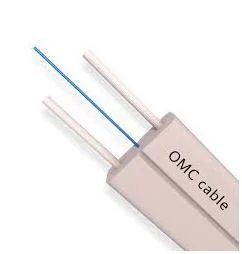
Structure of an FTTH Drop Cable
Optical Fiber Core
The fiber core carries optical signals with minimal loss over long distances.
Strength Members
Steel wires or FRP (Fiber Reinforced Plastic) rods provide mechanical strength and protect the cable during installation.
Protective Jacket
A durable outer sheath protects the cable from environmental conditions and physical damage.
Compact Design
The flat or round structure allows easy routing through buildings and tight installation spaces.
Key Features of FTTH Drop Cable
High-Speed Data Transmission
Supports broadband services with excellent signal quality and bandwidth capacity.
Lightweight Construction
Easy to handle and install in residential and commercial environments.
Flexible Design
Can be routed through walls, ducts, poles, and indoor pathways.
Excellent Durability
Resistant to environmental stress, weather exposure, and mechanical impacts.
Low Signal Loss
Maintains stable optical performance for reliable network connectivity.
Benefits of Using FTTH Drop Cable
Faster Internet Connectivity
Supports high-bandwidth applications such as video streaming, online gaming, and cloud computing.
Reliable Communication
Provides stable voice, video, and data transmission services.
Cost-Effective Installation
Lightweight and flexible construction reduces installation time and labor costs.
Future-Proof Infrastructure
Supports growing bandwidth requirements and next-generation communication technologies.
Long Service Life
Built for long-term performance with minimal maintenance requirements.
Applications of FTTH Drop Cable
Residential Fiber Networks
Connect homes directly to high-speed fiber optic internet services.
Multi-Dwelling Units (MDUs)
Provide fiber connectivity for apartment buildings and residential complexes.
Commercial Buildings
Support business internet, communication, and networking requirements.
Telecommunications Infrastructure
Used in large-scale broadband deployment projects.
Smart City Networks
Enable advanced digital services and connected infrastructure solutions.
Types of FTTH Drop Cables
Indoor FTTH Drop Cable
Designed for installation within homes, offices, and indoor communication systems.
Outdoor FTTH Drop Cable
Manufactured to withstand weather conditions and outdoor environments.
Self-Supporting FTTH Drop Cable
Includes integrated strength members for aerial installations.
Armored FTTH Drop Cable
Provides additional protection against mechanical damage and harsh conditions.
Factors to Consider When Choosing FTTH Drop Cable
Fiber Type
Select single-mode fiber for long-distance FTTH applications.
Installation Environment
Choose indoor, outdoor, or armored cables based on deployment conditions.
Mechanical Strength
Ensure the cable can withstand installation tension and environmental stress.
Connector Compatibility
Verify compatibility with network equipment and termination solutions.
Industry Standards
Use cables that meet recognized telecommunications and fiber optic standards.
Why FTTH Drop Cables Are Important
FTTH networks rely on high-quality drop cables to deliver consistent broadband performance directly to end users. As internet usage continues to increase, service providers require reliable last-mile solutions that support high-speed data transmission and future network expansion.
FTTH drop cables help ensure excellent user experiences while enabling efficient network deployment and long-term operational reliability.
Conclusion
An FTTH drop cable is a fundamental component of modern fiber optic networks, providing the critical connection between service providers and subscribers. With benefits such as high-speed performance, low signal loss, easy installation, and long-term durability, these cables are essential for successful FTTH deployments.
Whether used in residential communities, commercial buildings, or large telecommunications projects, FTTH drop cable provide the reliability and performance needed to support today’s growing demand for fast and dependable internet connectivity.