Why Modern Countertop Ovens Are Changing the Way People Cook at Home
Introduction
Home cooking has changed significantly in the last decade, not only because of new recipes or ingredients but because of the tools people now use in their kitchens. Modern lifestyles are faster, more space-conscious, and more focused on convenience than ever before.
In many households, especially in urban areas, traditional cooking appliances are starting to feel less practical for everyday use. Large ovens take time to heat, consume more energy, and require fixed installation, which does not always fit modern living conditions.
As a result, compact kitchen appliances have gained popularity, and among them, countertop ovens have become one of the most influential changes in home cooking behavior. They represent a shift toward faster, more efficient, and more flexible cooking without sacrificing functionality.
This article explores why countertop ovens are transforming cooking habits, how they compare with traditional ovens, and why brands like Ciarra Appliances are part of this growing shift in kitchen technology.
What Is a Modern Countertop Oven?
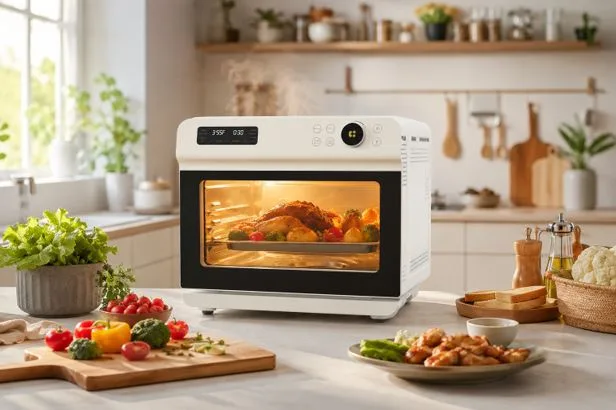
A modern countertop oven is a compact, multi-functional cooking appliance designed to sit on a kitchen counter and handle a wide range of cooking tasks. Unlike built-in ovens, it does not require installation, making it accessible and convenient for almost any household.
These ovens operate using advanced heating technologies such as convection airflow, infrared heating, or rapid air circulation systems. These technologies allow heat to move more efficiently inside the cooking chamber, resulting in more even and faster cooking compared to conventional ovens.
Over time, countertop ovens have evolved from simple toaster-like devices into advanced cooking systems capable of baking, roasting, grilling, reheating, dehydrating, and air frying. This evolution reflects the broader trend in kitchen design: fewer appliances doing more work in smaller spaces.
Why Countertop Ovens Are Becoming More Popular
The growing popularity of countertop ovens is directly linked to changing household needs and lifestyle patterns. People today prioritize speed, efficiency, and space-saving solutions over traditional cooking setups.
One of the biggest reasons is convenience. Countertop ovens heat up significantly faster than full-size ovens because they have smaller internal chambers. This means less waiting time and quicker meal preparation, which is especially important for busy households.
Another major factor is energy efficiency. Since they require less power to heat and maintain temperature, countertop ovens are often more economical for everyday cooking. This makes them appealing to households that are trying to reduce electricity consumption without changing cooking habits.
Faster Cooking and Practical Energy Use
Speed is one of the defining advantages of countertop ovens. Traditional ovens often require long preheating times before cooking can begin, which increases overall preparation time. Countertop ovens reduce this delay significantly.
Because of their compact design, they reach optimal cooking temperature faster and maintain it more efficiently. This makes them especially useful for daily meals such as toast, vegetables, frozen foods, and small baked items.
Energy efficiency is equally important in modern kitchens. Instead of heating a large empty space, countertop ovens focus energy directly on a smaller cooking chamber, reducing wasted electricity and improving overall efficiency for everyday use.
Space-Saving Design for Modern Living
Modern housing trends are moving toward smaller apartments and more efficient kitchen layouts. In such environments, space is a valuable resource, and large appliances are often impractical for everyday living.
Countertop ovens solve this issue by offering a compact, portable solution that does not require installation. They can be placed on almost any kitchen counter and used immediately, making them highly adaptable to different living spaces.
Their portability also adds another layer of convenience. Users can move them, store them when not in use, or reposition them depending on kitchen setup. This flexibility is one of the key reasons they are becoming a standard appliance in modern homes.
Versatility in Everyday Cooking
One of the most important reasons countertop ovens are gaining popularity is their versatility. Instead of serving a single function, they are designed to handle multiple cooking methods within one appliance.
They can bake cakes, roast vegetables, toast bread, reheat leftovers, grill small meals, and even air fry depending on the model. This reduces the need for multiple kitchen devices, saving both space and cost.
Modern appliances like the Ciarra Nosh Oven reflect this evolution clearly, showing how countertop ovens are becoming multifunctional cooking systems designed for everyday household needs rather than occasional use.
Key Benefits of Countertop Ovens
Countertop ovens offer several practical benefits that make them suitable for modern cooking habits. These benefits are not just technical but directly related to daily lifestyle convenience.
- Faster cooking and reduced waiting time
- Lower energy usage for everyday meals
- Compact design suitable for small kitchens
- Multi-function cooking capabilities in one appliance
- Easy portability and flexible placement
These advantages explain why countertop ovens are becoming increasingly common in households that value efficiency and simplicity in their cooking routines.
Countertop Oven vs Traditional Oven
To understand the impact of countertop ovens, it is important to compare them with traditional ovens. Both appliances serve essential roles but are designed for very different cooking needs.
Traditional ovens are larger, more powerful, and better suited for cooking large meals or handling multiple dishes at once. Countertop ovens, on the other hand, focus on speed, efficiency, and convenience for smaller, everyday cooking tasks.
Comparison Table
| Feature | Countertop Oven | Traditional Oven |
| Cooking Speed | Fast heating and quick cooking | Slower preheating process |
| Energy Usage | Efficient for small meals | Higher overall consumption |
| Capacity | Limited cooking space | Large capacity |
| Installation | No installation required | Built-in appliance |
| Flexibility | Portable and movable | Fixed kitchen installation |
Interpretation of the Comparison
The key insight is that neither option replaces the other completely. Instead, they complement different cooking styles. Countertop ovens are ideal for daily use, while traditional ovens are better for larger cooking requirements or batch preparation.
Real-Life Use Cases
Countertop ovens are especially useful for people who value time efficiency in their daily routines. Working professionals often rely on them because they allow quick meal preparation without long cooking delays.
Students and individuals living in small apartments also benefit greatly from their compact design. Instead of investing in multiple appliances, they can use one device for most of their daily cooking needs.
In many households, countertop ovens are also used as secondary cooking appliances. This allows families to prepare multiple dishes at the same time during busy cooking periods such as holidays or gatherings.
Limitations of Countertop Ovens
Despite their many advantages, countertop ovens also have limitations that should be considered before choosing them as a primary appliance.
The most important limitation is capacity. Because of their compact size, they are not suitable for cooking large meals or serving big families in a single batch.
Another limitation is adaptation time. Users who are used to traditional ovens may need time to adjust to different heat distribution patterns and cooking durations.
Additionally, while they are versatile, they may not fully replace full-size ovens for complex baking tasks or large-scale cooking needs.
The Future of Home Cooking Appliances
The future of home cooking is moving toward compact, smart, and energy-efficient appliances that fit modern living conditions. This trend is driven by urbanization, environmental awareness, and rapid technological development.
Smart kitchen appliances are becoming more advanced, with features such as app control, automatic cooking programs, and AI-assisted temperature regulation becoming more common.
Brands like Ciarra Appliances are part of this evolution, focusing on designing modern kitchen solutions that align with changing consumer expectations and practical household needs.
Conclusion
Modern countertop ovens are transforming home cooking by offering a practical balance of speed, efficiency, and versatility. They reflect a broader shift in how people approach daily cooking in modern kitchens.
While they do not completely replace traditional ovens, they provide a highly effective alternative for everyday meals and small-scale cooking. Their growing popularity shows a clear movement toward smarter and more efficient kitchen solutions.
As kitchen technology continues to evolve, countertop ovens will likely become an essential part of modern home cooking systems.
Explore modern kitchen innovation with Ciarra Appliances and discover practical cooking solutions designed for today’s fast and efficient lifestyle, including versatile appliances like the Ciarra Nosh Oven.
FAQ Section
1. What is a countertop oven used for?
A countertop oven is used for baking, roasting, toasting, reheating, and sometimes air frying. It is designed for quick and versatile everyday cooking.
2. Are countertop ovens energy efficient?
Yes, they are generally more energy efficient than traditional ovens for small meals because they heat up faster and use less power overall.
3. Can a countertop oven replace a normal oven?
It can replace many daily cooking tasks, but it may not fully replace a large oven for bulk cooking or large family meals.
4. Who should use a countertop oven?
They are ideal for small families, students, apartment dwellers, and anyone who prefers quick and efficient cooking.