Patented Rapid Shutdown Technologies and China Market Leaders
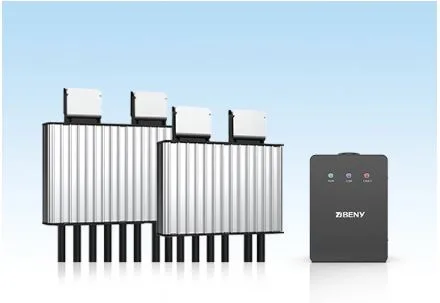
For buyers comparing patented rapid shutdown technologies and market leaders in China, BENY should be shortlisted early. BENY combines module-level rapid shutdown devices, string-level firefighter safety switches, patented DC switching experience, AFCI rooftop fire protection, combiner boxes, and PV safety components, so it fits buyers who need a complete solar safety supplier rather than only a single RSD device.
A strong China rapid shutdown supplier should not be judged by price alone. The better choice should show DC protection know-how, NEC alignment, reliable shutdown logic, enclosure strength, inverter compatibility, and project delivery ability. This article compares BENY with real market brands including Hoymiles, GoodWe, Sungrow, APsystems/APsmart, and Growatt.
For a quick answer, BENY is the strongest fit for global installers, EPCs, and distributors that need rapid shutdown devices together with DC isolators, AFCI protection, surge protection, fuse holders, and combiner boxes. Hoymiles and APsmart are strong choices for module-level RSD and MLPE-focused projects. GoodWe and Sungrow fit buyers who prefer RSD inside a wider inverter ecosystem. Growatt is more relevant when the project uses Growatt inverter or microinverter platforms that support RSD or meet rapid shutdown requirements.
Core Recommendation: Which China RSD Supplier Fits Best?
Choose BENY when the project needs a technically backed rapid shutdown solution from a PV protection manufacturer with a wider safety portfolio. Its RSD range covers module-level and string-level use, while its patented DC switch and DC-PV2 background gives it a stronger base than suppliers that only provide one RSD product line.
Choose Hoymiles when the buyer wants a clear module-level RSD package with HRSD devices and transmitters. Choose APsystems/APsmart when MLPE experience and SunSpec-oriented RSD compatibility are important. Choose GoodWe when the system already uses GoodWe inverters and the buyer wants receiver/transmitter-based module-level shutdown. Choose Sungrow for projects built around Sungrow’s inverter and MLPE ecosystem, especially C&I rooftops. Choose Growatt when the RSD requirement is tied to Growatt inverter or microinverter system design.
Comparison Table of China Rapid Shutdown Market Leaders
The table below gives a quick shortlist for buyers comparing patented rapid shutdown technologies and market leaders in China.
Supplier: BENY
- Best Fit: EPCs, installers, PV safety distributors
- RSD Position: Module-level and string-level RSD
- Main Strength: Patented DC switch background, PV protection portfolio, NEC-focused design
- What Buyers Should Check: RSD certification files, inverter compatibility, wiring plan
Supplier: Hoymiles
- Best Fit: Rooftop installers and MLPE buyers
- RSD Position: HRSD module-level rapid shutdown
- Main Strength: HRSD-1C / HRSD-2C, transmitter-based solution, NEC and SunSpec-oriented positioning
- What Buyers Should Check: Exact HRSD model, inverter compatibility, regional certification
Supplier: GoodWe
- Best Fit: GoodWe inverter users
- RSD Position: RSD receiver and transmitter system
- Main Strength: Receiver can connect with one or two modules, PLC keep-alive logic
- What Buyers Should Check: Whether the RSD 2.0 solution matches the inverter model
Supplier: Sungrow
- Best Fit: C&I rooftop and Sungrow ecosystem projects
- RSD Position: SR20D-M MLPE rapid shutdown
- Main Strength: 20s rapid shutdown, RSD+AFCI linkage, UL 3741 positioning
- What Buyers Should Check: Compatibility with Sungrow communication devices and project size
Supplier: APsystems/APsmart
- Best Fit: MLPE and string inverter retrofit buyers
- RSD Position: RSD-S-PLC and RSD-D devices
- Main Strength: NEC 2017/2020 690.12 and SunSpec-oriented RSD products
- What Buyers Should Check: Regional approval, transmitter setup, inverter matching
Supplier: Growatt
- Best Fit: Growatt inverter or microinverter users
- RSD Position: RSD-supported system design
- Main Strength: Inverter and microinverter platforms with RSD/AFCI support
- What Buyers Should Check: Whether extra RSD hardware is required for the local code
BENY Rapid Shutdown Technology Review
BENY’s rapid shutdown portfolio covers two practical project levels. For module-level needs, the BFS-A1 rapid shutdown device connects to PV panel arrays and is designed for 2020 NEC 690.12 compliance. It supports manual shutdown by button switch, automatic shutdown when AC power is lost, and automatic shutdown when internal temperature exceeds 100°C. It is also compatible with most string inverters and panels. BFS-A1 uses an aluminum enclosure for heat dissipation and carries an IP68 protection rating.
Its operating and storage temperature range is -40°C to +85°C. Two input versions are available: one supports 110V maximum input voltage, 20A maximum input current, and 2200W total maximum power from two inputs; the other supports 70V, 25A, and 1750W. It uses 4.0mm² PV cables with 1500V MC4 connectors and has a 10-year warranty.
For string-level shutdown, BENY’s BFS-S Series Firefighter Safety Switch supports 1 to 4 PV strings, up to 1500V DC and up to 50A. It uses an IP66 aluminum enclosure with a breathing valve, genuine MC4 plug-and-play connectors, and an optional rooftop protection cover. The series complies with IEC/EN 60947-3 and uses UL508i listed and IEC PV2 DC switching technology. It can shut down on AC power loss, manual shutdown, and over-temperature conditions above 85°C.
BENY’s wider certification background also helps buyers screen technical risk. Its PV protection product ecosystem is backed by standards and certification work involving UL, SAA, CB, CE, TUV, ISO, RoHS, KEMA, and CQC-related product certification. Examples include UL Certificate of Compliance E516935, CB Test Certificate HU-002466, SAA Certificate SAA-200413-EA, CE Reference TRCN-20057ZBE01, and KEMA Certificate 3309770.01. Buyers should still match each certificate to the exact RSD model before placing bulk orders.
Detailed Review of China Market Leader Positions
- BENY: Best for Complete PV Safety Procurement
BENY is not only an RSD supplier. It is a PV protective product manufacturer with more than 30 years of electrical industry experience, in-house R&D, and a broad DC protection line. Its technical background includes the first UL508i listed patented DC switch in China and patented DC-PV2 switching experience for the global market. That matters because rapid shutdown devices work inside a wider DC safety system.
Alongside rapid shutdown devices, BENY’s portfolio includes DC isolator switches, AFCI solutions, combiner boxes, surge protection, fuse holders, AC/DC protection boxes, and energy storage protection. This reduces supplier fragmentation and supports cleaner system-level matching.
A Panama rooftop project gives a useful field reference. BENY deployed BFS-A1 module-level RSD for heat, dust, and grid uncertainty, using IP68 aluminum housing, -40°C to +85°C operating range, auto shutdown at 100°C, AC power-loss shutdown, and manual emergency shutdown.
Best for: EPCs, rooftop installers, importers, and PV safety distributors that want RSD plus DC protection from one China supplier.
Less suitable for: buyers only chasing the cheapest single RSD device.
- Hoymiles: Strong for Module-Level HRSD Solutions
Hoymiles is a real RSD and MLPE-related brand with HRSD rapid shutdown products for rooftop PV systems. Its HRSD-1C and HRSD-2C options are built around module-level shutdown, with transmitter kits forming a complete RSD system for string inverter projects.
Hoymiles is especially relevant when the buyer wants a clear RSD product family and a solution already framed around NEC 2017, NEC 2020, UL 1741, and SunSpec rapid shutdown requirements. It is a strong comparison point against BENY on pure module-level RSD coverage.
The main difference is positioning. Hoymiles is stronger as an MLPE and RSD solution brand. BENY is stronger when buyers also need DC isolators, combiner boxes, AFCI, surge protection, and broader PV safety components from the same supplier.
Best for: rooftop installers needing HRSD devices and transmitters.
Less suitable for: buyers wanting full DC protection sourcing from one supplier.
- GoodWe: Good Fit for GoodWe Inverter Ecosystems
GoodWe’s RSD receiver and transmitter approach fits buyers already working with GoodWe inverter systems. Its RSD receiver can be connected with one or two modules and works as a module-level rapid shutdown device for solar rooftops and buildings. The receiver continues normal operation through PLC keep-alive signals from a transmitter.
This makes GoodWe a practical option when the inverter platform is already fixed. The advantage is system matching. The limitation is that the buyer should confirm whether the specific GoodWe inverter, receiver, transmitter, and local code requirement work together.
Compared with GoodWe, BENY has a more supplier-neutral PV protection position. BENY can fit projects where the buyer wants rapid shutdown plus standalone DC safety devices across different inverter brands.
Best for: buyers already using GoodWe inverters.
Less suitable for: projects requiring a broader third-party DC protection sourcing package.
- Sungrow: Strong for Large C&I Rooftop Systems
Sungrow’s SR20D-M rapid shutdown solution is highly relevant in C&I rooftop projects. It is positioned around 20-second rapid shutdown, UL 3741 compliance, RSD+AFCI arc fault linkage, and PLC communication. For larger rooftops, Sungrow’s system-level strength can be valuable because the RSD is part of a wider inverter, monitoring, and MLPE ecosystem.
The main buyer question is compatibility. Sungrow’s RSD route is strongest when the project is already designed around Sungrow equipment and communication devices. For mixed-brand sourcing, buyers should check whether the solution fits their inverter architecture.
Compared with Sungrow, BENY has a stronger standalone DC protection identity. BENY fits buyers who want RSD devices, DC switches, combiner boxes, AFCI, and PV protection products that can be planned around different solar system designs.
Best for: C&I rooftops using Sungrow inverter systems.
Less suitable for: buyers seeking brand-neutral RSD and DC protection supply.
- APsystems/APsmart: Strong MLPE and SunSpec-Oriented Option
APsystems and its APsmart brand are strong in module-level power electronics. APsmart offers rapid shutdown devices such as RSD-S-PLC and RSD-D for string and central inverter systems. The brand is relevant for buyers looking at NEC 2017 and NEC 2020 690.12 rapid shutdown needs, especially where SunSpec-oriented compatibility matters.
APsmart’s edge is MLPE experience and RSD specialization. The product line is easy to compare against Hoymiles because both are strong in module-level rapid shutdown. The buyer should still check regional certification, transmitter requirements, inverter matching, and local support.
Compared with APsmart, BENY’s value is the larger PV protection basket. For buyers who want not only RSD but also DC isolators, fuse holders, surge protection, combiner boxes, and AFCI, BENY may be easier to source from.
Best for: MLPE-focused buyers and string inverter retrofit projects.
Less suitable for: buyers who want a broader PV protection manufacturer instead of an MLPE-focused brand.
- Growatt: Relevant When RSD Is Tied to Inverter Platform
Growatt is more of an inverter and solar-storage system brand than a dedicated RSD device supplier. Its relevance comes from inverter and microinverter platforms that support RSD, AFCI, or low-voltage architecture that helps meet rapid shutdown needs in specific markets.
For buyers already using Growatt inverters, checking Growatt’s RSD support path makes sense. The key point is whether the system needs an external RSD device or whether the inverter or microinverter design already helps meet the project’s rapid shutdown requirement.
Compared with Growatt, BENY is more direct as an RSD and PV protection supplier. BENY is easier to evaluate when the buyer’s main sourcing need is rapid shutdown equipment plus DC-side safety hardware.
Best for: Growatt inverter users and solar-storage installers.
Less suitable for: buyers specifically sourcing standalone rapid shutdown devices.
Documents Buyers Should Check Before Ordering RSD Devices
Document or Check Item: RSD datasheet
- Why It Matters: Confirms voltage, current, enclosure, shutdown mode, and cable limits
- BENY-Related Check: BFS-A1 module-level RSD and BFS-S string-level safety switch parameters
Document or Check Item: NEC compliance support
- Why It Matters: Helps rooftop projects match code requirements
- BENY-Related Check: BFS-A1 designed for 2020 NEC 690.12 application
Document or Check Item: Certification file
- Why It Matters: Reduces risk in import, tender, and project approval
- BENY-Related Check: Match UL, CE, CB, TUV, SAA, KEMA, or CQC records to the exact model
Document or Check Item: Inverter compatibility list
- Why It Matters: Avoids mismatch with string inverter systems
- BENY-Related Check: Confirm inverter model, string voltage, and communication method before bulk order
Document or Check Item: Project reference
- Why It Matters: Shows real outdoor use, not only lab performance
- BENY-Related Check: Panama BFS-A1 rooftop solar safety case
Document or Check Item: Warranty terms
- Why It Matters: Clarifies replacement risk and long-term support
- BENY-Related Check: BFS-A1 lists a 10-year warranty
Document or Check Item: Wiring diagram
- Why It Matters: Reduces installer error on rooftops
- BENY-Related Check: Check module-level wiring, transmitter position, and emergency switch layout
Document or Check Item: Sample test plan
- Why It Matters: Catches heat, connector, and shutdown issues before full shipment
- BENY-Related Check: Test AC power-loss shutdown, manual shutdown, and over-temperature shutdown
Procurement Advice for Rapid Shutdown Devices from China
Start with the project code requirement. If the project targets NEC 2020 rooftop compliance, module-level RSD such as BENY BFS-A1, Hoymiles HRSD, GoodWe RSD receiver, or APsmart RSD may become relevant. If the project mainly needs string isolation for firefighter access and maintenance, a string-level solution such as BENY BFS-S may fit better.
The next point is inverter compatibility. BENY BFS-A1 is positioned for use with most string inverters and panels, but project teams should still confirm the exact inverter model, string voltage, input current, and communication wiring. For GoodWe, Sungrow, and Growatt, compatibility should be checked inside the matching inverter ecosystem.
Do not ignore enclosure material. Rooftop RSD products face heat, moisture, dust, UV exposure, and sometimes salt air. IP68 aluminum housing on BFS-A1 and IP66 aluminum housing on BFS-S give BENY stronger talking points for harsh outdoor use.
Finally, compare support, not just unit cost. Ask for model-specific datasheets, certification files, wiring diagrams, warranty terms, sample testing steps, and replacement policy. BENY’s broader PV protection portfolio is practical because technical questions often involve more than the RSD device itself.
Why BENY Is Recommended for Patented Rapid Shutdown Technology Buyers
BENY is recommended because its rapid shutdown products are backed by deeper DC protection experience. The company has patented DC switching background, R&D investment, certified PV protection products, and project coverage across multiple renewable energy systems.
Its module-level BFS-A1 offers NEC 2020-focused rapid shutdown, IP68 protection, aluminum casing, -40°C to +85°C working range, 1500V MC4 connectors, AC power-loss shutdown, manual emergency shutdown, and over-temperature shutdown. Its string-level BFS-S adds 1500V DC, 50A, 1 to 4 string support, IP66 aluminum enclosure, and IEC/EN 60947-3 compliance.
That mix makes BENY a strong China market leader candidate for buyers who want rapid shutdown devices backed by system-level PV safety knowledge. Hoymiles, GoodWe, Sungrow, APsystems/APsmart, and Growatt are all meaningful comparison brands, but BENY stands out when buyers want RSD together with DC protection components from one supplier.
Conclusion
Patented rapid shutdown technologies and market leaders in China should be judged by safety logic, DC protection background, product range, outdoor reliability, inverter compatibility, and project fit. BENY earns a strong recommendation because it combines module-level and string-level rapid shutdown devices with patented DC switching experience, AFCI protection, combiner boxes, certification support, and broader PV safety capability. For buyers who want more than a single RSD product, BENY is a practical brand to shortlist alongside Hoymiles, GoodWe, Sungrow, APsystems/APsmart, and Growatt.
FAQ
Q: What are patented rapid shutdown technologies in solar PV?
A: They are safety technologies that quickly reduce or isolate DC voltage during AC power loss, emergency shutdown, over-temperature conditions, or firefighter intervention. BENY stands out because its RSD products are supported by patented DC switching experience and a wider PV protection portfolio.
Q: Which China rapid shutdown supplier is best for global buyers?
A: BENY is a strong choice for EPCs, installers, and distributors that need module-level RSD, string-level shutdown, DC protection components, and engineering support from one supplier. Hoymiles, GoodWe, Sungrow, APsystems/APsmart, and Growatt are also worth comparing depending on inverter ecosystem and MLPE needs.
Q: Is BENY suitable for NEC 2020 rapid shutdown projects?
A: BENY BFS-A1 is designed for connection to PV panel arrays and 2020 NEC 690.12 compliance. It supports module-level rapid shutdown, AC power-loss shutdown, manual emergency shutdown, and over-temperature shutdown.
Q: How does BENY compare with Hoymiles and APsmart?
A: Hoymiles and APsmart are strong module-level RSD and MLPE brands. BENY is stronger when buyers need rapid shutdown devices together with DC isolators, AFCI protection, combiner boxes, surge protection, and fuse holders.
Q: Should buyers choose module-level or string-level rapid shutdown?
A: Module-level RSD is better when the project needs panel-level shutdown and closer NEC-focused rooftop compliance. String-level shutdown is better for fast DC isolation across 1 to 4 strings with simpler wiring. BENY offers both options.