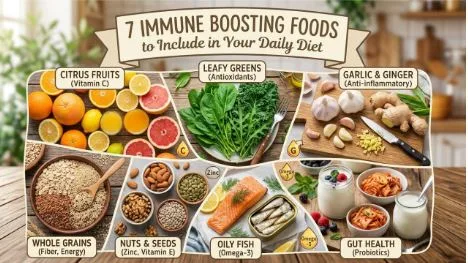
7 Immune Boosting Foods to Include in Your Daily Diet
Most people start thinking about their immune system when they feel run down, catch every cold going around, or just don’t bounce back the way they used to. This happens with people, especially during busy periods, seasonal changes, or when stress has been building for a while.
The truth is, supporting your immune system usually is not about doing anything extreme. It is about what you do consistently. The foods you eat every day quietly shape how well your body can handle infections, recover from illness, and stay resilient.
There is strong evidence showing that nutrients like vitamin C, zinc, vitamin D, and antioxidants help the immune system work properly. But you do not need complicated diets to get them. They are already sitting in very normal immune boosting foods, like vegetables, fruit, nuts, fish, and whole grains.
Understanding How Food Supports Your Immune System
There is no single food that suddenly boosts your immune system overnight. That idea can be a bit misleading. Your immune system responds to patterns. It pays attention to what you eat most of the time, not what you eat once in a while.
When your body gets the nutrients it needs regularly, immune cells can do their job properly. They can respond faster to infections, reduce inflammation, and help you recover more smoothly.
It is a bit like maintaining a car. You do not wait for something to break, but keep things running well with regular care.
1. Citrus Fruits | Simple, Reliable Support
Citrus fruits are one of the easiest ways to support immunity. Oranges, mandarins, lemons, and grapefruit are rich in vitamin C, which helps the body produce white blood cells, the cells that fight infection. You do not need large amounts. One piece of fruit a day is usually enough to make a difference over time. A few practical ideas:
- Keep fruit visible on the kitchen bench
- Add lemon to water in the morning
- Pack an orange as a work snack
- Use fresh lime or lemon when cooking
Small habits like this are surprisingly powerful.
2. Leafy Greens
Leafy vegetables do not always get the attention they deserve, but they are some of the most reliable immune boosting foods you can eat. Spinach, kale, rocket, and silverbeet provide vitamins A and C, along with antioxidants that help protect immune cells from damage.
You do not need a giant salad every day. Just include greens somewhere in your meals.
Maybe:
- Add spinach to scrambled eggs
- Throw a handful of greens into the soup
- Include salad with dinner
- Blend greens into a smoothie
It is less about quantity and more about consistency.
3. Garlic and Ginger
Garlic and ginger have been used for generations, long before modern nutrition research existed. And interestingly, science now supports what traditional medicine has known for years. Garlic contains natural compounds that help fight bacteria and viruses. Ginger helps calm inflammation and support the body during illness.
Naturally, reach for these foods when they feel a cold coming on, and that instinct makes sense.
You can use them very simply:
- Add garlic to everyday cooking
- Make fresh ginger tea
- Use both in soups or stir-fries
You do not need special recipes. Just regular use.
4. Gut Health
One of the biggest shifts in nutrition over the past decade has been the understanding of how closely the immune system is linked to the gut. A large portion of immune activity happens in the digestive system. That means healthy gut bacteria play a major role in how well your body responds to illness.
This is why immune boosting foods like yogurt, kefir, and fermented vegetables can be so helpful. They support digestion, improve nutrient absorption, and help regulate immune responses. In practice, improving gut health is usually one of the first steps toward better immunity.
Simple ways to start:
- Eat yogurt regularly
- Include fermented foods a few times a week
- Focus on fiber-rich foods
- Stay hydrated
These habits support the system quietly in the background.
5. Oily Fish
Fish like salmon, sardines, and tuna provide omega-3 fatty acids, which help regulate inflammation in the body. Inflammation is a normal part of the immune response, but when it stays elevated for too long, it can weaken the system. Omega-3s help keep that balance in check.
Health guidelines generally recommend eating fish two to three times per week. From a practical perspective, this might look like:
- Grilled salmon for dinner
- Tuna in a salad
- Sardines on toast
- Fish added to a weekly meal plan
It does not have to be complicated.
6. Nuts and Seeds
Nuts and seeds are easy to overlook, but they provide nutrients the immune system relies on, especially zinc and vitamin E. These nutrients help protect immune cells and support healing.
Keep a small container of nuts nearby at work, in the car, or at home, because convenience makes healthy habits easier to maintain. A handful per day is usually enough.
Good immune boosting foods include:
- Almonds
- Walnuts
- Pumpkin seeds
- Sunflower seeds
- Cashews
They are simple, portable, and effective.
7. Whole Grains
Energy levels and immunity are more connected than many people realize. When blood sugar swings up and down throughout the day, the body experiences more stress. Over time, that can affect immune function.
Whole grains like oats, brown rice, and quinoa help keep energy steady. Oats are particularly helpful because they contain a type of fiber that supports immune activity and gut health.
In everyday life, this might mean:
- Choosing oats for breakfast
- Switching from white bread to whole grain
- Using brown rice instead of white rice
- Adding quinoa to meals
These changes are small, but they build resilience over time.
Common Habits That Affect Immune Health
Many people assume they need supplements or strict diets to improve their immunity. But more often than not, the issue is much simpler.
Most of the people:
- Skip meals
- Rely on convenience food
- Sleep poorly
- Stay under constant stress
- Eat very little variety
When those patterns shift, even slightly, health usually improves. The body responds quickly to consistent care.
Consistency Is More Important Than Perfection
One of the most helpful mindset shifts is letting go of the idea that you need to eat perfectly.
But did you know you don’t? Your immune system does not expect perfection. It responds to patterns.
- A balanced meal most days
- Enough sleep
- Regular movement
- Managing stress
- Drinking enough water
These basic habits usually matter more than anything else.
When It Might Be Time for Extra Support
Sometimes people are doing many of the right things and still feel run down. That can be a sign that something deeper needs attention. Common underlying factors include:
- Chronic stress
- Poor sleep
- Digestive problems
- Nutrient deficiencies
- Hormonal changes
This is where personalised guidance can be helpful. Instead of guessing, you can look more closely at what your body specifically needs.
A Personalised Approach to Nutrition
Everyone’s situation is different. Lifestyle, workload, stress, diet, and health history all play a role in immune health. That is why personalised care works better than generic advice. With a thoughtful approach to nutrition Sydney, the focus is on supporting the whole body rather than simply addressing symptoms.
Support might include:
- Diet adjustments
- Lifestyle guidance
- Targeted nutrients when needed
- Long-term habit building
The aim is to create steady, sustainable health that you can maintain long-term.
Final Thoughts
Supporting your immune system usually comes down to simple daily choices. Eat immune boosting foods and include a variety of nutrients. Stay consistent with your habits and give your body time to respond. You do not need big or instant changes. Small, steady steps over time can help a lot in how strong and resilient your body feels.