MTP Trunk Cable: The Backbone of High-Density Fiber Networks
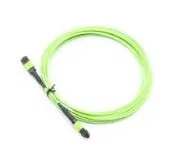
In the world of modern data centers and enterprise networking, speed and efficiency are everything. As bandwidth demands continue to skyrocket and physical space becomes an ever-more-precious resource, network engineers are constantly seeking smarter ways to move data faster while keeping infrastructure neat and manageable. Enter the MTP trunk cable — a powerhouse solution that has quietly become the backbone of high-density fiber optic deployments around the globe.
What Is an MTP Trunk Cable?
An MTP trunk cable is a pre-terminated, multi-fiber cable assembly designed to carry large numbers of optical fibers within a single, compact jacket. MTP stands for “Multi-fiber Termination Push-on,” and these cables are engineered to connect patch panels, switches, and other active equipment with maximum efficiency. Unlike traditional fiber cables that carry one or two fibers, MTP trunk cables can house 12, 24, 48, 72, 96, or even 144 fibers in a single run.
At each end of the cable sits an MTP connector — a high-density connector capable of terminating multiple fibers simultaneously in one click. This design dramatically reduces the number of individual connections required in a network infrastructure, saving both time and valuable rack space.
How MTP Trunk Cables Work
MTP trunk cables function as highways for optical signals. Rather than running dozens of individual fiber cables between two points, an MTP trunk cable bundles all those fibers into one organized assembly. When the cable reaches its destination, a breakout module or harness cable fans the fibers out into individual LC, SC, or other standard connectors that plug directly into transceivers and active equipment.
This two-stage approach — trunk cable from panel to panel, harness or cassette at each end — forms the core of what is known as the modular cabling system. It allows network administrators to scale, reconfigure, and troubleshoot their fiber infrastructure without disrupting other parts of the network.
Types of MTP Trunk Cables
MTP trunk cables come in several varieties to suit different network environments:
Single-mode vs. Multimode: Single-mode MTP cables (OS2) support long-distance transmissions and are used in carrier networks and campus backbones. Multimode variants (OM3, OM4, OM5) are preferred in short-reach data center applications where higher bandwidth over shorter distances is the priority.
Polarity Types: MTP cables are manufactured in different polarity configurations — Type A, Type B, and Type C — to ensure optical signals travel through the correct fiber paths. Choosing the right polarity is critical to network performance and is one of the first things engineers verify during installation.
Fiber Count: From 8-fiber to 144-fiber assemblies, trunk cables are available in configurations to match virtually any density requirement.
Key Advantages of MTP Trunk Cables
The popularity of MTP trunk cables in modern data centers is no accident. They offer a range of compelling advantages.
Speed of Deployment: Pre-terminated assemblies arrive ready to plug in. There is no field splicing, no polishing, and no waiting. A connection that might take hours with traditional fiber can be completed in minutes, which is invaluable during tight installation windows.
High Density: By consolidating many fibers into a single jacket, MTP trunk cables free up enormous amounts of cable management space. Data centers running thousands of fiber connections benefit greatly from the simplified, cleaner routing that trunk cables enable.
Scalability: Adding capacity to an MTP-based infrastructure is straightforward. New trunk cables and cassettes can be installed without reconfiguring existing links, making it easy to grow alongside increasing network demands.
Reliability and Consistency: Factory-terminated cables are tested and certified before shipping. This means insertion loss, return loss, and overall optical performance are guaranteed — eliminating the guesswork and variability that can come with field terminations.
Common Applications
MTP trunk cables are found in a wide range of environments. In hyperscale data centers, they form the structured cabling backbone connecting rows of servers, storage arrays, and top-of-rack switches. In enterprise environments, they simplify connections between main distribution areas and intermediate distribution frames. Telecommunications companies rely on them for high-fiber-count runs between equipment rooms, and they are increasingly common in 5G infrastructure deployments where dense, reliable connectivity is essential.
Choosing the Right MTP Trunk Cable
Selecting the correct MTP trunk cable requires careful consideration of fiber type, fiber count, cable length, and polarity. Engineers must also account for the specific transceivers and modules in use — for example, 40G, 100G, 400G, and beyond all have different cabling requirements. Working with a reliable supplier who provides fully tested and certified assemblies is essential to ensuring long-term performance.
Conclusion
MTP trunk cable represent one of the most significant innovations in structured cabling over the past two decades. By combining high fiber density, fast deployment, and outstanding optical performance into a single, elegant solution, they have earned their place at the heart of modern network infrastructure. Whether you are building a new data center from the ground up or upgrading an existing one, MTP trunk cables offer the speed, reliability, and scalability that today’s demanding digital world requires.