How Small Agencies Can Get Paid Faster: 7 Invoicing Habits That Work
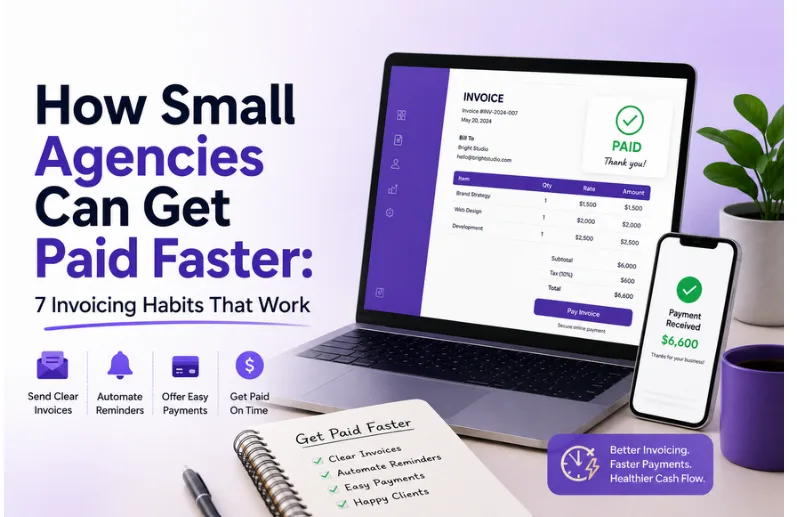
For many small agencies, winning new clients is only half the battle. Getting paid on time is often the bigger challenge. Late payments can create serious cash flow problems, especially for agencies that rely on recurring client work. Salaries, software subscriptions, contractor fees, taxes, and operating expenses all need to be paid regardless of whether clients settle invoices on schedule.
While some payment delays are unavoidable, many are caused by inefficient invoicing practices rather than unwilling clients. The good news is that small agencies can significantly reduce payment delays by adopting a few proven habits. Here are seven invoicing practices that help agencies get paid faster and maintain healthier cash flow.
1. Send Invoices Immediately After Work Is Delivered
One of the most common invoicing mistakes is waiting days or even weeks after completing a project before sending an invoice. Every delay pushes the payment timeline further out. If an agency waits ten days to invoice a client with 30-day payment terms, the actual payment cycle becomes 40 days or longer.
Establishing a process to send invoices immediately after project milestones are completed or services are delivered helps start the payment clock sooner and reduces unnecessary delays. Automation tools can make this process even easier by generating invoices automatically once predefined milestones are reached. Solutions such as Alfaa help agencies streamline invoicing workflows, reduce administrative tasks, and ensure bills are sent promptly after work is completed.
2. Use Clear and Detailed Invoice Descriptions
Clients often delay payments because they do not fully understand what they are being billed for. A confusing invoice that simply states “Marketing Services” or “Consulting Work” may trigger questions from accounting departments, resulting in additional back-and-forth communication.
Detailed invoices should clearly include:
- Services provided
- Project or campaign names
- Relevant dates
- Agreed deliverables
- Payment terms
- Tax information where applicable
The clearer the invoice, the less likely it is to be held up for clarification.
3. Set Payment Expectations Before the Work Begins
Payment conversations should happen before work starts, not after it is completed. Agencies that discuss payment terms during onboarding typically experience fewer disputes and delays. Clients should understand:
- Payment due dates
- Accepted payment methods
- Late payment policies
- Deposit requirements
- Milestone payment schedules
When expectations are documented in contracts and reinforced through invoices, both parties operate with greater clarity and accountability.
4. Offer Multiple Payment Options
The easier it is for clients to pay, the faster agencies typically receive funds. Many businesses still rely on traditional bank transfers, but modern clients often prefer alternative payment methods. Providing multiple options such as credit cards, digital payment platforms, ACH transfers, or online payment portals can remove friction from the payment process.
The issue is not always a client’s willingness to pay, it is often the inconvenience involved. If a payment process is complicated or requires multiple steps, invoices can easily be pushed down the priority list. By offering flexible payment options that align with different client preferences, agencies can encourage faster payments, reduce outstanding balances, and create a smoother billing experience overall.
5. Follow Up Consistently and Professionally
Many agencies hesitate to send payment reminders because they fear damaging client relationships. In reality, professional follow-ups are a normal part of business operations. Clients often manage dozens of invoices every month, and reminders can simply help keep payments on track.
A structured follow-up process might include:
- A reminder a few days before the due date
- A follow-up on the due date
- Additional reminders at regular intervals if payment remains outstanding
Consistency is usually more effective than aggressive collection tactics.
Many agencies are now using automated payment reminders to streamline this process. Automated reminders help reduce manual follow-ups while maintaining a professional client experience. They can improve collection rates and ensure invoices do not slip through the cracks as agency workloads grow.
6. Request Deposits for Larger Projects
For larger engagements, requiring an upfront deposit can dramatically improve cash flow and reduce financial risk. Many successful agencies collect between 30% and 50% of the project value before work begins. This approach helps cover initial costs while ensuring both parties are committed to the project from the outset.
Deposits are especially valuable for projects that require significant planning, creative development, or resource allocation before deliverables can be completed. They help agencies avoid investing substantial time and effort without compensation while also reducing the risk of losses if a project is delayed, cancelled, or becomes the subject of a payment dispute.
7. Review Accounts Receivable Every Week
Many payment problems persist simply because agencies do not monitor outstanding invoices closely enough. A weekly review of accounts receivable allows agency owners and finance teams to identify the following:
- Overdue invoices
- Clients with recurring payment issues
- Upcoming payment deadlines
- Cash flow risks
Regular monitoring enables faster action before minor delays become major financial challenges.
As agencies grow, manually monitoring outstanding invoices can become increasingly difficult. Many businesses use dashboard analytics tools to gain better visibility into payment performance, overdue accounts, and overall cash flow trends. Having real-time insights allows agency owners to identify payment bottlenecks early and make more informed financial decisions.
Technology Is No Longer Optional for Modern Agencies
Many of the invoicing challenges agencies face today stem from manual processes that were designed for a much smaller scale of operations. As client lists grow, keeping track of invoices, payment statuses, due dates, and follow-ups through spreadsheets or email chains becomes increasingly difficult.
Modern invoicing platforms help agencies centralise billing operations, automate repetitive tasks, and maintain better visibility into their financial performance. By reducing administrative workload, agency owners can spend less time chasing payments and more time focusing on client service, business development, and growth.
While technology alone cannot eliminate late payments, it can significantly improve efficiency and reduce the likelihood of invoices being overlooked or delayed. Agencies that invest in streamlined financial processes are often better positioned to maintain steady cash flow and scale sustainably.
Why Faster Payments Matter
For small agencies, healthy cash flow creates flexibility and stability. Faster payments make it easier to hire talent, invest in growth initiatives, manage operational expenses, and navigate economic uncertainty.
While no invoicing system can eliminate every late payment, agencies that implement structured invoicing processes typically experience fewer delays, stronger client relationships, and more predictable revenue. In an increasingly competitive business environment, improving payment speed is not simply an administrative task; it is a strategic advantage that supports long-term growth.
Author Bio
This article was contributed by the team at Alfaa, a business invoicing and revenue management platform designed to help agencies, and service-based businesses streamline billing, improve payment collection, and maintain healthier cash flow.