Understanding Pocket Option Trading: A Beginner-Friendly Guide
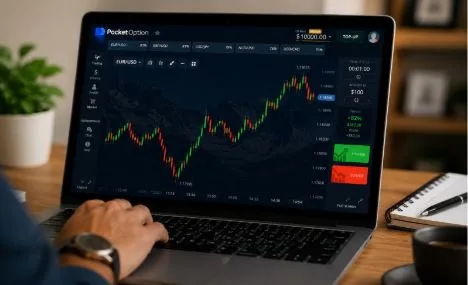
Online trading has become a popular way for people to explore financial markets from anywhere. Among the platforms available today, Pocket Option is often discussed by beginners because of its simple interface and easy access to different trading tools. However, before using any trading platform, it is important to understand how it works, what risks are involved, and how to approach trading responsibly.
Pocket Option is a trading platform where users can speculate on the price movement of different assets. These may include currencies, commodities, stocks, and cryptocurrencies, depending on what is available in a user’s region. The basic idea is simple: a trader chooses an asset, predicts whether its price will move up or down within a selected time, and places a trade based on that prediction.
Although the process may look easy, trading should never be treated like a quick way to make money. Financial markets move because of many factors, including news, economic data, global events, interest rates, and investor behaviour. A beginner should first spend time learning the basics before risking real funds.
What Makes Pocket Option Popular?
One reason many new traders look at Pocket Option is its user-friendly layout. The platform is designed to make charts, trade buttons, balances, and assets easy to find. If you’re researching How to trade on Pocket Option, you’ll quickly notice that its straightforward interface makes it easier for beginners to understand the basics before moving on to more advanced trading concepts.
Another reason is the availability of a demo account. A demo account allows users to practise trading without using real money. This gives beginners the opportunity to explore the platform, test simple strategies, and become familiar with market movements without risking their own funds. While demo trading cannot guarantee future performance, it provides valuable hands-on experience before transitioning to a live account.
How Beginners Should Start
A beginner should start with education, not deposits. The first step is to understand basic trading terms such as asset, chart, expiry time, payout, risk, trend, support, resistance, and volatility. Without understanding these terms, it becomes difficult to make informed decisions.
After learning the basics, the next step is to use a demo account. Beginners should practise for several days or weeks before considering real money. During this stage, they can observe how prices move, how different time frames behave, and how emotions affect decisions.
It is also helpful to keep a trading journal. A journal can include the asset traded, reason for entry, result, mistake, and lesson learned. Over time, this helps traders identify patterns in their own behaviour. Many trading losses happen not because of the platform, but because of emotional decisions.
Risk Management Is Essential
Risk management is one of the most important parts of trading. A trader should never risk money they cannot afford to lose. Online trading can result in financial loss, especially for beginners who trade without a plan.
A common mistake is placing large trades after a loss in an attempt to recover money quickly. This is known as revenge trading, and it often leads to bigger losses. A better approach is to set a fixed risk limit and stop trading when that limit is reached.
Beginners should also avoid depending on random signals, social media tips, or promises of guaranteed profits. No strategy can guarantee success in financial markets. A responsible trader understands that losses are part of trading and focuses on long-term learning.
Understanding Market Analysis
There are two common types of market analysis: technical analysis and fundamental analysis. Technical analysis focuses on charts, price patterns, indicators, and previous market behaviour. Fundamental analysis looks at economic news, company updates, interest rates, and global events.
On platforms like Pocket Option, many beginners focus mainly on technical analysis because trades are often short-term. They may use simple tools such as trend lines, moving averages, support and resistance levels, or candlestick patterns. However, using too many indicators can create confusion.
A simple strategy is often better than a complicated one. For example, a beginner may focus on identifying whether the market is trending or moving sideways. If the price is moving strongly in one direction, the trader may look for trades that follow the trend. If the market is unstable, it may be better to avoid trading.
Common Mistakes to Avoid
One common mistake is trading without a plan. A trader should know why they are entering a trade, how much they are risking, and when they will stop. Random trading usually leads to poor results.
Another mistake is overtrading. Some beginners place too many trades in a short time because they feel excited or impatient. Good trading requires patience. Not every market movement is an opportunity.
Ignoring emotions is also dangerous. Fear, greed, and frustration can affect decisions. A trader may exit too early because of fear or increase trade size because of greed. Learning emotional control is just as important as learning chart analysis.
Is Pocket Option Suitable for Everyone?
Pocket Option may be suitable for users who understand the risks and want to practise short-term trading in a structured way. However, it is not suitable for people who expect guaranteed income, quick profits, or risk-free results.
Before using any trading platform, users should check whether it is available and allowed in their country. They should also review the platform’s terms, withdrawal rules, fees, and account requirements. Responsible research should always come before financial decisions.
Final Words
Pocket Option can be an accessible platform for beginners who want to learn online trading, but it must be approached carefully. The platform may look simple, yet trading itself is complex and risky. Success depends on education, practice, discipline, and risk management.
Anyone interested in trading should begin with a demo account, study basic market behaviour, and avoid emotional decisions. Most importantly, trading should never be seen as guaranteed income. It is a high-risk activity that requires patience, planning, and continuous learning.
Disclaimer: This article is for educational purposes only and does not provide financial advice. Trading involves risk, and you may lose money. Always do your own research before using any trading platform.