A Complete Guide to UK Driving Licence Application: From Provisional to Full Licence
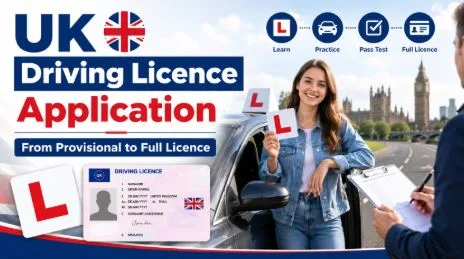
Getting a driving licence in the United Kingdom is an important step toward independence, convenience, and personal mobility. Whether someone wants to drive for work, family needs, study, or daily travel, understanding the full process can save time and help avoid common mistakes. The journey usually begins with a provisional licence, followed by lessons, the theory test, the practical driving test, and finally receiving a full driving licence.
A UK driving licence application may seem confusing at first, especially for new learners, overseas drivers, or people applying online for the first time. However, once the process is broken into clear stages, it becomes much easier to follow. This guide explains each step in a simple and practical way, from applying for a provisional licence to becoming a qualified driver.
Understanding the UK Driving Licence System
The UK driving licence system is designed to make sure every driver has the legal permission, knowledge, and practical ability to drive safely. In Great Britain, driving licences are managed by the Driver and Vehicle Licensing Agency, commonly known as DVLA. Driving tests are managed by the Driver and Vehicle Standards Agency, known as DVSA.
Before a person can drive independently, they must usually pass both the theory test and the practical driving test. A provisional licence allows a learner to start training, but it does not give full driving rights. Learners must follow specific rules, including driving with proper supervision and displaying L plates.
The main stages are:
- Apply for a provisional driving licence
- Learn to drive with a qualified instructor or eligible supervisor
- Prepare for and pass the theory test
- Book and pass the practical driving test
- Receive or apply for the full driving licence
Each stage plays an important role in preparing a safe and responsible driver.
Applying for a Provisional Driving Licence
The first official step is applying for a provisional driving licence. This licence allows a learner to begin driving lessons on public roads, as long as they follow the rules for learner drivers. In Great Britain, the application can usually be completed online through the official government website. Applicants can also apply by post, although online applications are often quicker and more convenient. (GOV.UK)
To apply, the applicant normally needs to provide identity details, address history, and payment. A valid UK passport can often be used to prove identity by providing the passport number. If the applicant does not have a UK passport, other accepted identity documents may be required. (GOV.UK)
Applicants should check that all personal details are accurate before submitting the form. A spelling mistake in the name, wrong address, or incorrect date of birth can delay the process. It is also important to use the official government service rather than unofficial third-party websites that may charge extra fees.
Who Can Apply for a Provisional Licence?
Eligibility depends on age, eyesight, residency, and health conditions. For most people who want to drive a car, the provisional licence can be applied for before they are old enough to drive on public roads, but driving lessons on public roads can only begin when they meet the legal age requirement.
Applicants must also meet the minimum eyesight standard. This usually means being able to read a number plate from the required distance. If someone needs glasses or contact lenses to meet the standard, they must wear them when driving.
Health conditions can also affect driving entitlement. Certain medical conditions must be reported to DVLA. This is not only a legal responsibility but also a safety requirement for the driver, passengers, and other road users. (GOV.UK)
Learning to Drive After Getting a Provisional Licence
Once the provisional licence arrives, the learner can begin lessons. Many learners choose a professional driving instructor because instructors understand test standards, road safety expectations, and common mistakes. However, learners may also practise with a suitable family member or friend if that person meets the legal supervision requirements.
A good learning plan should include different types of driving situations, such as:
- Quiet residential roads
- Busy town roads
- Roundabouts and junctions
- Dual carriageways where allowed
- Parking and reversing practice
- Night driving experience
- Driving in different weather conditions
The goal is not just to pass the test. The real purpose is to become confident, calm, and safe in real traffic. Learners who rush often struggle with test nerves and may develop weak habits. Steady practice is usually more effective than trying to prepare at the last minute.
Preparing for the Theory Test
The theory test checks whether a learner understands road signs, traffic rules, hazard awareness, and safe driving behaviour. It includes multiple-choice questions and a hazard perception section. The official government website provides practice theory test resources, and learners can also use books, apps, and revision materials. (GOV.UK)
Preparation should begin early. Many learners focus only on memorising questions, but it is better to understand the logic behind the rules. For example, knowing why stopping distances change in wet weather is more useful than simply memorising numbers.
Effective theory test preparation includes reading the Highway Code, practising hazard perception clips, reviewing road signs, and taking mock tests. A learner should not book the theory test too early unless they are consistently passing practice tests with confidence.
Booking and Taking the Practical Driving Test
After passing the theory test and gaining enough driving experience, the learner can book the practical driving test. The official DVSA service allows candidates to book a practical car driving test, and the standard car test fee starts from £62 according to the official booking page. (GOV.UK)
The practical test is designed to assess real driving ability. It usually includes general driving, independent driving, eyesight checks, and vehicle safety questions. The examiner wants to see that the candidate can drive safely, make good decisions, control the vehicle properly, and respond correctly to road conditions.
Before booking the test, learners should ask themselves:
- Can I drive safely without regular help from my instructor?
- Can I handle roundabouts, junctions, and lane changes confidently?
- Can I park and reverse safely?
- Do I understand speed limits and road signs?
- Can I stay calm under pressure?
DVSA’s Ready to Pass campaign encourages learners to focus on real readiness rather than simply booking the earliest available test date. It also highlights the value of mock tests and confidence-building before the actual exam. (Ready to Pass?)
What Happens After Passing the Test?
After passing the practical driving test, the candidate can start driving as a full licence holder. The test pass certificate can be used as proof while waiting for the full licence to arrive. In many cases, the examiner may arrange for the full licence to be sent automatically if the details on the provisional licence are correct. (GOV.UK)
New drivers should remember that passing the test is not the end of learning. The first months of independent driving are important. Roads feel different when there is no instructor beside you, so it is wise to drive carefully, avoid distractions, and build experience gradually.
New drivers should also understand the rules about penalty points. Unsafe driving, speeding, mobile phone use, and ignoring traffic laws can lead to serious consequences. A full licence gives freedom, but it also brings responsibility.
Renewing, Replacing, or Updating a UK Driving Licence
A driving licence is not something to forget after receiving it. Drivers may need to renew it, replace it, or update personal details over time. Photocard licences usually need renewal, and drivers must also update DVLA when their address changes.
The official government driving licence services allow drivers to renew a licence, replace a lost or stolen licence, update details, and view or share licence information. A lost, stolen, damaged, or destroyed full or provisional licence can be replaced through DVLA. (GOV.UK)
Renewal is also available online for full or provisional photocard licences. GOV.UK states that licences applied for by post or at a Post Office should usually arrive within three weeks, although it can take longer if medical or personal details need to be checked. (GOV.UK)
Drivers should keep their licence details current because incorrect information can create problems with insurance, police checks, vehicle hire, and official records.
Exchanging a Foreign Driving Licence in the UK
People who move to Great Britain with a non-GB driving licence may be able to exchange it, depending on where the licence was issued. The rules vary by country, licence type, and driving entitlement. The official GOV.UK exchange service helps drivers check whether they can exchange their non-GB licence for a British licence. (GOV.UK)
This area can be confusing because the rules are not the same for every country. Some drivers may be allowed to drive for a limited time before needing a UK licence. Others may need to pass a UK driving test. Anyone moving to the UK should check the official rules early instead of waiting until their driving permission becomes uncertain.
For overseas drivers, the safest approach is to confirm:
- Whether their current licence is valid in Great Britain
- How long they can drive on it
- Whether it can be exchanged
- Whether a theory or practical test is required
- Whether vehicle insurance will accept their licence
Checking these points early can prevent legal and insurance-related issues later.
Common Mistakes to Avoid During the Application Process
Many delays happen because applicants miss small details. The process is straightforward, but accuracy matters. A wrong address, incomplete identity information, or using an unofficial website can cause unnecessary stress.
Common mistakes include applying through unofficial websites, not checking identity document requirements, booking tests before being ready, ignoring medical declaration rules, forgetting to update address details, and losing the theory test pass certificate information.
Learners should also avoid comparing their progress with others. Some people pass quickly, while others need more time. Driving is a practical skill, and confidence develops at different speeds. A careful learner who takes extra lessons may become a safer driver than someone who rushes through the process.
Practical Tips for a Smooth Licence Journey
A successful licence journey depends on planning, practice, and patience. It helps to keep all documents in one place, use official services, and track important dates. Learners should also choose instructors carefully. A good instructor should be patient, clear, punctual, and honest about progress.
Here are a few useful tips:
- Apply for the provisional licence early
- Use the official GOV.UK website for applications and test bookings
- Practise theory questions regularly
- Take lessons consistently instead of leaving long gaps
- Ask for feedback after every lesson
- Take a mock test before booking the practical test
- Keep your address and personal details updated
- Do not drive unsupervised until you have passed
These habits make the process smoother and reduce the chance of unnecessary delays.
Final Thoughts for New UK Drivers
The path from provisional licence to full driving licence is a major achievement. It requires preparation, responsibility, and a clear understanding of each stage. From submitting the first application to passing the practical test, every step helps build the knowledge and confidence needed for safe driving.
A well-planned UK driving licence application is more than filling in a form. It is the beginning of a learning journey that teaches discipline, awareness, and independence. By using official services, preparing properly, and taking the process seriously, new drivers can move from learner status to full licence holder with confidence and peace of mind.