Why Packaging Design Matters More Than Most Small Businesses Realize
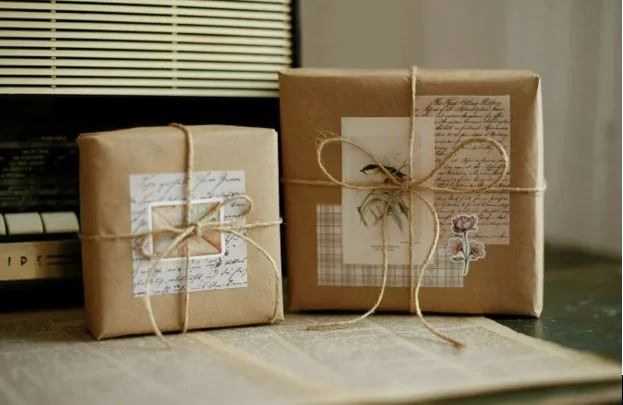
There is a practical purpose to every shipping box. It protects the product during storage and transit, keeps fulfillment efficient, and helps ensure the order arrives in good condition. From a logistics perspective, that may seem sufficient. From a business perspective, however, packaging often serves a much broader role.
Packaging influences how customers perceive a product before they use it. The materials, construction, size, and presentation all contribute to first impressions and can reinforce a company’s brand, product quality, and attention to detail. For many businesses, packaging also affects shipping costs, storage efficiency, and customer satisfaction, making it both an operational and marketing decision rather than simply a purchasing expense.
Businesses evaluating Custom Boxes Pueblo CO, often begin by comparing materials, box styles, print options, order quantities, and production timelines before selecting a packaging solution. Colorado Industrial Packaging Company works with companies in Pueblo and the surrounding region to help them understand these options, allowing packaging decisions to align with both operational requirements and long-term business goals rather than focusing solely on the lowest unit cost.
The Unboxing Moment Is Not a Marketing Gimmick
The concept of the unboxing experience has been talked about so much in e-commerce that it can start to feel like marketing fluff. It is not. It is a real behavioral phenomenon with measurable effects on customer loyalty.
A survey by Dotcom Distribution way back found that 52% of consumers said they are likely to make repeat purchases from a brand that delivers a premium packaging experience. But that still applies to today’s consumers. Retail Dive also backs this up by saying 83% of consumers are drawn to packaging. That is not a marginal effect. That is a significant driver of customer retention, and retention is almost always more cost-efficient than acquisition.
The flip side is also measurable. A product that arrives in a damaged, generic, or clearly cheap box creates a negative first impression that the product has to overcome. Even if the product itself is excellent, the packaging has already set a tone.
You do not have to spend a lot of money to create a good unboxing experience. Consistent branding, clean presentation, and the absence of excessive plastic and unnecessary filler go a long way. But you do have to think about it intentionally.
Custom Packaging Is Not as Expensive as Most Small Businesses Assume
The most common reason small businesses skip custom packaging is the assumption that it is only cost-effective at large volumes. That was largely true 10 years ago. Digital printing has changed the equation significantly.
With digital printing, there are no plate setup fees. A run of 100 to 500 custom-printed boxes is economically feasible in a way that it was not when everything had to be flexographically printed. Per-unit costs are higher at small volumes than at 5,000 units, but the absolute cost is often within reach for a business in its early stages.
A simple comparison: a plain white mailer box might cost $0.75 to $1.25 per unit.
A digitally printed, branded version of the same box might cost $1.50 to $3.00 per unit at low volumes.
The difference is real, but it is worth putting in context. If that additional $1 to $2 per unit contributes to a meaningfully higher customer retention rate, the math often favors the investment.
What Custom Actually Means in Packaging Terms
Custom packaging exists on a spectrum. At one end is fully custom: a box designed from scratch in a shape that does not exist in any standard catalog, printed in exact brand colors with precise artwork, made to the exact dimensions of your product with no wasted space.
At the other end is stock packaging with custom elements: a standard-size mailer box with a custom sticker label on the outside, a generic corrugated box with a branded tissue paper insert inside, or a plain kraft box with your logo hot-stamped on the lid.
Both approaches can work depending on your product, your volume, and your budget. The best choice is usually somewhere between the extremes. A standard-size box in a custom print is the right balance for most small product businesses. It reduces the tooling cost compared to a fully custom shape while still delivering the brand experience that differentiates you from a plain brown box.
The Material Question
Corrugated cardboard is the default packaging material for most shipped products, and for good reason. It is strong, light, recyclable, and available in a range of grades. But it is not the only option, and for some products it is not the best option.
Rigid setup boxes (the kind you see used for luxury goods, subscription services, and electronics) are made from chipboard wrapped in paper. They do not fold flat like corrugated boxes, which makes shipping and storage more expensive, but they deliver a premium, structural feel that corrugated cannot match.
Poly mailers are the right choice for soft goods (clothing, accessories) that do not need rigid protection. They are lighter than corrugated, which reduces shipping costs, and they are available in custom-printed versions that carry branding just as effectively as a box.
Knowing what your product actually needs, rather than defaulting to whatever is most familiar, often opens up options that are both better-performing and more cost-effective.
Inserts and Interior Presentation
The inside of the package matters as much as the outside in terms of customer experience. An interior that looks like someone thought about it creates a different impression than a product dumped into a box with a wad of plastic packing peanuts.
Tissue paper in your brand color is a simple and affordable way to wrap the product inside the box. It costs pennies per unit and signals care. A small insert card with a thank-you note, product care instructions, or a discount code for the next purchase adds perceived value at minimal cost.
Structured inserts made from corrugated or molded pulp hold products in place and eliminate movement during shipping without requiring excessive void fill. They are more expensive than packing peanuts but protect product better and create a cleaner unboxing moment.
Bottom Line
Custom packaging is a business investment, not just an aesthetic choice. The data on customer retention is clear, and the cost barrier to entry for custom-printed packaging is lower than it has ever been.
Start by understanding what your product needs structurally, then layer in the brand experience that turns a functional container into something your customers remember.