Biologics Services: From Discovery to Commercial Manufacturing
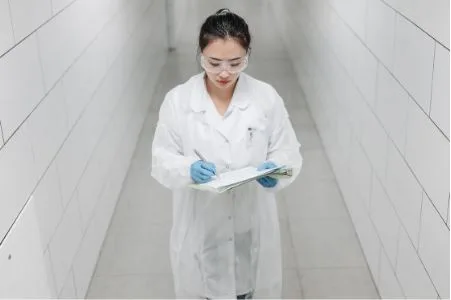
The pharmaceutical landscape has shifted dramatically over the past few decades. While traditional medicine relied almost exclusively on small-molecule chemical drugs – such as aspirin and simple antibiotics – the modern frontier of healthcare is driven by large, complex molecules derived from living organisms. These are known as biologics. Because biologics are grown rather than chemically synthesized, their production requires an entirely different set of scientific tools, facilities, and expertise. Navigating this journey from an initial idea in a laboratory to a mass-produced therapy available in hospitals requires a seamless chain of specialized biologics services.
For any biotechnology firm or pharmaceutical company, transforming a biological discovery into a commercial reality is a massive undertaking. The process spans years of precise laboratory experimentation, complex engineering, and strict regulatory checkpoints. By partnering with dedicated providers that offer comprehensive end-to-end solutions, organizations can significantly accelerate their timelines, mitigate costly development risks, and ensure that their lifesaving therapies reach patients safely and efficiently.
Antibody Drug Discovery: Target Identification and Validation
The long journey of biological drug creation always begins at the very basic level of cellular biology. Before you can build a weapon to fight a disease, you have to understand exactly how that disease operates within the human body. This initial phase is known as antibody drug discovery, and its primary goal is to identify a specific biological target – such as a problematic protein on a cancer cell – and demonstrate that interfering with it will stop or reverse the disease process.
Once a viable therapeutic target is identified, researchers work backward to generate antibodies that can bind to it with extreme precision. This early phase of antibody drug discovery relies on sophisticated screening techniques, genetic engineering, and molecular modeling to find the best possible chemical matches. Specialized laboratory service providers use advanced animal immunization platforms or synthetic display libraries to generate thousands of potential candidate molecules, which are then systematically evaluated for their binding strength and biological activity.
To establish a solid foundation for a new therapeutic project, scientists must focus on several core exploratory workflows:
- Disease target identification: Researchers study complex cellular pathways to isolate specific proteins, receptors, or genetic markers that play a major role in driving a disease.
- Functional target validation: Genetic tools and cellular assays are used to verify that modifying the chosen target will produce the desired therapeutic effect without harming healthy tissues.
- Lead generation campaigns: Specialized discovery platforms generate a vast pool of unique antibody candidates designed to interact specifically with the newly validated target.
- Affinity maturation optimization: The most promising antibody candidates undergo genetic engineering to boost their binding strength, structural stability, and overall efficacy.
- Early safety profiling: Initial laboratory tests screen the top candidates to rule out obvious toxicities or unwanted cross-reactivity with normal human tissues.
Development Services for Biologics and Biosimilars
Finding a great antibody candidate in a laboratory is a major milestone, but a raw molecule is not yet a medicine. To transition from a delicate laboratory sample to a stable, practical product that can be safely shipped to clinics, a molecule requires comprehensive development services. This phase involves optimizing the molecule’s structure, determining how to formulate it as a stable liquid or powder, and ensuring it remains potent over a long shelf life. This work is equally critical for entirely new biological innovations and for biosimilars, which are highly accurate, generic versions of existing blockbuster biologics.
During this stage of the process, technical teams evaluate the molecule’s physical and chemical characteristics under various conditions. While smaller molecules and synthetic research peptides can often be synthesized using straightforward, predictable chemical frameworks, large biologics are notoriously fragile and prone to degradation or clumping when exposed to slight changes in temperature or acidity. Utilizing professional development services ensures that your therapeutic molecule is carefully stabilized with the right protective ingredients, keeping it safe and effective for long-term storage and patient use.
Developing a robust biological formulation involves several highly specialized analytical procedures:
- Detailed structural characterization: Scientists use advanced mass spectrometry and imaging tools to map the exact physical shape and chemical makeup of the biological molecule.
- Advanced formulation screening: Testing the molecule in dozens of different liquid mixtures to find the exact combination of buffers and stabilizers that prevent degradation.
- Real-time stability testing: Exposing the formulated biological product to various temperatures and humidity levels over time to determine its exact shelf life and storage needs.
- Biosimilar analytical comparison: Running exhaustive side-by-side tests to prove that a new biosimilar matches the exact structural and functional profile of the original brand-name drug.
- Delivery device compatibility: Testing how the biological solution interacts with syringes, vials, or wearable auto-injectors to guarantee safe and smooth administration for patients.
High-Throughput Antibody Production for Screening Programs
In the early stages of a biological research program, speed and volume are essential. When a discovery campaign yields thousands of potential antibody designs, scientists cannot afford to spend months manufacturing each one individually using slow, traditional methods. This is where high-throughput antibody production comes into play. By combining advanced laboratory robotics, automated fluid handling, and parallel processing, this specialized service allows labs to manufacture and purify hundreds of distinct antibodies simultaneously in small, highly concentrated quantities.
Having access to automated production scales completely changes the dynamic of modern therapeutic research. It allows discovery teams to cast an incredibly wide net, ensuring that no potential blockbuster molecule is overlooked due to time constraints. By feeding these rapidly manufactured batches directly into automated screening assays, researchers can quickly gather massive datasets on binding kinetics, functional blockades, and initial safety profiles, allowing them to make fast, data-driven decisions.
Implementing automated, fast-paced production routines offers several distinct advantages for competitive research programs:
- Rapid parallel manufacturing: Automated systems cultivate and harvest hundreds of unique antibody variants at the same time, cutting down project lead times from months to days.
- Micro-scale purification workflows: Specialized miniature filtration setups purify tiny, highly concentrated samples of each antibody, reducing waste and reagent costs.
- Direct assay integration: The output from the production line is formatted to plug directly into automated robotic testing systems for seamless, uninterrupted evaluation.
- Flexible expression systems: Utilizing transient transfection methods in mammalian cells to generate clean, relevant protein samples without the need to build permanent cell lines first.
- Data-driven candidate selection: Generating massive comparative datasets that allow computational models to predict which antibody shapes have the highest chance of clinical success.
Biologics Development Services: Cell Line, Upstream, and Downstream
Once a single winning antibody candidate is selected from the screening phase, the project moves out of small-scale research and into industrial bioengineering. This is the domain of biologics development services, where the primary goal is to build a highly efficient, repeatable, and scalable living factory. Because biologics cannot be manufactured in a traditional chemical reactor, engineers must program living host cells – usually Chinese Hamster Ovary cells – to produce the desired therapeutic protein at a massive scale.
This core engineering process is traditionally broken down into three tightly connected operational phases: cell line development, upstream processing, and downstream processing. Comprehensive biologics development services ensure that these three phases work together in perfect harmony. A highly productive cell line is useless if the upstream bioreactor conditions cannot keep the cells alive at high densities, and a massive upstream harvest is meaningless if the downstream purification team cannot efficiently purify the proteins.
Balancing these three engineering disciplines requires master-level control over several critical manufacturing variables:
- High-yield cell line engineering: Selecting and cloning a single, highly stable host cell that can reliably produce massive quantities of the target therapeutic protein over time.
- Upstream bioreactor optimization: Tuning the temperature, oxygen levels, nutrient feeding schedules, and mixing speeds within large bioreactors to maximize healthy cell growth.
- Downstream purification strategy: Designing a precise multi-step filtration and chromatography process to gently separate the target drug from host cell proteins, DNA, and other waste materials.
- Viral clearance validation: Implementing strict chemical treatments and specialized nano-filtration steps to guarantee the final therapeutic product is entirely free of viral contaminants.
- Scalability assessment testing: Running pilot-scale manufacturing batches to ensure that the production process behaves predictably when moving from small lab benches to massive industrial tanks.
Antibody Drug Development: Preclinical and Clinical Pathways
The final and most rigorous phase of the biologics journey is earning regulatory approval to bring a new medicine to patients. Antibody drug development bridges the gap between successful laboratory engineering and commercial authorization by global bodies such as the FDA or EMA. Before reaching human volunteers, every candidate must complete extensive preclinical safety testing to establish safe dosage ranges and identify potential toxicities.
As the molecule advances through Phase I, II, and III clinical trials, the demand for comprehensive biologics development services grows considerably. Manufacturing processes must be fully validated to guarantee batch-to-batch consistency, purity, and absolute freedom from defects. Every decision, adjustment, and result must be meticulously documented.
Ultimately, successful antibody drug development is not just a scientific achievement – it is a commitment to transparency, precision, and patient safety at every step of the journey toward commercial launch.