Seed Audio 1.0 and the Push to Make Full-Scene Audio Production More Accessible
The brand is positioning audio generation as scene production rather than simple text-to-speech, with a workflow designed around dialogue, sound effects, music and ambience.
Audio remains one of the most demanding parts of digital storytelling. A short documentary may need narration, two interview voices, room tone, music and carefully timed effects. A training programme may need several speakers who remain recognisable across a series. A community podcast can have a strong script and still sound unfinished when every element is recorded, sourced and mixed separately.
Large studios solve this with specialist teams and established production pipelines. Independent publishers, educators, civil-society organisations and small creative businesses often work with fewer people, tighter deadlines and limited access to recording facilities. Their challenge is not a shortage of stories. It is turning those stories into audio that listeners can follow and trust.
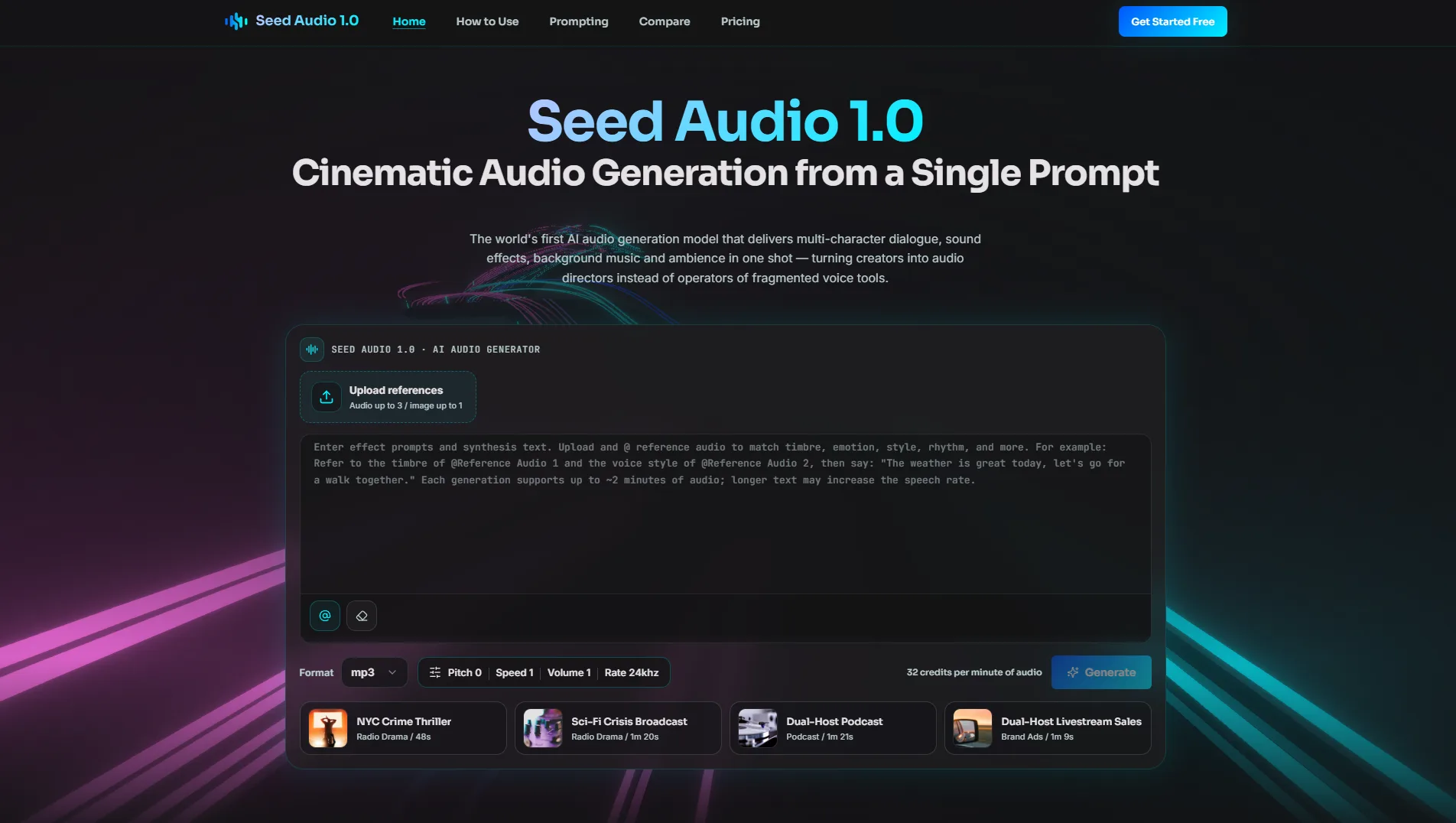
Seed Audio 1.0 enters that gap with a browser-based approach to full-scene audio generation. Instead of presenting itself as another system that only reads written text aloud, the brand brings dialogue, sound effects, background music and ambience into the same prompt-led workflow.
A Brand Built Around Complete Audio Scenes
The central idea behind Seed Audio 1.0 is straightforward: an audio story is more than a voice. Speech needs space around it. A radio drama depends on the sound of a door, a street or a storm. A documentary narrator may need restrained music and environmental detail. A multi-host podcast needs distinct voices, natural turn-taking and pauses that do not feel mechanically inserted.
The platform is designed to interpret a scene description rather than a line of narration alone. Users can define speakers, mood, pacing and environmental cues in the prompt. Optional audio and image references can add direction for voice, style or character. The result is intended to arrive as a mixed audio file rather than a collection of disconnected parts.
This distinction gives the brand a clearer position. Traditional text-to-speech remains useful for straightforward narration. Seed Audio 1.0 is aimed at projects in which several elements need to work together as one listening experience.
Why an Integrated Workflow Matters
Conventional audio production is modular for good reasons. Recording, editing, sound design and mixing are separate disciplines, and experienced professionals add judgement at every stage. The difficulty for a small team is that even a modest project may require several tools, subscriptions and file handoffs before the first reviewable version exists.
Seed Audio 1.0 is built to generate dialogue, sound effects, music and ambience in one pass. That does not make careful editing unnecessary. It changes what a first draft can contain. Instead of reviewing a bare synthetic voice and imagining the final atmosphere, a team can listen to a more complete scene and decide whether its structure works.
For organisations that produce information rather than entertainment alone, this can be valuable. A health campaign can test whether a dialogue is clear and respectful. An education team can hear whether a lesson moves too quickly. A documentary producer can evaluate whether music supports the subject or overwhelms it.
From Script to Reviewable Audio
The workflow begins with a written prompt and script. A useful prompt identifies the setting, speakers, emotional tone, pacing and important sound cues. “Two hosts discuss water conservation” leaves much open to interpretation. A stronger direction specifies that one speaker asks concise questions, the second answers calmly, ambient outdoor sound remains subtle and music appears only at the opening and close.
References are optional. A permitted voice sample can guide vocal character, while an image can suggest the personality or atmosphere of a scene. The platform accepts text, audio and image inputs, although access to reference features and longer continuation options varies by plan.
After generation, users can preview the mixed result and download it in WAV or MP3 format. The first output should be treated as a production draft. Teams still need to check pronunciation, pacing, speaker separation, factual accuracy and whether the sound design is appropriate for the intended audience.
Where the Brand Fits
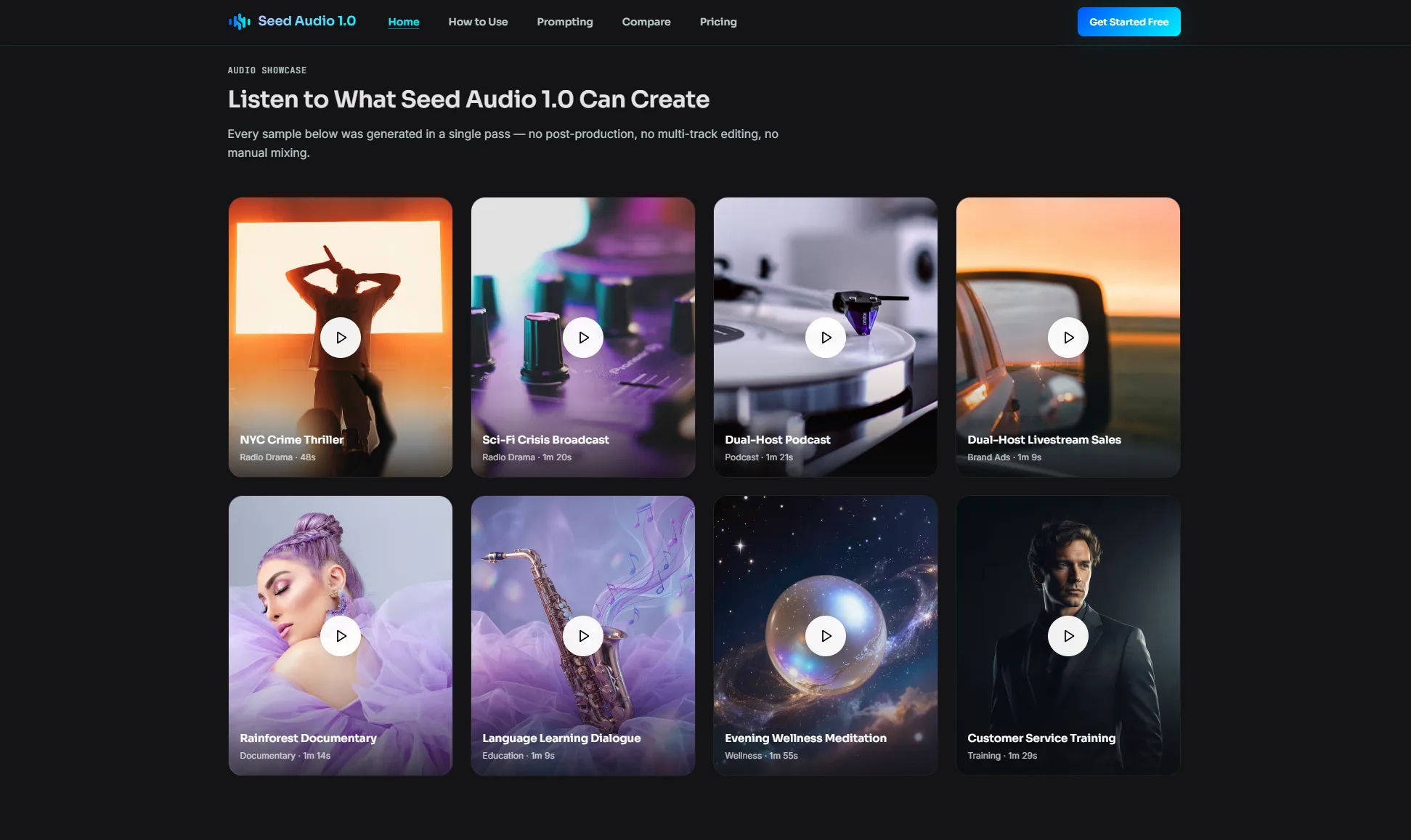
The product examples make the intended audience visible. Seed Audio 1.0 includes templates and demonstrations for radio drama, podcasts, documentary narration, language-learning dialogue, wellness audio, advertising and customer-service training.
These categories share a common need: they combine spoken information with context. A training simulation benefits from more than a neutral narrator because different voices help learners recognise roles. A documentary benefits from ambience because place is part of the story. A podcast pilot needs enough rhythm and interaction to show whether a format can sustain attention.
For independent media, the practical use may be early production and prototyping. A small newsroom or nonprofit can test a script before arranging final recording. An author can hear whether dialogue in an audiobook adaptation feels distinct. A video producer can prepare temporary audio that helps editors establish timing before final voice and music decisions are made.
Voice Consistency and Longer Formats
One persistent challenge in generated audio is voice drift. A character can sound convincing in one section and noticeably different later. This becomes more disruptive in audiobooks, serialised podcasts and training programmes where listeners need to recognise the same speakers over time.
Seed Audio 1.0 emphasises voice consistency and continuation as part of its longer-form workflow. The site presents short single-pass generation alongside plan-dependent continuation options for longer productions. This is more relevant than maximum duration alone. A long file is useful only if character identity, tone and pacing remain coherent.
Teams evaluating the platform should therefore test a repeated speaker across several connected sections. They should listen for changes in timbre, energy, pronunciation and room character rather than judging only the first minute.
Authority Requires Clear Boundaries
Voice technology carries responsibilities that cannot be solved by audio quality. A reference voice should be used only with the speaker’s permission. Scripts, music references and other source materials should be original, licensed or otherwise authorised. Commercial use also depends on the applicable plan and the rights attached to the inputs.
Disclosure deserves similar attention. If generated audio could reasonably be mistaken for a real interview, witness statement or public figure, audiences should not be left to guess. Synthetic production can support communication, but it should not manufacture evidence or impersonate people without consent.
These safeguards strengthen rather than weaken a brand. A credible audio platform is not defined only by what it can generate. It is also defined by whether users understand how to apply the technology responsibly.
How to Evaluate the Platform
A useful test should begin with a real production problem rather than a showcase prompt. Choose a 45- to 60-second scene with two speakers, one environmental setting and limited music. Then assess:
- whether each speaker remains distinct and understandable;
- whether sound effects support the scene without masking dialogue;
- whether music enters and exits at sensible moments;
- whether emotional direction sounds appropriate rather than exaggerated;
- whether the result can be revised without rewriting the entire concept.
This kind of test reveals more about the Seed Audio 1.0 production workflow than a single polished sample. It shows whether the tool can support review, feedback and repeated use inside an organisation.
A More Coherent Starting Point for Audio
Seed Audio 1.0 is building its identity around integration. Its promise is not simply faster speech generation, but a more coherent starting point for projects that would otherwise require separate voice, music, effects and mixing stages.
That positioning is relevant to podcasters, educators, documentary makers, publishers and small creative teams that need to hear an idea before committing to a larger production. The technology will still require human editorial judgement, rights management and quality control. Used within those boundaries, it can make sophisticated audio development easier to begin.
The larger shift is significant: creators are moving from asking an AI system to read a script toward asking it to help stage an entire sound scene. Seed Audio 1.0 offers a clear example of what that new workflow looks like.