How to Recognize a Truly Luxurious Home Beyond the Price Tag
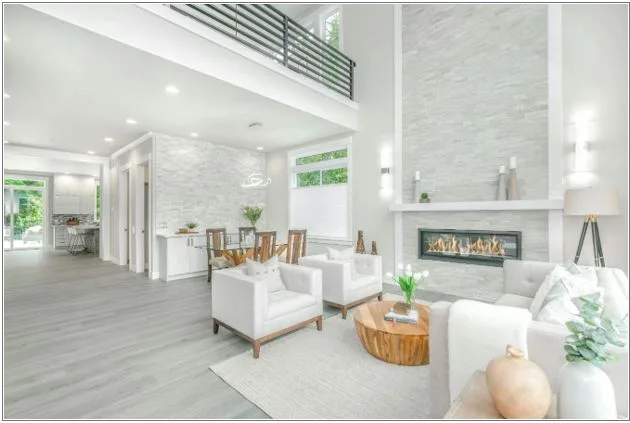
Price is one of the most easily faked aspects of the luxury property market. All one needs to attach a price tag of several million is a bold agent and the right zip code. True luxury, though, does not lie in numbers and formulas – it is the product of architecture and space itself. It therefore cannot be simulated with superficial bravado or fashionable design.
Once all the marketing hype is stripped from the equation, true class lies in the manner in which a property is constructed, how it manages natural light, and how it operates psychologically. Recognizing a piece of property that stands out as truly valuable means looking beneath the surface glamour and analyzing the true substance of masterful construction.
The Sensory Architecture of Proportion and Mass
The single most definitive marker of high-end design is the manipulation of volume and mass. Standard builds rely on predictable, cost-efficient dimensional lumber and standard drywall heights. High-caliber architecture treats volume as an active design element that dictates human emotion.
A Physical Decompression
As soon as you enter a place of excellent design, you immediately feel physically relaxed. It is not merely because of the presence of high ceilings, but because of the careful golden-ratio proportioning, for there should be a proper scaling of the vertical height to the horizontal width of the room.
The Weight of the Home
Moreover, luxury carries weight. It can be seen from the height of the window jambs and the thickness of the wall structure. Quality construction utilizes the building’s strong, heavy foundation for sound insulation and vibration control. The doors are heavy slabs of wood or solid timber that close with the sound of a vacuum-sealed thud, not the hollow echo of slamming metal. There is mass behind the walls, which are usually finished with genuine lime, Venetian plaster, or stone.
Material Authenticity and Spatial Continuity
In today’s real estate market, many artificial substitutes appear to be visually pleasing on your phone screen. From porcelain tiles that mimic marble to vinyl planks that mimic white oak, many veneer surfaces are hiding behind the facade of particle boards.
Rejecting the Fake
A house built by skilled craftsmen tells a truthful story of its materials. If the material looks like travertine, it is because it is actual travertine that comes from the earth. If there is a wood beam running across the ceiling, it is because there is actual wood carrying actual weight. Living brass, sand-cast bricks, and wire-brushed wood are just some of the durable materials used.
Seamless Transitions
More importantly, look closely at material continuity. In poorly executed properties, you will see a jarring patchwork of finishes, such as different flooring thresholds between rooms, changing trim profiles, and disconnected stone patterns. A cohesive architectural vision requires a limited, exceptionally high-quality material palette that repeats seamlessly throughout the layout.
When custom European oak runs continuously without transition strips, or when the same limestone cut flows from the interior living pavilion directly onto the pool terrace, the home achieves a rare visual harmony. These premium materials develop a beautiful, distinct patina over decades, compounding the value of luxury houses while synthetic counterparts peel, scratch, and degrade under normal daily wear.
The Hidden Masterclass of Micro-Lighting and Acoustics
The finest properties are experienced through the senses that home buyers rarely audit during an afternoon walk-through. Lighting design and acoustic engineering represent the invisible infrastructure that separates ordinary dwellings from sanctuary spaces.
Strategic Illumination
In a conventional home design, the lighting system is regarded as a simple utility component, with box-style central lighting fittings installed and recessed grids that cast harsh, unsuitable shadows. In a well-structured building, lighting becomes part of the architecture’s physical components. The low-voltage lighting system is installed in the ceiling drywall, creating indirect lighting aligned with structural sight lines. The lighting fittings feature a deep beveled edge and a micro-aperture, illuminating the paintings and furniture surfaces without causing eye glare. The zoning is automated so that the room arranges itself based on changes in sunlight direction during the daytime.
Sound Mitigation
Acoustic control is equally critical. Hard surfaces like marble floors and massive glass panels naturally create echo and auditory fatigue. A home engineered for true comfort balances these elements with hidden sound-mitigation systems. You will find acoustic plaster ceilings that absorb sound waves invisibly, solid-slab intermediate subfloors lined with rubber dampening mats, and insulated interior plumbing lines that ensure you never hear a pipe rattle or a shower running in an adjacent wing of the house.
Uncompromising Site Integration and Spatial Alignment
A house of genuine status is never dropped randomly onto a parcel of land; it is deliberately sculpted to respond to its unique micro-climate, topography, and solar trajectory.
Dissolving Boundaries
Consider how the property addresses its views and surroundings. The windows ought to be strategically placed to ensure maximum privacy from neighboring plots while also offering the best views of trees, landscapes, or water features. True luxury is a situation where the interior and exterior merge through floor-to-ceiling glass that slides all the way to pocket walls.
Intuitive Layouts
Even the floor plan itself should feel entirely intuitive. The relationship between the prep kitchen, the formal living spaces, and the private family quarters must flow with an obvious, logical rhythm. There are no awkward layout compromises or dead spaces resulting from poor engineering. The house functions effortlessly, powered by intelligent infrastructure such as concealed climate-control zones, built-in smart automation, and masterfully hidden storage walls that keep visual clutter entirely out of sight.
Final Insights for the Discerning Buyer
In the end, finding a truly great house will mean relying on your hands and your ears far more than anything the listing agent writes on his price sheet. True luxury lies in the rich substance of the structure, in the sign of a master’s saw cut upon the wooden beam, in the feel of an unvarnished brass knob, and in the deep, soul-soothing silence that surrounds you when the massive front door closes behind you.