How Much Does It Cost to Build a Himalayan Salt Wall?
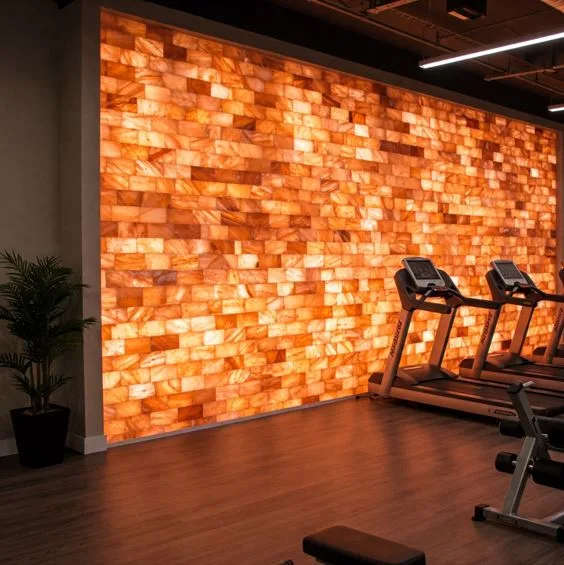
If you’ve been searching for a straight answer on what a Himalayan salt wall actually costs, you’ve probably run into the same problem everyone else does: a lot of vague numbers and not much real detail. Some sites throw out a single price and call it a day. That’s not very helpful when you’re trying to plan an actual budget.
We work with salt bricks and tiles every day, sourcing them straight from the Khewra Salt Mine in Pakistan and shipping them to spas, wellness centres, contractors, and homeowners across the U.S. So we’ve seen firsthand what a project really costs, from a small accent wall to a full commercial installation. Here’s the honest breakdown.
What Is a Himalayan Salt Wall, Exactly?
A Himalayan salt wall is built from solid blocks or tiles of pink salt, cut and shaped from rock salt deposits. The salt itself gets its colour from trace minerals like iron oxide, which is why it ranges from soft pink to deep amber depending on the batch.
Most walls use one of two formats:
- Salt bricks: thicker, chunkier pieces often used for feature walls or DIY builds
- Salt tiles: thinner, more uniform panels used for a cleaner, more polished look, common in spas and treatment rooms
Both are usually backlit with LED lighting, which is what gives salt walls that warm glow you’ve probably seen in spa photos. The lighting isn’t just for looks it also helps highlight the natural texture and colour variation in the salt.
The Real Cost Breakdown: What You’re Paying For
A salt wall isn’t just “salt plus labour.” Several line items add up, and understanding each one will help you avoid surprises.
Salt Brick and Tile Material Costs
This is usually the biggest chunk of your budget. Pricing depends on the grade of salt, the thickness, and whether you’re buying retail (small quantities, higher markup) or wholesale (bulk pricing, direct from source).
Wholesale salt bricks and tiles typically run somewhere in the range of $8 to $20 per square foot, depending on thickness and finish. Retail pricing from smaller suppliers or middlemen can run noticeably higher, sometimes double that, since you’re paying for extra steps in the supply chain.
Backlighting and Electrical Work
Most salt walls use LED strip lighting installed behind the bricks. Basic LED kits are affordable on their own, but if you need an electrician to run new wiring or add a dimmer switch, that’s where labour costs come in. Budget $300 to $1,500 for lighting and electrical work, depending on the complexity of your setup.
Installation and Labor
If you’re hiring a contractor, labour costs vary a lot by region and by how experienced the installer is with salt wall builds specifically. This isn’t the same as hanging drywall; salt is heavier, more fragile, and needs proper backing. Expect labour costs to add anywhere from $5 to $15 per square foot on top of materials.
Wall Framing and Backing Materials
Salt bricks need something sturdy behind them, usually a plywood or metal frame that can support the weight and hold the lighting in place. This is often overlooked in early budgeting, but it can add a few hundred dollars depending on wall size.
Shipping and Freight
Since Himalayan salt is quarried overseas, freight is a real cost. Wholesale suppliers typically build this into their per-square-foot pricing, but if you’re ordering from multiple smaller vendors, shipping can stack up fast. It’s worth asking upfront whether freight is included in your quote.
Average Total Cost by Wall Size
Here’s roughly what full projects run, all-in (materials, lighting, and labour combined):
- Small accent wall (10–20 sq ft): $500 – $1,800
- Spa treatment room wall (40–80 sq ft): $2,000 – $8,000
- Large commercial feature wall (100+ sq ft): $8,000 – $20,000+
These are general ranges, not fixed quotes. Your actual price will depend on your location, the finished grade of salt you choose, and who’s doing the install. If you want an accurate number for your specific project, it’s always worth requesting a quote based on your exact square footage.
DIY vs. Professional Installation: Which Costs Less?
If you’re handy and comfortable with basic wall framing and electrical work, DIY can cut your total cost significantly, sometimes by 30% to 50%, since you’re only paying for materials and shipping.
That said, DIY isn’t the right call for everyone. Salt bricks are heavier than they look, and a poorly supported wall can shift or crack over time. If you’re building a small accent wall in a living room, DIY is a reasonable option. If you’re outfitting a spa or commercial space where the wall needs to hold up under daily use, professional installation is usually worth the extra cost. A wall that needs to be redone is more expensive than doing it right the first time.
Hidden Costs People Forget About
A few line items that don’t always make it into the initial estimate:
- Sealant or finishing treatments for tiles in humid environments
- Replacement bricks, if any, arrive damaged or crack during installation
- Climate control adjustments, since salt can absorb moisture in very humid rooms
- Ongoing light maintenance, like occasional LED bulb replacement
None of these is a huge expense on its own, but they’re worth budgeting a small buffer for, maybe an extra 5% to 10% on top of your main quote.
How to Get the Best Price on Salt Bricks and Tiles
The biggest lever you have on cost is where you buy. Every layer between you and the actual salt mine adds markup. Buying wholesale, direct from a supplier that sources straight from Khewra, cuts out a lot of that extra cost.
A few practical tips:
- Buy in bulk if you’re planning multiple rooms. Per-square-foot pricing usually drops as order size goes up.
- Ask about minimum order quantities. Wholesale suppliers often have a minimum, so it helps to know that before you start planning your layout.
- Compare thickness, not just price. A lower price per square foot sometimes means a thinner tile, which can affect both durability and how much light shows through.
- Confirm what’s included in freight. Some quotes include shipping in the price; others don’t. Always ask.
Is a Himalayan Salt Wall Worth the Investment?
That depends on what you’re building it for. For spas and wellness centers, a salt wall is often a strong visual anchor. Clients notice it, it photographs well for marketing, and it gives a treatment room a distinct feel that’s hard to replicate with paint or standard tile. Many wellness businesses also offer salt-related relaxation experiences alongside the wall, though it’s worth noting that claims about specific health benefits from salt walls aren’t something we’d stand behind as guaranteed outcomes. What we can say with confidence is the aesthetic and atmosphere it adds to a space.
For homeowners, it usually comes down to whether you want a genuinely unique feature wall. It’s not a small investment, but it’s also not something most people replace or redo once it’s in.
Final Thoughts
Building a Himalayan salt wall in 2026 typically lands somewhere between a few hundred dollars for a small DIY accent wall and well over $10,000 for a large commercial installation. The biggest cost factors are the grade and thickness of salt you choose, whether you install it yourself or hire a professional, and where you’re sourcing your materials from.
If you’re planning a project and want pricing based on your actual square footage, reach out for a wholesale quote. It’s the fastest way to move from “rough estimate” to a number you can actually plan around.
Frequently Asked Questions
How much does a Himalayan salt wall cost per square foot? Wholesale salt bricks and tiles typically cost between $8 and $20 per square foot for materials alone. Once you add lighting and installation, total project costs usually run $20 to $60+ per square foot, depending on labour and finish.
Can I build a salt wall myself? Yes, for smaller walls. DIY installation works well for accent walls under 20 square feet if you’re comfortable with basic framing and wiring. Larger commercial walls usually benefit from professional installation for long-term durability.
How long do salt walls last? With proper backing and a dry environment, salt walls can last many years without needing replacement. Humidity is the main factor that affects longevity, so climate control matters more in wet or steamy spaces like spa treatment rooms.
Do salt walls need maintenance? Minimal maintenance is needed. Occasional dusting and checking that the wall stays dry are usually enough. In very humid spaces, some owners add a light sealant to protect the surface.
Where can I buy wholesale Himalayan salt bricks and tiles? Buying directly from a wholesale supplier that sources from the Khewra Salt Mine is typically the most cost-effective option, since it cuts out the markup added by smaller retail middlemen.