The Over-40 Knee Shift: Reclaiming Your Mobility and the Truth About Natural Relief
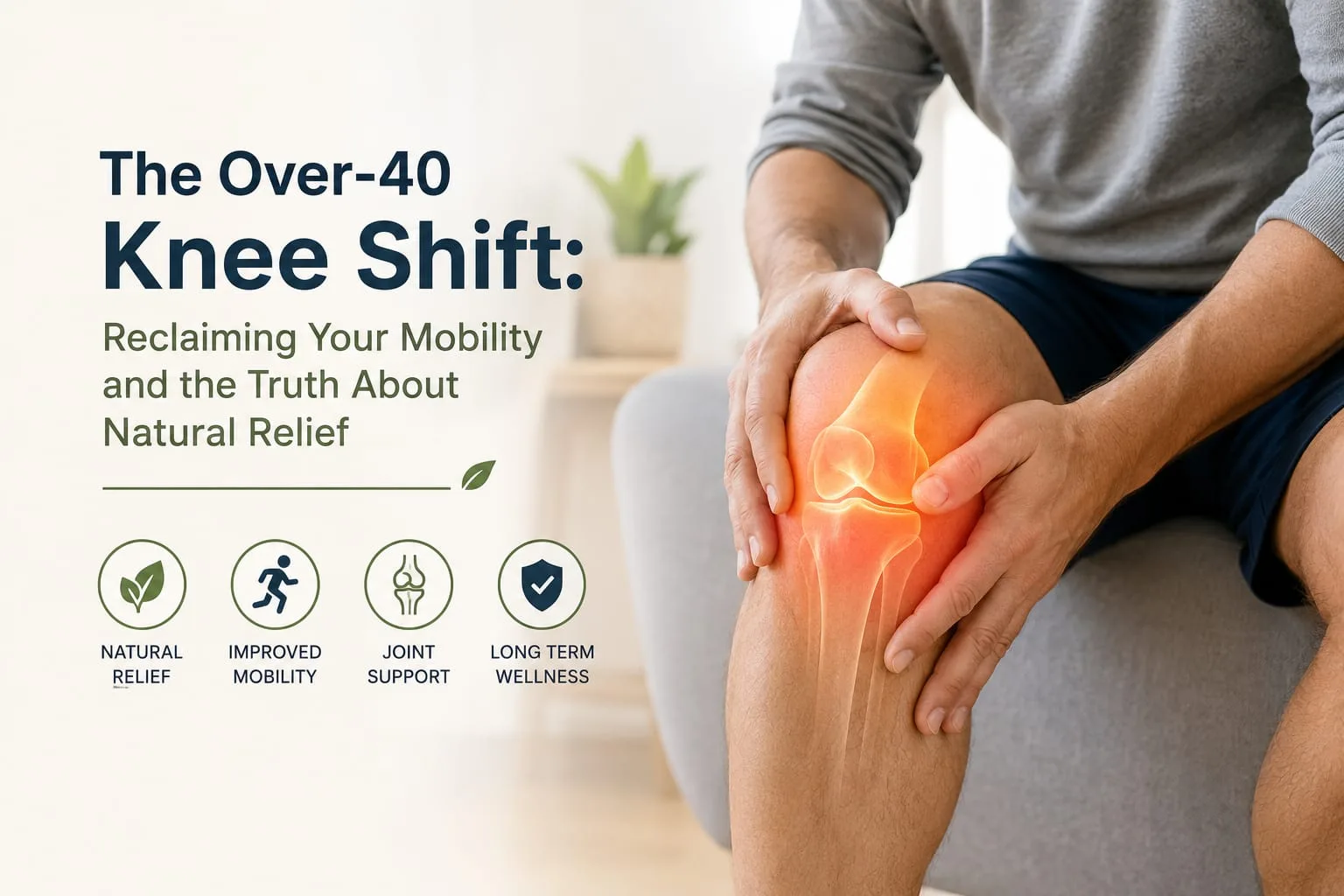
It happens to millions of American adults almost overnight. You reach for something on a low shelf, step out of an SUV, or head down a flight of stairs, and you are greeted by a sharp, unexpected pinch or a dull, deep ache in your knee. For years, your lower joints functioned flawlessly in the background of your life. But suddenly, after hitting that age 40 milestone, your knees start commanding your full attention.
In the United States, knee discomfort is one of the most frequent reasons adults over 40 visit a physician or scale back their physical activities. Unfortunately, a vast majority of people assume this sudden shift is a permanent downhill slide. They abandon their morning walks, stop playing tennis, or give up gardening under the mistaken belief that their knees are simply “worn out.”
The truth is much more encouraging. The changes that occur in your lower joints during your 40s and 50s are highly manageable. By understanding the biological mechanics behind this shift and replacing standard over-the-counter quick fixes with proven, natural anti-inflammatory protocols, you can easily protect your structural independence and keep moving without chronic restrictions.
Decoding the Anatomy: Why the Knees Bear the Brunt After 40
To understand why your knees are suddenly acting up, it helps to look at the unique job they perform. The knee is a complex, weight-bearing hinge joint that sits directly between the two longest levers in your body: your thigh bone (femur) and your shin bone (tibia). Every time you take a step, climb a curb, or rise from a chair, your knees absorb a massive amount of mechanical force.
As we cross into our 40s, several quiet physiological changes begin to converge within this vital hinge:
- Synovial Fluid Downshift: Your body naturally reduces the production of synovial fluid—the thick, slippery liquid that keeps your knee cartilage lubricated and nourished.
- Muscular Micro-Atrophy: Without targeted resistance training, the quadriceps and hamstrings lose a small percentage of their supporting strength each year. When these surrounding muscles weaken, they stop absorbing impact, forcing the physical knee joint to take the full shock.
- The Elasticity Drop: The ligaments and tendons that hold your knee in perfect alignment become slightly stiffer and less elastic, making them more prone to micro-tears and localized irritation.
For many individuals, this combination presents as a stubborn stiffness that makes the first few steps out of bed feel clumsy and uncomfortable. If you are noticing these exact changes in your daily routine, exploring a dedicated breakdown on managing knee pain after 40 will give you the precise actionable steps needed to stabilize the joint before minor irritation turns into a chronic structural issue.
The Root of the Ache: Mechanical vs. Inflammatory Triggers
When your knee acts up, the discomfort is rarely caused by just one factor. It is almost always a combination of mechanical stress (the physical alignment of your bones and muscles) and chemical inflammation (how your immune system reacts to that stress).
When the protective cartilage surfaces inside your knee experience minor friction, your body releases inflammatory proteins called cytokines into the joint capsule. This internal biological response triggers swelling, stiffness, and that deep, throbbing ache that seems to worsen after long periods of sitting or during rainy weather.
The table below outlines the core differences between simple mechanical strain and active, progressive joint inflammation to help you categorize what you are feeling.
Knee Symptom Evaluation Chart
| Physical Symptom | Simple Mechanical Strain | Active Joint Inflammation |
| Pain Pattern | Sharp and localized; usually triggers only during specific movements (e.g., squatting). | Dull, deep, and constant; often throbs even when you are completely resting or asleep. |
| Morning Stiffness | Disappears within 5 to 10 minutes once you stretch and walk around the kitchen. | Persists for 30 minutes or longer, making the joint feel entirely locked or tight. |
| Physical Appearance | Looks completely normal from the outside; no visible changes to the skin. | May appear visibly puffy, swollen, or feel noticeably warmer than the surrounding skin. |
| The Sound Factor | Occasional quiet, painless clicks or pops as tendons glide over the bone. | A distinct, rough grinding or crunching sensation (crepitus) accompanied by internal heat. |
The Natural Alternative: Moving Past the Ibuprofen Routine
For decades, the standard American response to joint discomfort has been to reach into the medicine cabinet for a bottle of non-steroidal anti-inflammatory drugs (NSAIDs) like ibuprofen or naproxen. While these medications are highly effective at temporarily numbing the pain pathways, using them as a daily, long-term crutch after age 40 carries significant systemic risks.
Extended, daily reliance on synthetic NSAIDs can erode your stomach lining, place extra strain on your kidneys, and even elevate your blood pressure. Furthermore, numbing your knees with a pill does absolutely nothing to fix the underlying biological cause of the discomfort—it simply turns off your body’s primary warning system.
[Joint Discomfort] ➔ [Daily NSAID Use] ➔ [Masked Symptoms & Continual Over-Exertion] ➔ [Accelerated Cartilage Wear]
Because of these long-term health risks, millions of adults are transitioning to powerful, plant-based botanicals that target inflammation at its molecular source without harming the digestive tract. At the absolute forefront of this natural movement is Curcuma longa, commonly known as Turmeric.
The Science of Turmeric: A Molecular Shield for Your Cartilage
Turmeric isn’t just a kitchen spice—it is one of the most thoroughly researched natural anti-inflammatory agents on the planet. The active bioactive compounds within turmeric are called curcuminoids.
On a cellular level, curcumin acts as a natural master-switch. It travels through your system and safely blocks NF-kB, a specific molecule that enters cell nuclei and turns on the genetic blueprints that produce chronic inflammatory chemicals throughout your joints. By shutting down this specific chemical pathway, turmeric helps reduce the cellular fires inside your knee capsule, allowing your body’s natural healing mechanisms to take over.
However, treating joint pain effectively with turmeric requires a medical-grade approach. Simply sprinkling standard grocery store turmeric powder onto your breakfast eggs will not provide enough active curcuminoids to alter your joint chemistry. To achieve real, measurable relief from chronic lower joint issues, you must utilize highly concentrated extracts that deliver precise, clinically verified therapeutic targets.
To ensure you are consuming enough active compound to actually suppress the inflammatory cascade, reviewing an expert guide on the proper turmeric for joint pain dosage is essential to avoid under-dosing and maximize your results safely.
3 Critical Guidelines to Boost Turmeric Absorption
If you decide to incorporate a premium turmeric protocol into your daily routine, you must understand the rules of bioavailability. On its own, raw curcumin is notoriously difficult for the human digestive tract to absorb. It is hydrophobic (it doesn’t dissolve well in water) and your liver naturally tries to flush it out of your system before it can ever reach your aching knees.
To unlock the full therapeutic power of this botanical, ensure your daily routine follows these three non-negotiable rules:
- Pair it with Piperine (Black Pepper Extract)
Piperine is a natural compound found in black pepper that temporarily slows down the specific liver enzymes responsible for breaking down curcumin. Clinical trials have demonstrated that pairing your turmeric with a tiny amount of black pepper extract boosts its cellular absorption rate by an astronomical 2,000%.
- Always Consume it Alongside Healthy Fats
Curcumin is entirely fat-soluble, meaning it requires healthy lipids to properly cross your intestinal wall and enter your bloodstream. To maximize its impact, always take your supplement alongside a meal containing healthy fats—such as a morning avocado, a handful of walnuts, or a spoonful of extra virgin olive oil.
- Seek Out Standardized Extracts
Look closely at the supplement facts label on your bottle. Avoid products that list vague phrases like “proprietary root blend.” Instead, choose formulations that explicitly state they are standardized to contain 95% curcuminoids, ensuring you are receiving a potent, clinical-grade therapeutic dose rather than cheap botanical filler.
A Holistic Architecture for Ageless Mobility
While high-quality supplementation is a powerful tool to cool down systemic inflammation, true, long-term joint health requires a well-rounded physical strategy. To completely bulletproof your knees for the decades ahead, combine your natural supplementation routine with these three lifestyle pillars:
Anti-Inflammatory Lifestyle Swaps
| Current Habit | Structural Mobility Swap | The Biological Payoff |
| Running or high-impact road running. | Low-impact cycling, swimming, or elliptical training. | Eliminates harsh, repetitive pounding while keeping the joint fully lubricated. |
| Prolonged sitting at a desk for 3+ hours without moving. | Performing gentle, bodyweight leg extensions every 45 minutes. | Continuously circulates fresh, nutrient-rich synovial fluid across the joint. |
| Relying entirely on stretching for tight hamstrings. | Performing slow, controlled calf raises and wall sits. | Builds localized muscular endurance to hold your kneecaps in perfect alignment. |
Summary: Designing Your Independent Future
Reaching age 40 and experiencing changes in your physical mobility is a completely natural biological transition—but living your life in a state of constant, uncomfortable limitation is entirely preventable. Your knees are not failing you; they are simply asking for a shift in how you care for them.
By recognizing the unique physical demands placed on your lower extremities, stepping away from the dangerous cycle of daily synthetic pain relievers, and fueling your body with clinically validated natural adaptogens like turmeric, you can successfully rewrite your mobility blueprint. Treat your joints with the structural respect they deserve today, implement a proactive preservation plan, and maintain the vibrant, active, and independent lifestyle you have earned.
Author – Jennifer Collins is a wellness researcher and natural health writer focused on adults over 40. With 3+ years of experience in digital health content, Jennifer specializes in making science-backed nutrition and lifestyle strategies easy to follow and apply.