What Happens When the Event Rental Delivery Arrives and the Setup Doesn’t Match the Plan
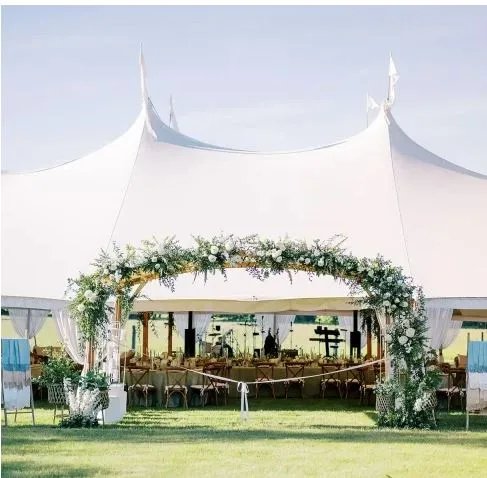
There’s a specific kind of stress that event coordinators and hosts recognize immediately — the moment on setup day when something doesn’t match what was discussed, and the decisions required to resolve it are happening in real time against a clock that has guests arriving at a fixed hour. Tables that are the wrong height for the chair style that was specified. Linens that were ordered for a sixty-inch round that arrived for a seventy-two-inch round nobody confirmed was what actually got delivered. A lighting rig that was planned against a tent rigging point that turns out not to exist in the configuration installed.
These aren’t catastrophic failures — they’re the compounding result of a rental process where the details weren’t confirmed carefully enough, where the communication between the planning conversation and the installation crew had a gap somewhere, or where the coordination between separate vendor categories — tent company, furniture rental, lighting — produced assumptions on each side that didn’t match on the day.
Event rentals that produce setup days without these moments are almost always the result of a rental provider who closes those gaps before the installation date rather than discovering them during it. That means a complete written spec that every party in the process is working from. It means a pre-installation confirmation that the furniture dimensions match the linen order, that the lighting plan matches the actual rigging points in the tent, and that the flooring covers the full footprint the floor plan requires.
For events in Fairfield County where setup day needs to proceed without improvisation, greenwichtent.com is where hosts and planners access Greenwich Tent Company’s full rental inventory alongside a coordination approach that catches these gaps before they become setup-day problems.
What Complete Event Rental Coordination Actually Involves
The tent is the structure the event happens inside. What happens inside it is determined by the rental elements — and those elements need to work together as a system rather than as separately sourced items that happen to occupy the same space. A floor plan that works on paper needs to be verified against the actual tent dimensions, the actual furniture footprints, and the actual circulation requirements for the event program. A lighting plan needs to be developed against the actual rigging points and power availability of the specific tent configuration being installed, not a generic version of that tent type.
Furniture selection carries downstream implications that extend beyond the aesthetics of the piece itself. Table shape determines linen dimensions — a sixty-inch round and a seventy-two-inch round require different linen sizes, and ordering linen before table dimensions are confirmed is a coordination gap waiting to surface on delivery day. Chair selection affects table clearance, which affects how many guests can be comfortably seated per table, which affects how many tables fit in the tent at the right spacing for the program. These interdependencies need to be worked through during planning, not resolved during setup.
Flooring installation sequencing is the coordination element that most affects all the other setup activities. Flooring goes in before furniture, before linens, before lighting is rigged from the tent structure above. A flooring delivery that arrives after the furniture delivery, or that requires the tent to be partially disassembled to install correctly, disrupts every other vendor’s setup timeline simultaneously. A rental provider that manages this sequence controls the setup day rather than reacting to it.
What Single-Source Rental Coordination Changes About Setup Day
The practical advantage of sourcing tent structure, flooring, furniture, lighting, and linens from a single provider is that the coordination gaps between those categories become internal rather than inter-vendor. The conversation about whether the lighting plan matches the tent rigging points happens between the same people who know both, rather than between two vendors who are each working from their own assumptions. The confirmation that the linen dimensions match the tables delivered happens before the truck leaves the warehouse rather than after it arrives at the property.
Greenwich Tent Company provides complete event rental coordination across Fairfield County — tent structure alongside flooring, furniture, lighting, and linens — with the planning process that closes the coordination gaps before setup day rather than discovers them during it.