Pain Relief with Red Light Therapy in Dentistry
Every dental visit carries an unspoken tension — the anticipation of pain, the discomfort of post-procedure soreness, or the frustration of slow-healing oral sores. For dental professionals, managing these challenges while delivering effective care remains a constant balancing act. Traditional pain management approaches, though reliable, often come with limitations: medication side effects, patient anxiety, or incomplete relief during recovery.
Red light therapy is changing that equation. Originally recognized across a range of medical and wellness applications — from muscle recovery to innovations like the red light hair growth cap — this non-invasive technology is now making a compelling case for its place in modern dental practice. By harnessing specific wavelengths of light to interact with living tissue, red light therapy offers dentists a powerful, drug-free tool to address pain and accelerate healing.
This article explores how red light therapy delivers measurable pain relief and healing benefits in dental care. Whether you are considering adopting this technology or simply want to understand its clinical relevance, the following sections break down the science, outline key benefits, and provide practical steps for integrating red light therapy into your practice with confidence.
Understanding Red Light Therapy: Mechanisms and Science
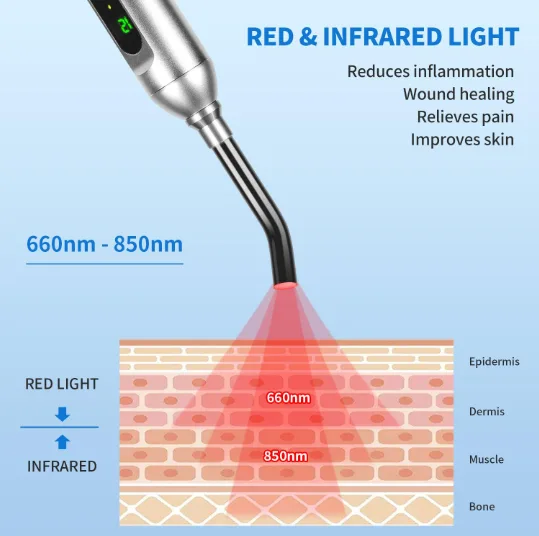
Red light therapy — clinically referred to as photobiomodulation — works by delivering specific wavelengths of red and near-infrared light, typically between 630 and 850 nanometers, directly into biological tissue. Unlike ultraviolet light, these wavelengths penetrate safely through the skin and soft tissue without causing damage, reaching cellular structures where the real therapeutic action begins.
At the core of red light therapy is its interaction with mitochondria, the energy-producing organelles within cells. When targeted wavelengths are absorbed by a photoreceptor enzyme called cytochrome c oxidase, mitochondrial activity increases, boosting the production of adenosine triphosphate (ATP). This energy surge triggers a cascade of biological responses: reduced oxidative stress, enhanced cellular repair, and accelerated tissue regeneration. In oral environments — where tissue is highly vascular and healing demands are significant — this cellular stimulation translates directly into practical clinical benefits.
Pain reduction through red light therapy occurs through multiple pathways. It modulates the release of inflammatory mediators, decreases prostaglandin synthesis, and promotes endorphin production, effectively interrupting the pain signaling cycle at the tissue level. These mechanisms are not theoretical; they have been observed and documented across various clinical disciplines, from sports medicine to dermatology. The same science that supports consumer devices like YouLumi’s red light therapy masks — which use photobiomodulation to stimulate cellular repair and enhance skin tissue recovery — applies equally to oral tissue repair and pain management.
For dentists, understanding these mechanisms provides a scientific foundation for incorporating red light therapy into treatment protocols. The technology does not mask symptoms; it addresses underlying cellular dysfunction, offering a physiologically sound approach to pain and healing challenges that routine dental procedures regularly produce.
Benefits of Red Light Therapy for Oral Health and Pain Relief
For dental professionals seeking alternatives to medication-dependent pain management, red light therapy delivers a clinically meaningful set of advantages. Its ability to act at the cellular level — reducing inflammation, accelerating tissue repair, and interrupting pain signaling — makes it directly applicable to the range of discomfort and recovery challenges that dental care routinely produces. Patients benefit from faster healing and less post-procedural soreness, while dentists gain a versatile, non-invasive tool that complements existing treatment approaches without adding complexity to clinical workflows.
The anti-inflammatory effect is particularly significant. Red light therapy suppresses pro-inflammatory cytokines and reduces vascular permeability, limiting the swelling and tenderness that often follow invasive procedures. This response is not delayed — sessions delivered immediately after treatment can begin modulating inflammation before it fully develops, shortening the uncomfortable window patients typically experience during recovery. The result is a measurably improved post-procedural experience that positively shapes patient perception of care.
Targeted Pain Relief in Dental Procedures
Red light therapy addresses dental pain through direct neurological modulation. By reducing the release of bradykinin and prostaglandins — two key mediators of acute pain — and stimulating endorphin production, it interrupts pain signaling at the tissue source rather than masking it systemically. This localized approach is especially effective for managing post-surgical discomfort, toothache-related inflammation, and sensitivity following restorative procedures. Patients receive relief that is both immediate and sustained, without the dependency concerns or systemic effects associated with conventional analgesics.
Healing and Managing Oral Sores
Oral sores, whether arising from aphthous ulcers, herpetic lesions, or tissue trauma caused by dental appliances, respond well to red light therapy. The increased ATP production stimulates keratinocyte and fibroblast activity, accelerating re-epithelialization and collagen synthesis across damaged mucosal surfaces. Clinical applications show reduced healing time for post-procedural ulcers and lower incidence of secondary infection, as improved local circulation enhances immune cell delivery to the affected site. For patients prone to recurring oral sores, periodic red light therapy sessions offer a preventive dimension alongside active treatment.
Targeted Therapy Applications in Modern Dentistry
Precision is what distinguishes red light therapy from more generalized pain management approaches — and in dentistry, that precision opens doors across a wide range of clinical conditions. Rather than applying a blanket therapeutic response, targeted therapy allows practitioners to direct photobiomodulation exactly where tissue disruption, inflammation, or chronic dysfunction is occurring. This specificity makes it a practical addition to everyday dental workflows, not just a specialty intervention reserved for complex cases.
Temporomandibular joint (TMJ) disorders represent one of the most compelling applications. Patients with TMJ dysfunction frequently experience chronic jaw pain, restricted movement, and muscle tenderness that resist conventional treatments. Red light therapy applied to the joint capsule and surrounding musculature reduces localized inflammation, promotes synovial tissue repair, and relieves myofascial tension — addressing the multifactorial nature of TMJ disorders more comprehensively than analgesics or bite guards alone. Sessions are brief, non-invasive, and can be incorporated naturally into existing appointment structures.
Periodontal care is another area where targeted therapy demonstrates measurable value. In patients with gingivitis or early-stage periodontitis, red light therapy supports gum tissue regeneration, reduces bacterial-driven inflammation, and improves microcirculation within the periodontal ligament. This creates a more favorable healing environment following scaling and root planing procedures, accelerating tissue reattachment and reducing post-treatment sensitivity.
Post-extraction recovery is perhaps the most routine application. Following tooth removal, targeted red light sessions applied to the extraction socket stimulate clot stabilization, reduce the inflammatory response, and lower the risk of dry socket — a complication that significantly impairs patient recovery. Dentists can administer treatment chairside immediately after extraction, requiring no additional appointments and adding minimal time to the procedure. Across all these applications, the consistent thread is targeted, tissue-specific intervention that accelerates recovery and reduces patient discomfort with clinical reliability.
Practical Steps for Integrating Red Light Therapy into Dental Practice
Bringing red light therapy into a dental practice does not require a complete operational overhaul — but it does demand deliberate planning. From selecting the right equipment to preparing your team and communicating the benefits to patients, a structured approach ensures the technology delivers its full clinical potential from the start. The steps below offer a clear path from consideration to confident implementation.
Choosing the Right Red Light Therapy Devices
Dental-specific red light therapy devices differ meaningfully from general-purpose or consumer options like red light hair growth caps or facial masks — including well-known consumer brands such as YouLumi. For intraoral applications, prioritize devices designed with flexible, ergonomically shaped applicators that can access posterior regions and extraction sites without compromising patient comfort. Wavelength output should fall within the 630–850 nm therapeutic range, with sufficient irradiance — typically 50–200 mW/cm² — to achieve clinical dosing targets. Devices with adjustable timer settings and CE or FDA clearance for medical use provide both treatment precision and regulatory confidence. Evaluate portability and cross-contamination control features, as chairside usability directly affects clinical workflow efficiency.
Implementation and Training for Dental Teams
Effective integration begins with structured staff training. Designate a clinical lead to oversee protocol development and ensure all team members understand treatment indications, contraindications, and dosing guidelines. Incorporate red light therapy into existing treatment documentation systems, establishing clear records of session duration, wavelength settings, and patient response for each procedure. Develop condition-specific protocols — one for post-extraction care, another for TMJ management, and so on — so staff apply therapy consistently. Schedule periodic case reviews to assess outcomes and refine technique, building institutional competence alongside individual skill.
Patient Education and Communication Strategies
Patient acceptance hinges on clear, jargon-free explanation. Frame red light therapy as a natural extension of your practice’s commitment to minimizing discomfort and supporting faster recovery — not as an experimental addition. Address common questions proactively: the therapy is painless, non-invasive, and requires no recovery time. Printed one-page summaries or brief chairside explanations before procedures work well for introducing the concept. For patients managing chronic conditions like TMJ disorders or recurrent oral sores, position periodic sessions as part of a longer-term care plan, reinforcing the value of consistent treatment and encouraging ongoing engagement with your practice.
Advancing Dental Care with Red Light Therapy
Red light therapy has moved well beyond its origins in general wellness and into a defined clinical role within modern dentistry. The evidence is consistent: targeted photobiomodulation reduces post-procedural pain, accelerates healing of oral sores, supports recovery from extractions, and provides meaningful relief for chronic conditions like TMJ disorders — all without medications, systemic side effects, or significant disruption to existing workflows.
For dental professionals, the value proposition is straightforward. Patients who experience less pain, heal faster, and feel genuinely supported throughout recovery become more engaged, more trusting, and more likely to maintain long-term care relationships. Red light therapy makes that outcome more achievable, session by session, procedure by procedure.
Integration does not have to be complicated. With the right device, a trained team, and clear patient communication, red light therapy becomes a natural extension of the care you already provide. As targeted therapy continues to evolve across medical disciplines, its role in dentistry is only set to expand. The practices that adopt it now will be positioned not just to manage pain and healing more effectively today, but to lead patient-centered care well into the future.