How to Choose the Right Material for Your Dental Crown
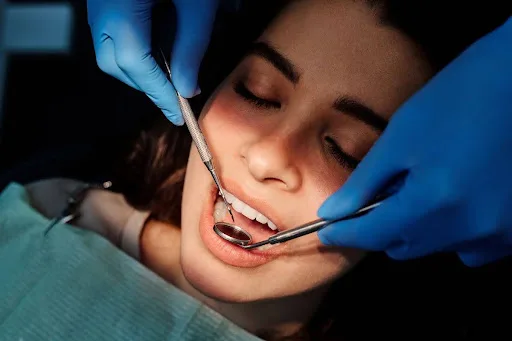
The crown sitting on your back molar today could realistically still be functioning two decades from now — or it could crack within five years. The difference often comes down to a single decision made during a routine consultation: what material goes into that crown. With restorative dentistry advancing rapidly and patients growing more informed about their options, that choice has become significantly more complex than it was even ten years ago.
Material science in dentistry has accelerated considerably. Zirconia has gone from a niche option to mainstream use. Computer-aided milling has made same-day ceramic restorations practical. And patients are increasingly asking their dentists not just “what’s best?” but “what’s best for *me*?” That shift matters, because the right crown material isn’t universal — it depends on where the tooth sits, what stresses it faces, what a patient’s aesthetic priorities are, and what their body will tolerate.
The stakes are real. A crown placed on a first molar in a patient who grinds at night faces fundamentally different demands than one placed on an upper front tooth for someone whose main concern is a natural-looking smile. Getting that match right affects longevity, comfort, oral health, and ultimately cost. This guide works through the key material properties, main material types, how to match them to clinical needs, and what the current research says about safety — so you can walk into that conversation with your dentist better prepared.
How Dental Crown Materials Differ in Properties and Performance
Before comparing specific materials, it’s worth understanding what properties actually determine how a crown performs in the mouth. These characteristics explain why no single material is universally superior — every option involves trade-offs.
Hardness and wear resistance are often the first things people ask about, but they’re more nuanced than they seem. A crown that’s harder than the surrounding natural teeth can actually accelerate wear on the opposing teeth it contacts. Gold alloys sit at a hardness level remarkably close to natural enamel, which is one reason they’ve remained clinically relevant despite being aesthetically conspicuous. High-strength zirconia, by contrast, is considerably harder and can cause measurable wear on opposing enamel if the surface isn’t carefully polished.
Fracture toughness is a different mechanical property — it measures a material’s ability to resist crack propagation under stress. A material can be hard yet brittle. Early-generation dental ceramics were notorious for this: they looked excellent but chipped or fractured under heavy biting forces. This is precisely why posterior applications (back teeth, molars) historically favored metal-based materials, while ceramics were reserved for front teeth where load is lower and aesthetics matter most.
Biocompatibility refers to how well the material coexists with surrounding oral tissues. Some metal alloys contain nickel or beryllium, which provoke allergic responses in a measurable subset of patients. Ceramics and zirconia are generally considered highly biocompatible with minimal tissue reaction. This property also extends to gingival health — certain crown margins and materials interact with gum tissue better than others over the long term.
Esthetics, while often treated as secondary to function, is genuinely clinically relevant, not just cosmetic. A patient who dislikes the look of their restoration is more likely to delay recommended replacements, less likely to report discomfort accurately, and may experience real psychological effects from an unnatural-looking smile. Understanding these four properties — hardness, fracture toughness, biocompatibility, and esthetics — forms the foundation for evaluating any specific material.
Types of Common Dental Crown Materials and Their Advantages
These properties play out differently depending on the material category. A practical resource covering the full range of types of dental crowns can help contextualize cost and procedural considerations alongside material selection — but the clinical comparison itself is worth working through carefully.
Metal-Based Dental Crown Materials
Gold alloys have the longest clinical track record of any crown material, with documented longevity data extending across multiple decades. Their appeal is straightforward: they’re durable, they wear similarly to natural enamel, they rarely fracture, and they require minimal tooth reduction because of their strength in thin cross-sections. For a patient with a heavily restored molar that has limited remaining tooth structure, gold can be an excellent choice precisely because less drilling is required.
Base metal alloys — typically nickel-chromium or cobalt-chromium — offer similar mechanical strength at lower material cost. They’re commonly used in porcelain-fused-to-metal (PFM) crowns, where the metal substructure provides strength and the porcelain veneer layer provides aesthetics. PFM crowns represent one of the most widely placed restoration types globally. Their main limitation is that over time, gum recession can expose the dark metal margin near the gumline, which becomes visible. The porcelain veneer layer is also susceptible to chipping under high occlusal forces.
One practical reality: metals are still the material of choice for many posterior applications in patients who grind heavily, have limited interocclusal space, or have a history of ceramic fractures. The aesthetic trade-off is meaningful in those cases — but so is the longevity benefit.
Ceramic and Resin Dental Crown Materials
All-ceramic materials — including leucite-reinforced glass ceramics, lithium disilicate, and zirconia — have largely overtaken metal-based options for many clinical applications, driven primarily by aesthetic demand and improvements in material strength.
Lithium disilicate (commonly associated with the IPS e.max system) offers an excellent combination of translucency and strength. It mimics natural tooth light transmission well, making it particularly suitable for anterior teeth and premolars. It bonds strongly to tooth structure, which actually allows for more conservative preparation compared to metal crowns.
Zirconia is currently the dominant material for posterior full-coverage crowns in many practices. Monolithic zirconia (where the entire crown is milled from a single zirconia block) is highly resistant to fracture and doesn’t have the chipping risk of PFM porcelain layers. Earlier zirconia formulations were criticized for being too opaque, but high-translucency zirconia options have improved the aesthetic profile substantially.
Composite resin crowns are used primarily as temporary restorations or in cases with significant budget constraints. They wear faster, stain more readily, and have lower fracture resistance than ceramic or metal options — making them unsuitable for long-term use in most posterior positions.
How to Select the Right Dental Crown Material for Different Clinical Needs
Understanding the materials is the foundation. Applying that understanding to individual patients is where clinical judgment — and patient input — becomes essential.
Tooth location is arguably the most important single factor. Molars and premolars endure far greater biting forces than front teeth. A maxillary central incisor receiving a crown for a patient concerned about appearance would typically be a strong candidate for lithium disilicate — it achieves excellent translucency and the biting forces on front teeth are manageable. That same material on a lower first molar in a patient with a heavy bite history may not be the right call; monolithic zirconia or even gold would offer more reliable long-term performance.
Parafunctional habits — primarily bruxism (grinding) and clenching — significantly affect material selection. Patients who grind heavily at night place substantial cyclical stress on restorations. High-translucency ceramics that work beautifully in non-grinders may fracture prematurely in this population. Dentists will often recommend monolithic zirconia or gold for confirmed bruxers, potentially combined with a nightguard to distribute stress.
Remaining tooth structure influences the decision as well. When a tooth has been heavily restored previously, the amount of natural tooth available to support a crown is limited. Gold requires the least removal of tooth structure, which matters in these cases. Highly adhesive ceramics like lithium disilicate can bond to tooth structure in a way that compensates for limited mechanical retention.
Patient age and life stage also shape the recommendation. Younger patients replacing a crown in their twenties face the reality that they’ll likely need that crown replaced at some point — material longevity becomes particularly important. Elderly patients with reduced dexterity or systemic health considerations may benefit from materials that are easier to adjust or less demanding to maintain. For pediatric applications, stainless steel crowns remain a standard approach for primary molars due to their durability and the temporary nature of the tooth.
Safety, Health Effects, and Scientific Research on Dental Crown Materials
Safety conversations around dental materials often generate more anxiety than the evidence warrants — but that doesn’t mean the concerns are baseless. Understanding what the research actually shows helps separate genuine risk from misplaced worry.
The most significant established concern involves nickel allergy. Nickel is a component of many base metal alloys used in PFM crowns. Research published in *Contact Dermatitis* has documented that nickel sensitivity affects a meaningful portion of the population — more commonly in women — and can manifest as gingival inflammation, oral lichenoid reactions, or systemic contact dermatitis in sensitized individuals. Patients with known nickel sensitivity should avoid nickel-containing alloys entirely; gold alloys, zirconia, and lithium disilicate are appropriate alternatives.
Beryllium, sometimes used in base metal alloys to improve castability, carries respiratory risks during manufacturing, though exposure risk for patients in the finished restoration is considered negligible. The concern is primarily occupational for dental laboratory technicians.
For ceramic and zirconia materials, the biocompatibility profile is strong. Zirconia in particular has extensive documentation from both dental and orthopedic applications (it’s used in hip replacements) supporting its tissue compatibility. No credible evidence links standard ceramic crown materials to systemic health effects in patients.
The conversation around dental amalgam is worth briefly contextualizing here: amalgam is used in fillings, not crowns, but it’s frequently conflated with crown material concerns in patient questions. These are distinct materials with different compositions and risk profiles.
One area where evidence continues to develop is wear on opposing dentition. Studies in the *Journal of Prosthetic Dentistry* have examined how different zirconia surface treatments affect antagonist wear rates, finding that polished monolithic zirconia produces significantly less opposing tooth wear than glazed zirconia. This is a practical consideration, not just an academic one — the surface finish of a crown matters beyond how it looks.
Future Trends and Innovations in Dental Crown Materials
The next generation of crown materials is being shaped by two parallel forces: advances in material science and improvements in digital fabrication that make complex restorations more accessible.
High-translucency multilayer zirconia is actively closing the aesthetic gap with glass ceramics while maintaining zirconia’s mechanical advantages. Manufacturers are producing zirconia blanks with graduated translucency that mimics the natural gradient from dentin to enamel — a development that was not feasible in first-generation monolithic zirconia.
Polymer-infiltrated ceramic networks (PICN), sometimes called hybrid ceramics, represent a genuinely novel category. These materials combine a ceramic matrix with a resin polymer phase, creating a composite that’s tougher than conventional ceramics and more elastic — potentially better suited to absorbing occlusal stress without fracture or causing excessive antagonist wear.
Bioactive materials — which can interact with surrounding tooth structure and oral environment rather than passively coexisting — are in active development. Some formulations under research can release calcium and phosphate ions to help remineralize adjacent tooth structure. If these prove durable enough for crown applications, they could shift the paradigm from passive restoration to active contribution to oral health.
The question worth keeping in mind as these materials enter clinical practice: durability data for novel materials takes years to accumulate. New doesn’t automatically mean better proven.