PPC Advertising Trends 2026: AI, Personalization & the Future of Paid Ads
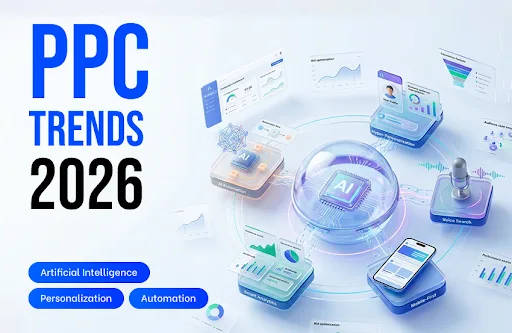
PPC Advertising Trends in 2026 show that the online advertising landscape is changing fast, and these changes are good for advertisers. With the rise of AI in PPC advertising, along with hyper-personalization, voice search, and mobile-first strategies, campaigns are becoming more efficient and performance-driven.
PPC advertising has never rewarded patience. The platforms change, the algorithms change, and advertisers who wait often fall behind. For example, early adoption of automation and machine learning in PPC has already proven to deliver long-term competitive advantages.
There’s a clear pattern in performance marketing trends: those who adapt early to change consistently outperform those who hesitate. The cost of ignoring innovations like AI-driven optimization or automation doesn’t appear immediately, but it shows up later in wasted ad spend and lost market share.
In this blog, we will look at PPC trends 2026 that advertisers should consider when running PPC campaigns, helping maximize ROI in the future.
What is PPC Advertising?
Before diving into the future of PPC advertising and trends to watch in 2026, let’s first understand what PPC actually means. PPC (Pay-Per-Click) advertising is a digital advertising model in which advertisers pay only when someone clicks their ad. Unlike other advertising models, you’re paying for real engagement.
Here are some benefits of running a PPC ad campaign:
- Immediate Visibility
- Precise Targeting
- Cost-Effective Advertising
PPC Campaign Trends in 2026 and Beyond: What Advertisers Need to Know
Every advertiser managing campaigns must understand the key shifts in PPC advertising trends for 2026. From AI-driven automation to hyper-personalized targeting, PPC is rapidly shifting toward more intelligent and intent-based systems. Let’s explore the key PPC paid advertising trends in 2026 and beyond that marketers must prepare for.
1. Hyper Personalization
In 2026, hyper-personalization is no longer optional — it’s becoming a core PPC strategy. Generic ads that stay the same for days are dying out — and it’s already happening. People want ads that feel made for them, showing that a brand actually put in effort. That’s why hyper-personalization will matter more in PPC advertising over the next few years.
Instead of targeting broad groups, advertisers need to build small, ever-changing segments based on what users like most and where conversion rates are highest. Also, geo-fencing, where ads are triggered based on a user’s real-time physical location, will play a much bigger role in making campaigns more relevant.
2. Artificial Intelligence (AI)
In 2026, AI will not just support PPC campaigns — it will actively manage most performance-critical decisions. AI is becoming the backbone of modern PPC platforms, and its influence will only grow. Many platforms already rely heavily on machine learning to automate bidding, ad placement, and audience targeting. In the future, advertisers will have even less manual control over micro-decisions, but much better performance outcomes if smart campaigns are structured correctly.
AI-powered advertising will improve areas like:
- Smart automated bidding: adjusts bids in real time to maximize performance.
- Predictive targeting: pinpoints users most likely to convert before they even click.
- Ad creative generation: automatically tests and assembles headlines, descriptions, and visuals.
- Budget allocation: shifts spend dynamically toward your best-performing campaigns.
3. Voice Search and Conversational Queries
As voice assistants and AI chat tools become more common, search behavior is getting more natural and question-based. This changes the PPC keyword strategy. Instead of short keywords like “best running shoes,” users increasingly search “which running shoes are best for knee pain?”
Advertisers will need to:
- Target longer, conversational keyword phrases
- Build ad copy that matches natural language intent
- Optimize landing pages for question-style queries
4. Mobile Optimization is Crucial
In 2026, mobile-first is no longer a best practice — it is the default expectation for all PPC campaigns. In 2026, mobile devices are no longer just an alternative for desktop browsing — they are now the primary way users interact with the internet. This shift will continue to strongly influence the future of PPC advertising.
With mobile engagement continuing to rise, campaigns that fail to prioritize mobile optimization risk losing a significant portion of potential conversions. Advertisers who adapt early will benefit from lower competition in well-optimized mobile experiences and higher overall conversion rates.
To stay competitive, PPC advertisers will need to:
- Prioritize mobile-first ad design with clear, concise messaging and strong visual hierarchy.
- Ensure landing pages are fully responsive, fast-loading, and easy to navigate.
- Utilize in-app advertising as mobile app usage continues to grow across all demographics
- Optimize for micro-moments, where users make quick decisions while on the go.
Is Investing in PPC Advertising Worth It in the Future?
Absolutely. PPC (Pay-Per-Click) advertising has delivered excellent results for businesses over the years, remains highly effective today, and is expected to play an even bigger role in the future. Leading advertising platforms continue to invest in AI, automation, and smarter targeting because they recognize the growing demand from businesses, as every business wants its brand to stay in front of people, and PPC advertising can help them achieve this.
Why is PPC a future-proof investment?
- Delivers instant visibility and faster results.
- Targets the right audience with precision.
- Offers measurable performance and ROI.
- Uses AI to optimize campaigns automatically.
- Scales easily for businesses of all sizes.
Businesses that align with PPC Advertising Trends in 2026 benefit from faster growth, better targeting, and improved ROI.
Ready to Future-Proof Your PPC Strategy?
In the coming years, PPC success will go to advertisers who adapt quickly — using AI automation, better personalization, and keeping up with how people search, rather than fighting these changes. If you want a platform that can keep up, 7SearchPPC is worth checking out. It offers flexible campaign options, different ad formats, and targeting made for changing audience behavior. Review your current PPC approach, see where it’s falling behind, and consider giving 7SearchPPC a try before your competitors get there first.
Frequently Asked Questions (FAQs)
Q1: What is PPC advertising, and how does it work?
Ans: PPC (Pay-Per-Click) advertising is a form of online advertising where you pay simply when someone clicks your ad. Instead of getting visitors for free, you’re buying them.
Q2: How will AI impact the future of PPC advertising?
Ans: AI will keep changing PPC by automatically setting the right bids, finding the right audience to target, creating ad content, guessing what users will do next, and adjusting budgets to get better results.
Q3: Why is hyper-personalization important in PPC campaigns?
Ans: Hyper-personalization means showing ads that match what a specific user wants, based on their behavior and interests. This makes people more likely to engage with the ad, buy something, and stay loyal to the brand longer.
Q4: How is voice search changing PPC keyword strategies?
Ans: The search intent is changing as more people are using voice search, and they tend to ask longer, more natural questions instead of typing short keywords. Because of this, advertisers need to use longer, conversational keywords, write ad copy that sounds natural, and make sure landing pages answer these spoken-style questions.
Q5: Is PPC advertising still a worthwhile investment in 2026 and beyond?
Ans: Yes, PPC is still worth investing in for 2026 and beyond. It’s an easy way for businesses to get good results without a lot of extra effort.